

There has been a pair of Crested Caracaras in one agricultural area I have been visiting for the past two months. Last week both birds of this pair were standing on a berm between two alfalfa fields. The berms help to provide control of water flow within each field. For birds, the berms provide a ‘high’ perch from which they can survey a large expanse of field.
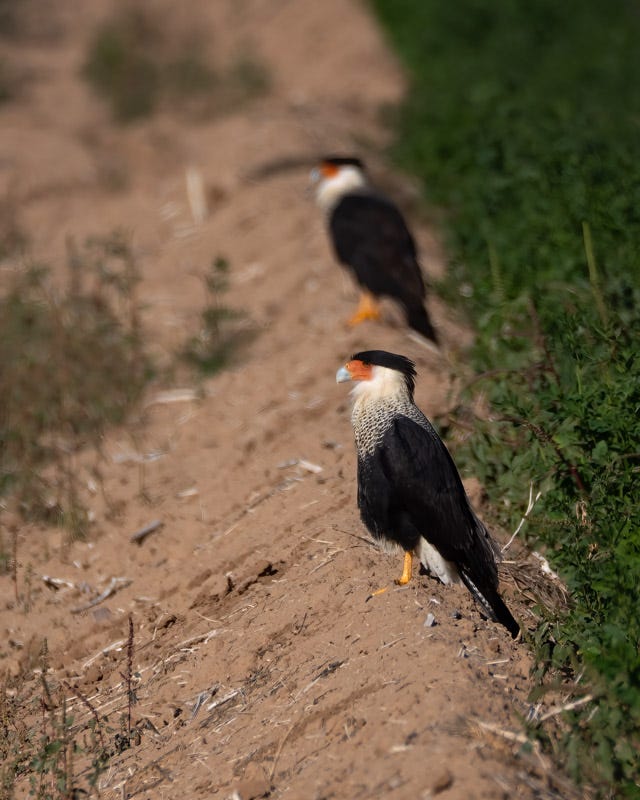
Crested Caracaras are large, long-legged raptors that are about two feet long, beak to tail. When standing, they also stand about two feet high on the ground. They were about 40 yards away from us and were not concerned by our vehicle’s presence on the farm road.
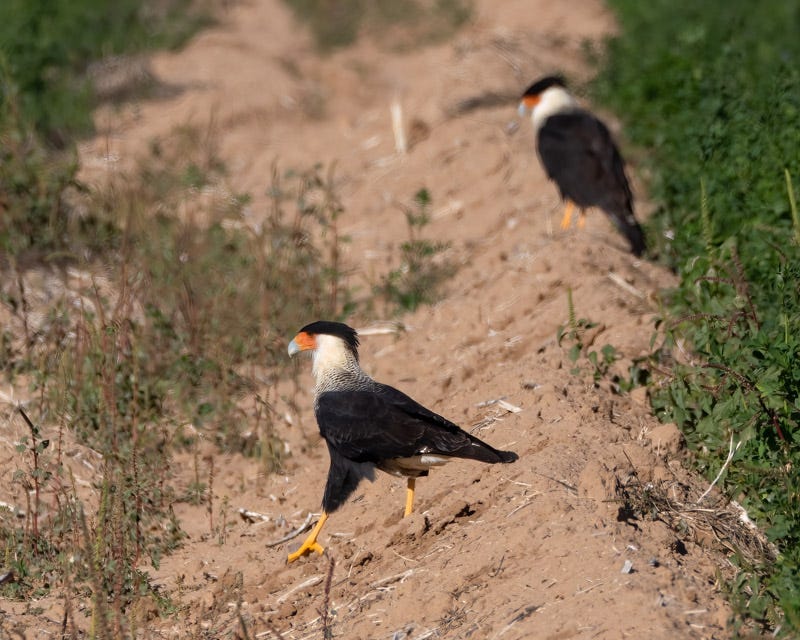
I drove around the neighborhood for some time. An hour after first observing the Crested Caracara pair, I saw them again on another berm in a nearby field.
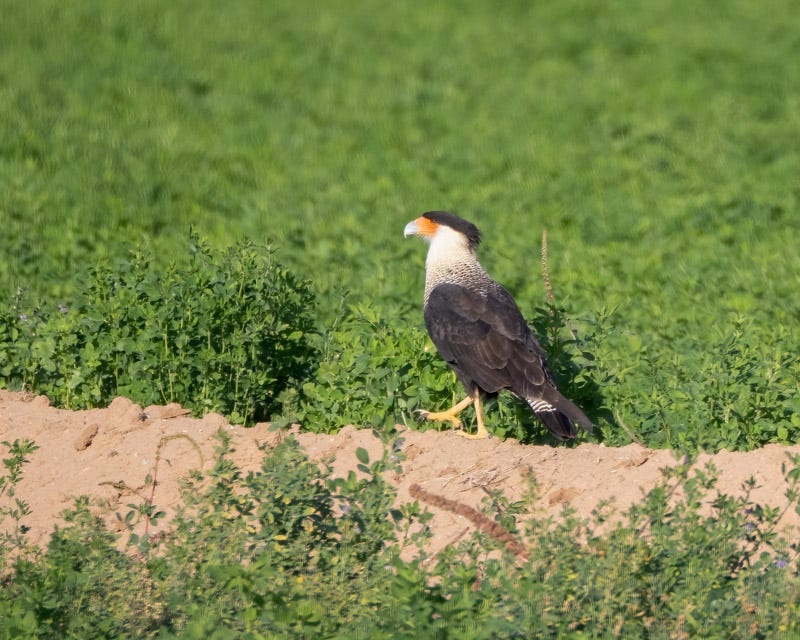
A few minutes later and a few fields away, I saw one Caracara flying into a barren and recently plowed field. Let’s call that bird Crested Caracara #1 (CC#1). I have no idea if this was one of the original two Caracara I had seen or a new, different bird. In this shot he was putting on the brakes and getting ready to land.
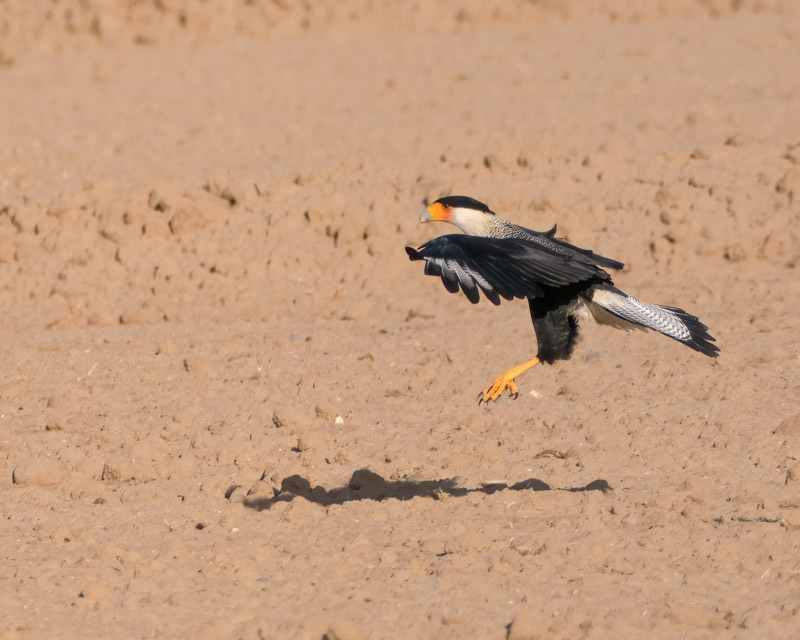
CC#1 continued to glide towards what I then saw was a second Crested Caracara (CC#2) in the open field. I’m not sure whether this second Caracara was one of the original pair of birds or a new bird to the field. The interaction between the two let me know these birds were not both part of the original pair. One of the birds must have been part of the original pair. I just don’t know which one that is.
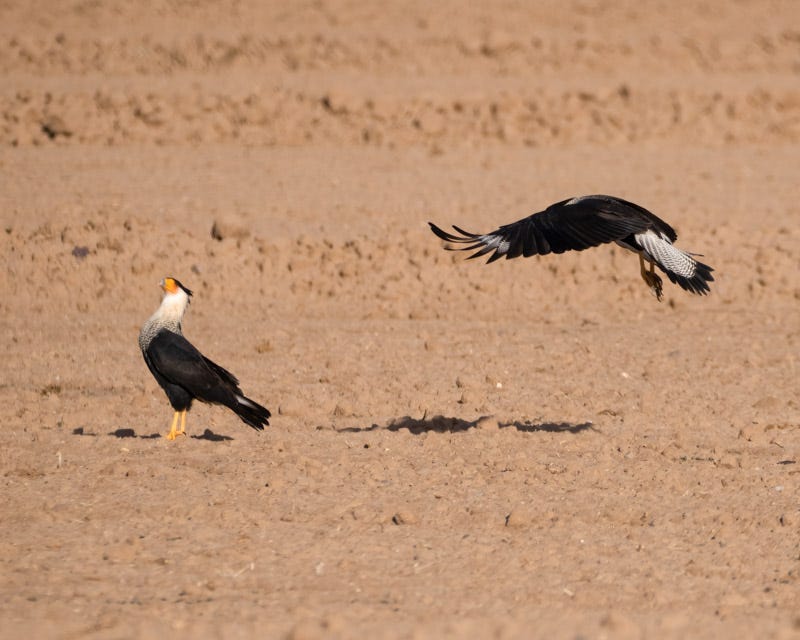
CC#1 landed next to CC#2 in what I felt was an assertive manner. They were in a very large field with lots of space to land in. Coming that close was purposeful and perhaps that type of aggressive landing was part of CC#1 harassing CC#2.
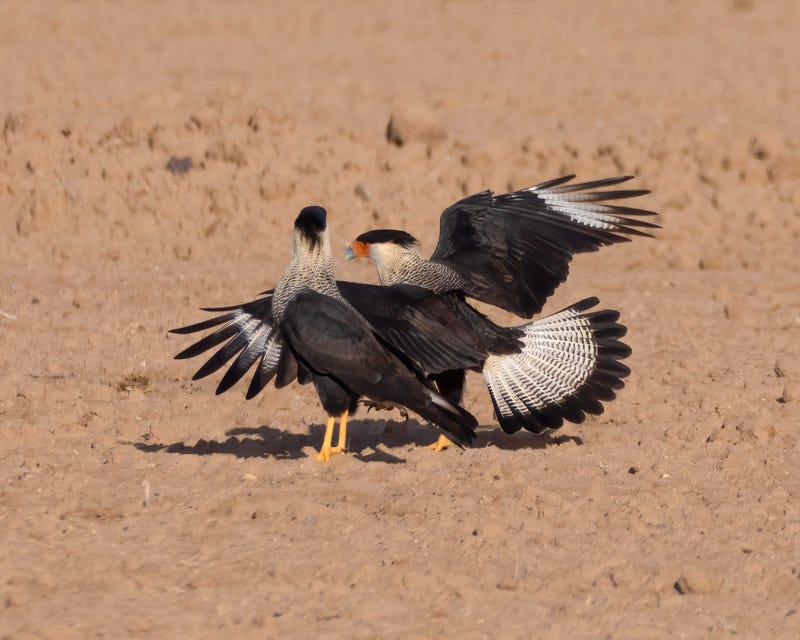
CC#1 continued nonchalantly past CC#2.
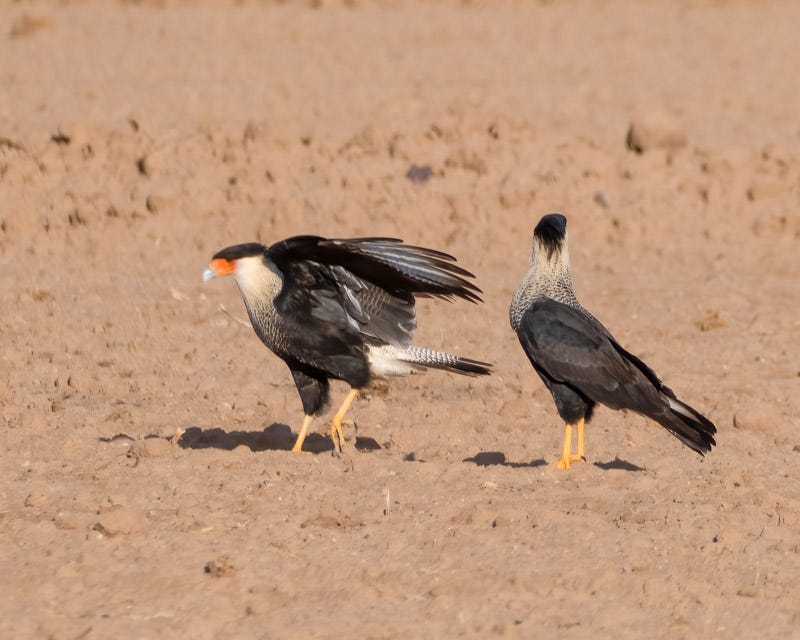
Immediately there was a bit of a standoff. Both birds knew of the other’s presence. Neither bird seemed to acknowledge the other. Both were very alert.
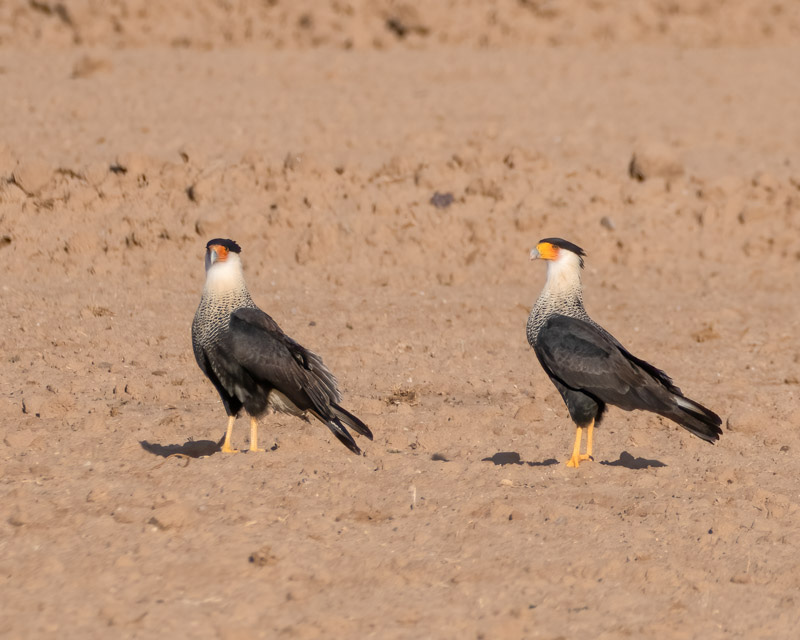
CC#2 spoke first. I was too far away to hear the sound CC#2 was making. CC#1 never looked directly at CC#2. It always gave side-eye but never direct eye contact.
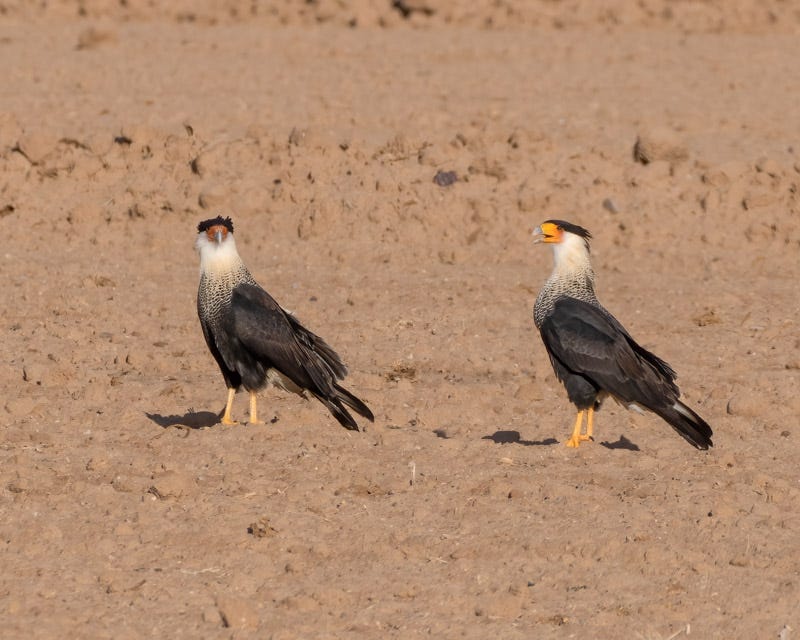
And then!!!! Crested Caracas have what is called head-throwback display. The neck is extended and the head is thrown back until the bird’s crown touches its upper back. At the same time, the Caracara is emitting loud, rattling vocalizations. Those sounds are the source of the bird’s name, “caracara”. AllAboutBirds has recordings of this sound. Listen here to the top 3 calls to hear the sound this bird was making. https://www.allaboutbirds.org/guide/Crested_Caracara/sounds
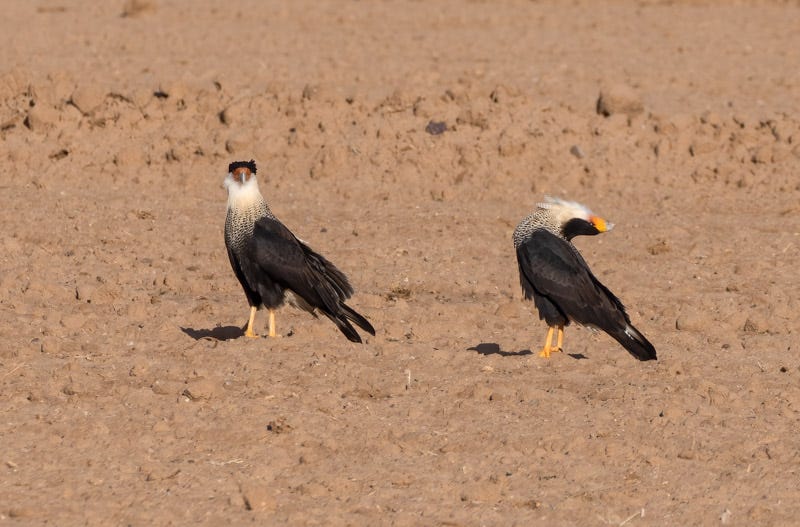
A close-up shows the dramatic pose of this rattling Crested Caracara. CC#2 repeated this behavior several times, stopping to look at CC#1 in between each time. The behavior didn’t seem to phase the first bird at all.
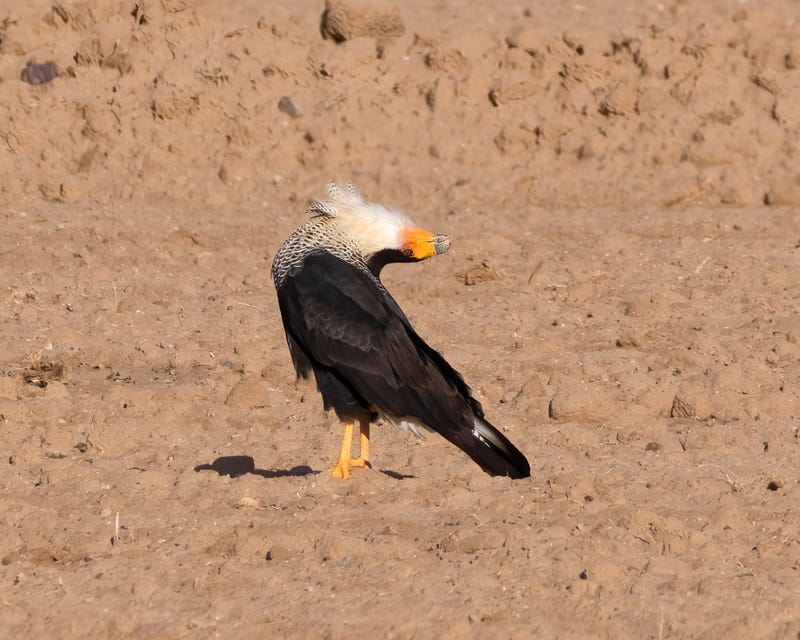
Although CC#1 did move a short distance from CC#2 during those interactions, it still never gave direct eye contact to CC#2
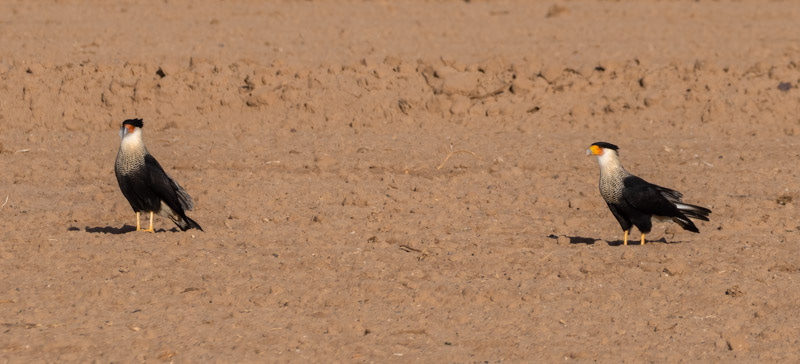
After several attempts to intimidate CC#1, CC#2 walked close to CC#1 and then began rubbing its head against its back. This might have been another form of territorial posturing. It also could have been some kind of displacement activity with CC#2 being aggravated or stressed, but not willing to make any more threatening behaviors. CC#1 certainly didn’t appear fazed by anything.
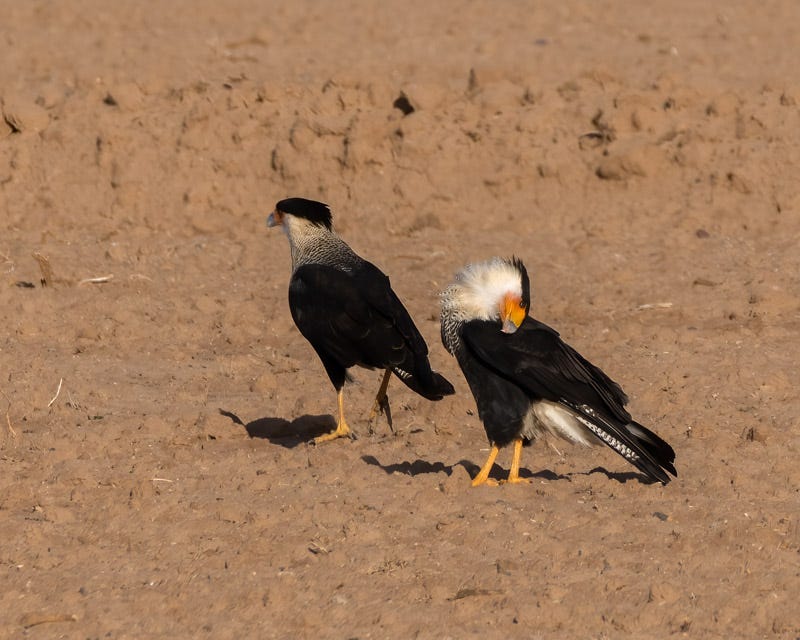
One of the birds flew away. Unfortunately, I didn’t see which of the birds took off. Suddenly there was only one bird in the field while the other flew off into the desert. The remaining bird’s facial skin appeared to turn a darker red than the orange both birds showed during their interactions. Crested Caracaras’ facial skin will change colors with emotion. The red-orange color is supposed to mean that the bird is relaxed and non-threatened, maybe displaying social dominance. I wish I was certain about which bird was which.
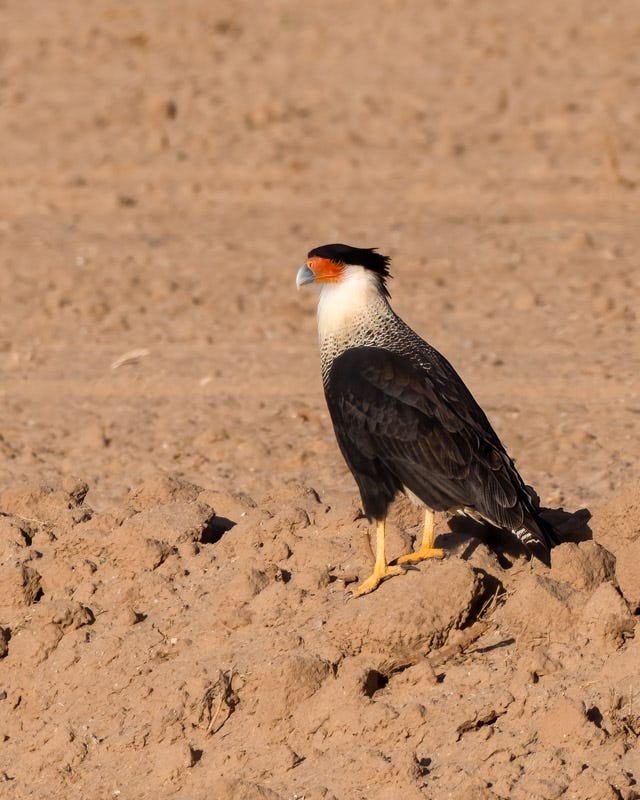
In any case, the interaction was over. This remaining bird flew off somewhat in the direction of the first bird but then turned back and flew into the fields. Although I am not sure which bird was part of the original pair and which bird was the intruder, each of the birds certainly knew and they resolved their concerns.
Birdnote has a nice short story about Crested Caracara and you can hear the bird’s rattling call. This Birdnote piece ignored the fact that Crested Caracara are common in southern and southwestern Arizona. Other than that, it is an interesting piece.
Crested Caracaras are very intelligent. Tucson Bird Alliance also has a story on these special birds. I love their description of this species: “The Crested Caracara looks like a hawk, often acts like a vulture, and is technically a large, tropical falcon.”
I love this bird. The first time I saw them was near the Nogales border near a large pond. If I remember correctly several Cottonwood trees. Thanks
Great story!