

Case Natural Resource Park is on the far eastside of Tucson. I had never heard of it, much less visited it before. It is named after a famous journalist, Leland Case, who purchased 20 acres of land here in 1950. The Arizona Daily Star has a story about him in their Street Smarts series. A friend told me about this park and I visited it with another friend one very cold morning last month, wandering around the desert paths. The park is listed as having 53 acres.
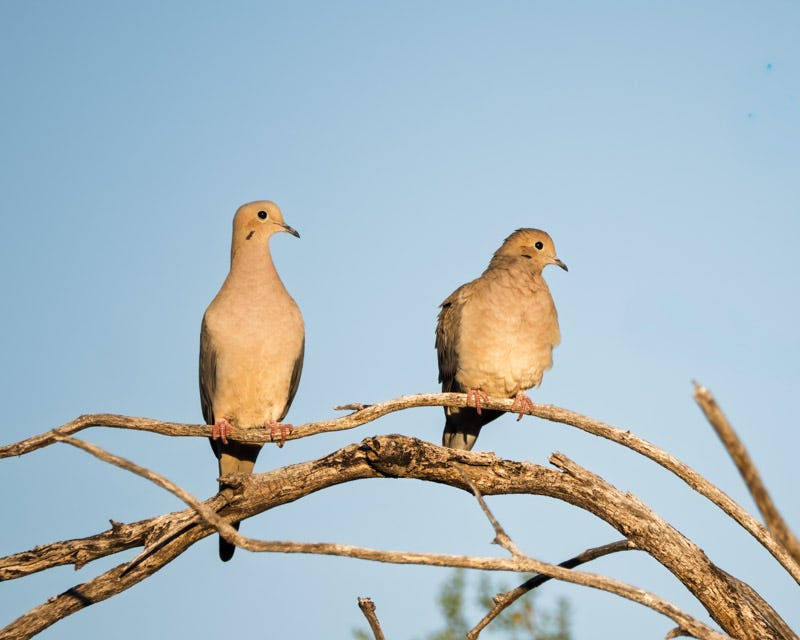
Pairs of Mourning Doves were among the first birds we saw. It was a cold morning and we arrived early while most birds weren’t venturing out. The Mourning Doves were among the first birds we saw.
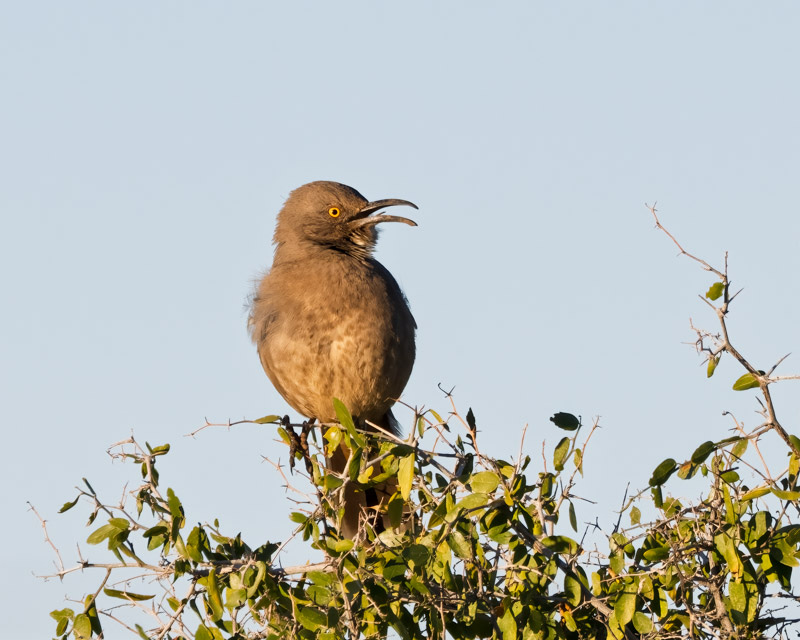
A Curve-billed Thrasher flew to the top of a hackberry bush to sing loudly to the world. You can tell it was a breezy morning by how the Thrasher’s feathers are blowing in the wind.
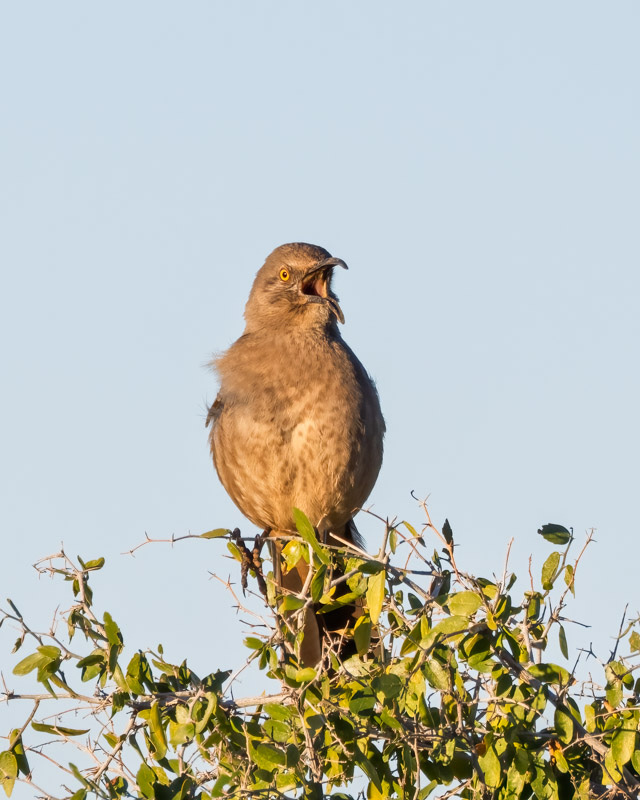
The bird was singing very loudly as Curve-billed Thrashers do. Often their territories can cover several acres and this Thrasher was making certain that all birds within hearing range knew he was there.
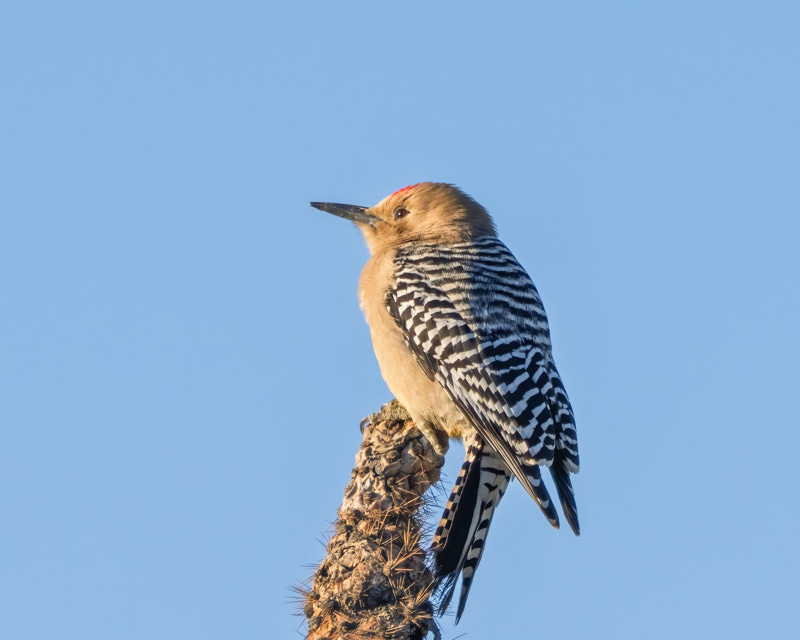
On this cold winter morning it took a while after sunrise before birds began making their appearance. One male Gila Woodpecker perched at the tip of a cholla cactus, facing the sun.
Meanwhile, a nearby female Gila Woodpecker had found a prize of some sort. She held this bean or berry proudly without singing. After a while she flew off with her treat.
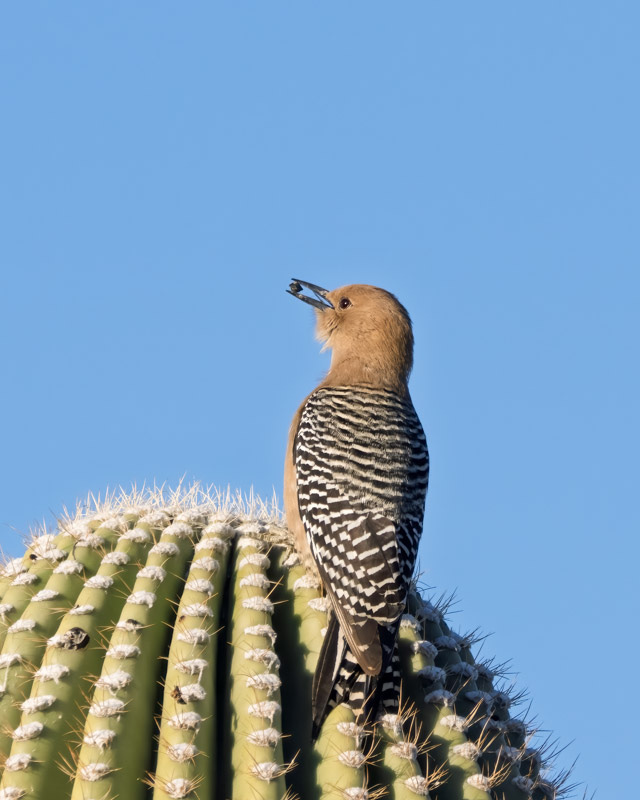
Case is mostly a desert park. There is a small grassy area but as we wandered the dirt paths in the desert area, we saw typical Tucson-area desert birds. A Cactus Wren was atop a bush. Just like the Curve-billed Thrashers, the songs of the Cactus Wrens are recognizable as songs of the desert. You can see how puffed up its feathers were on this cold morning as it tried to get warm.
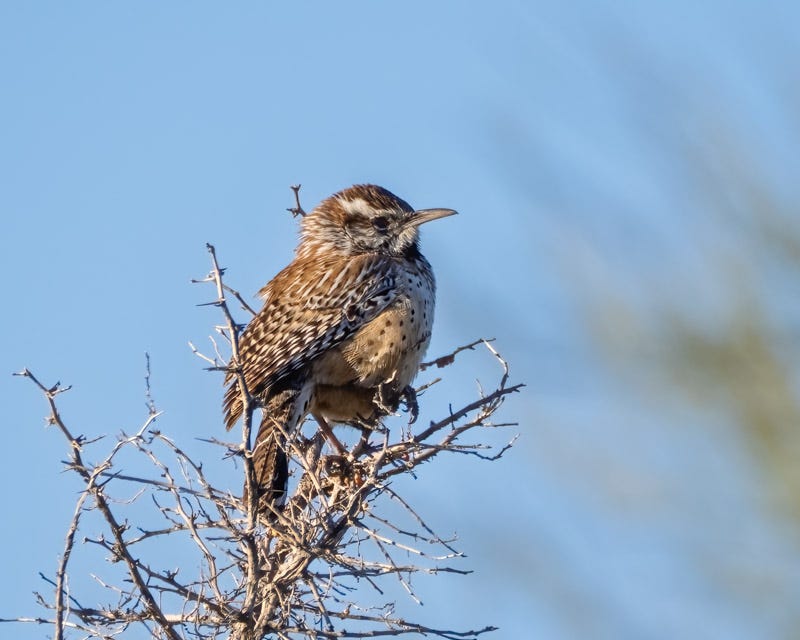
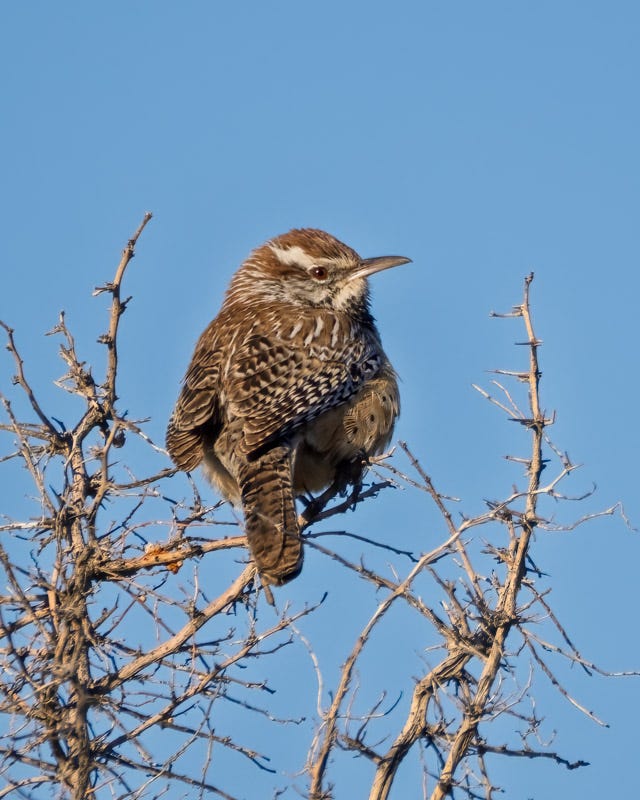
Another view of this Cactus Wren shows how cold it was, trying to stay warm on this wintery morning. A slim species, this Cactus Wren looks positively puffy. Almost all Wrens feature barred (striped) tails and a slender bill. Cactus Wrens are the largest Wren species in the United States.
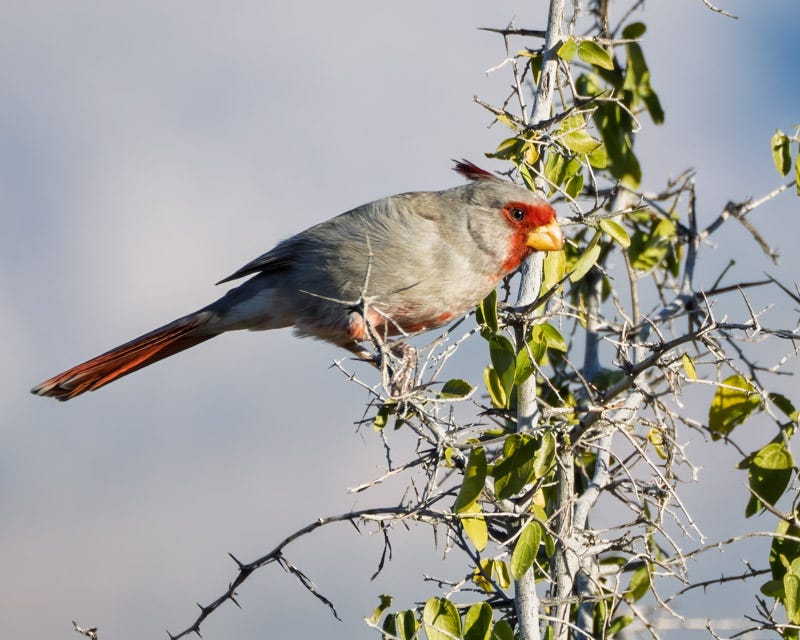
As we were getting ready to leave we heard the nice song of a Pyrrhuloxia. Although we couldn’t see the bird, we zig-zagged through the brushy desert, taking care to avoid cacti, until we finally had a nice view of this male Pyrrhuloxia. It was in brilliant red plumage and, although it did look at us occasionally, it continued to call and call.
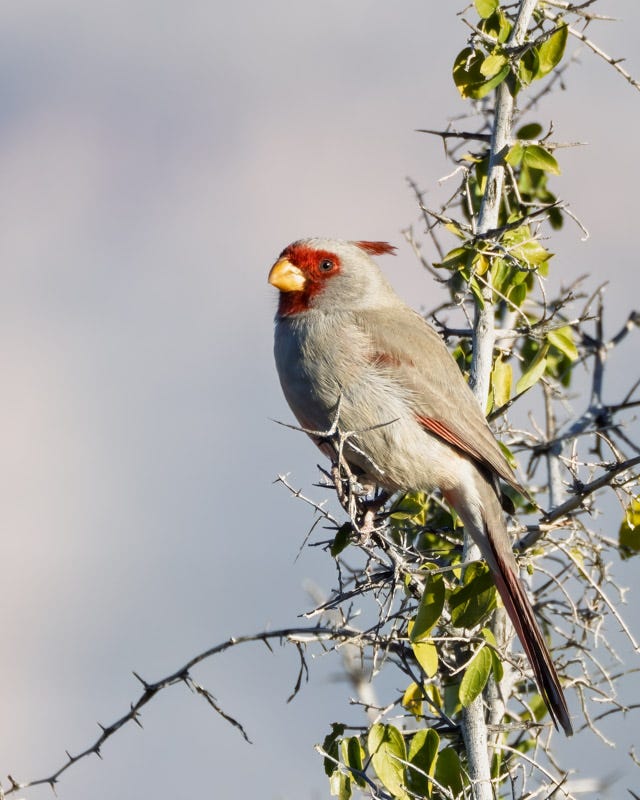
After several minutes it turned to face the sun and continued calling for a bit.
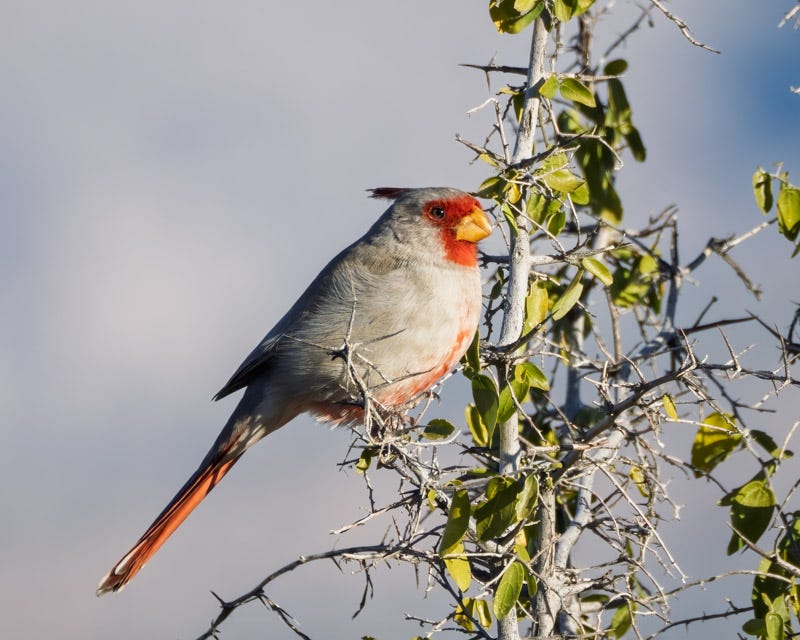
Finally, the Pyrrhuloxia took off and we headed back to the car.
Case Natural Resource Park was a pleasant little desert park. It is always nice to visit a new Tucson spot.
Great pix and commentary as usual. Thanks!
Patti
This looks like a nIce park to visit!