

Brown-crested Flycatchers are yet another bird that flies north to Tucson for breeding season. I usually don’t hear them until early May, but they do nest in my neighborhood. I hear and see them most often in the morning, when they come in for a drink of water.
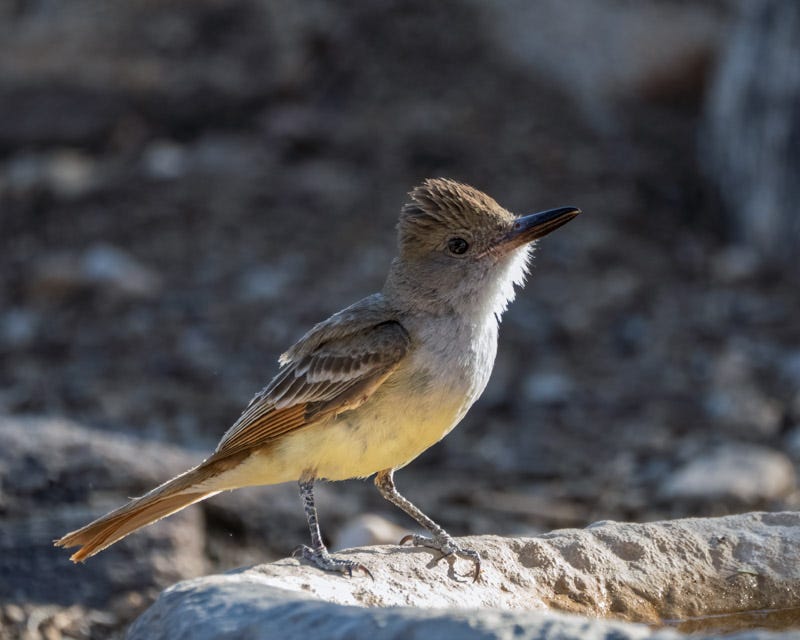
I’m not sure why this Brown-crested Flycatcher whipped his head around, but the water went flying.
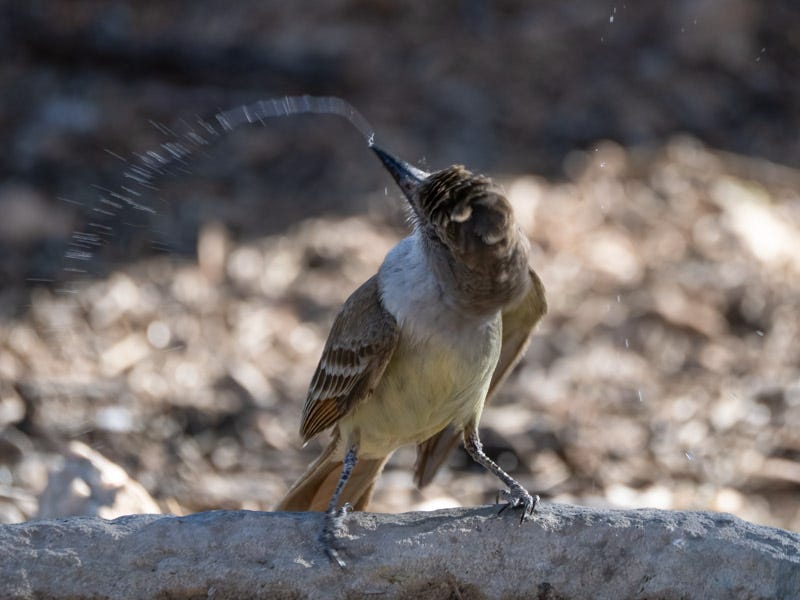
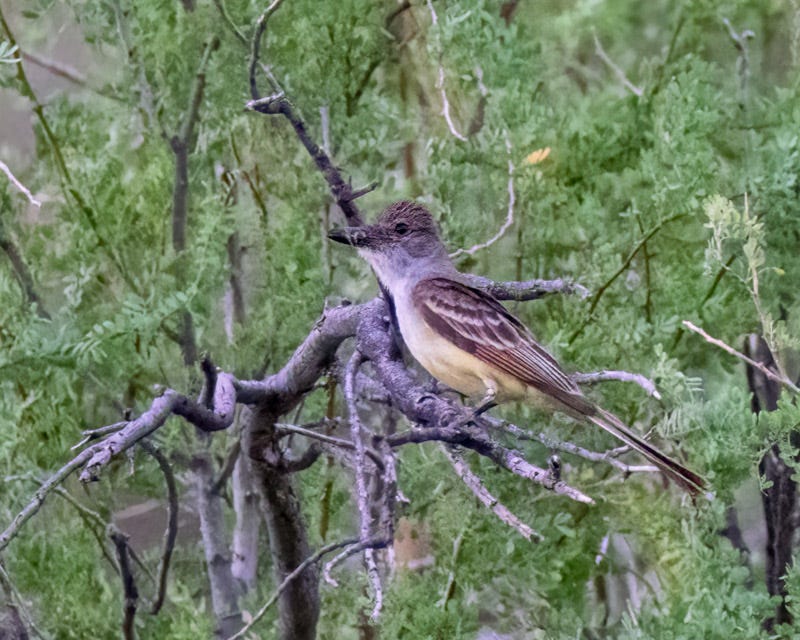
The bird paused to stare at me through the kitchen door. Brown-crested Flycatchers have a large, peaked head and a heavy bill. They have a grayish face and breast and a yellow belly.
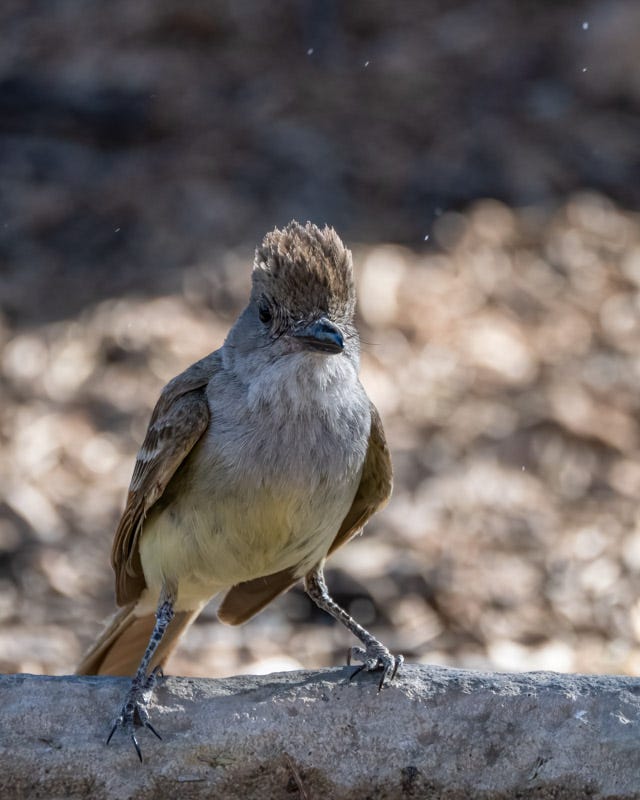
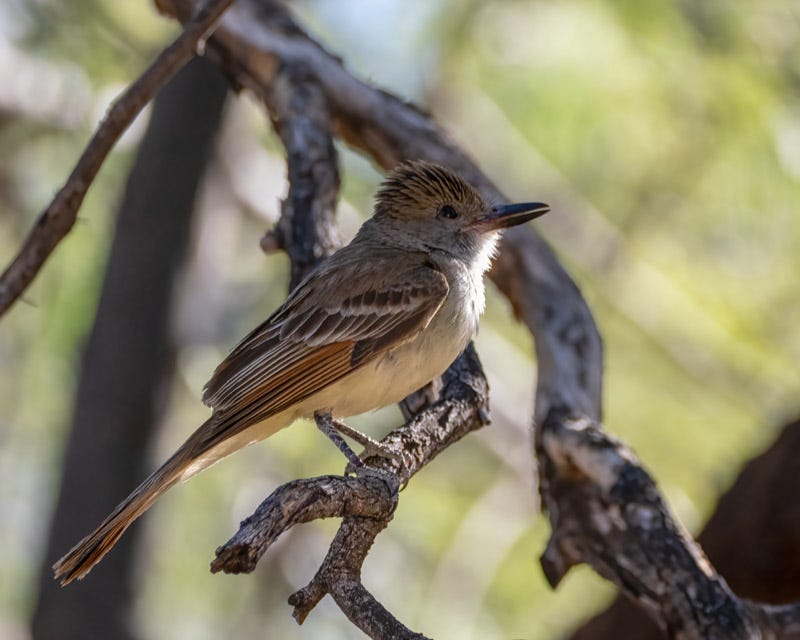
While ‘my’ neighborhood bird is around, it rarely sits out in the open for me to observe. On the rare occasion that I spot it, it would fly off before I could take any photos. I finally did get a chance to shoot it one day while it was on an unobstructed perch just after it drank its morning water.
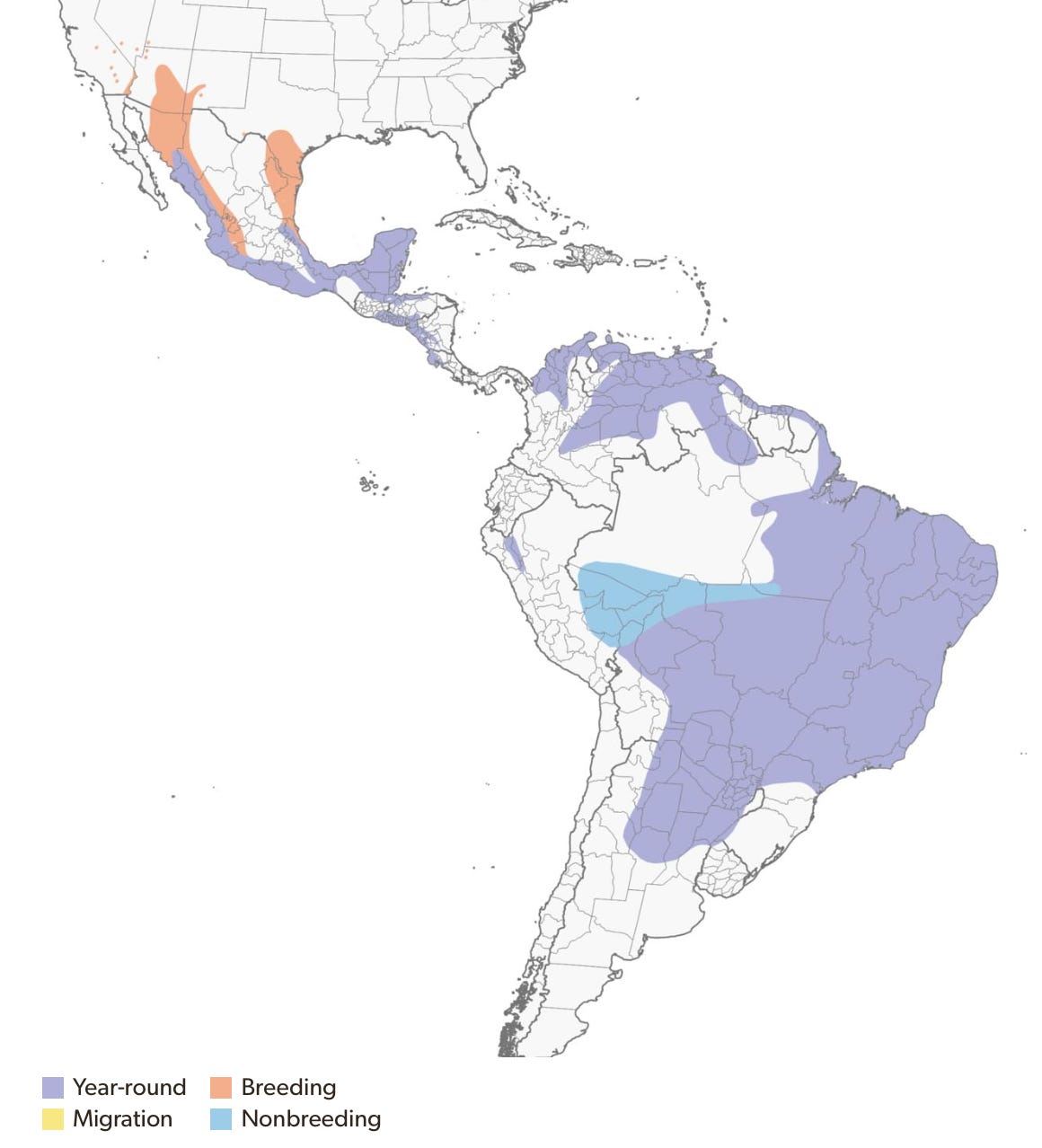
The range map from AllAboutBirds shows the unusual range of this species. The only places you can find these birds in the United States are in Arizona and southern Texas!
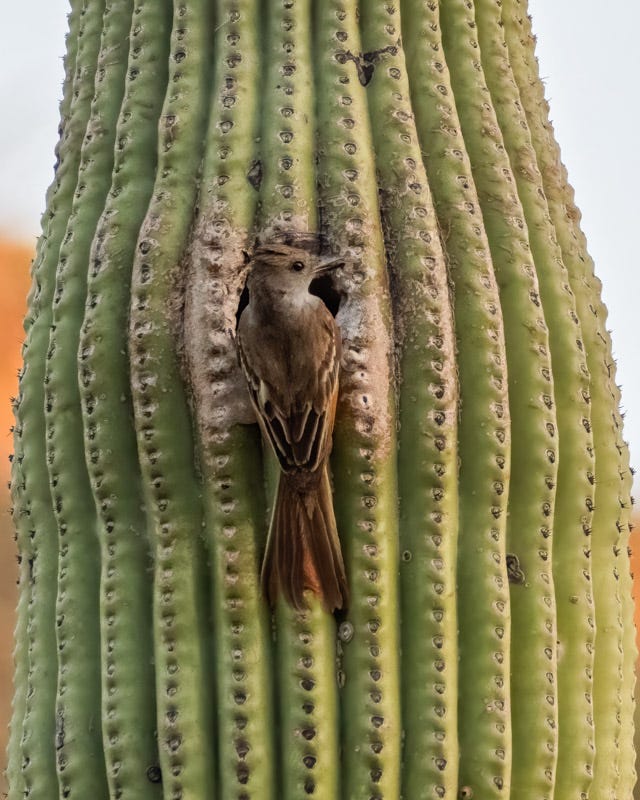
One recent day, I was on a trail in the Tortolita Mountains and I came across a pair of Brown-crested Flycatchers with a nest in a nearby saguaro cavity. In our area, these birds nest predominantly in the cavities that Gila Woodpeckers have made in saguaro cacti. Because they arrive so late in the breeding season, these Flycatchers compete aggressively with other cavity nesting birds for ownership of choice nest cavities. They will evict other birds from desirable holes and vigorously attack any intruders.
I was pleased to be able to watch a number of food deliveries from a distance. Both the male and the female Brown-crested Flycatchers were delivering insects to the young inside the nest.
The flights into the nest cavity were quick, and moments later the bird would burst out of the hole and fly off to continue hunting. You can learn a bit more about Brown-crested Flycatchers in a Tucson Bird Alliance article here.
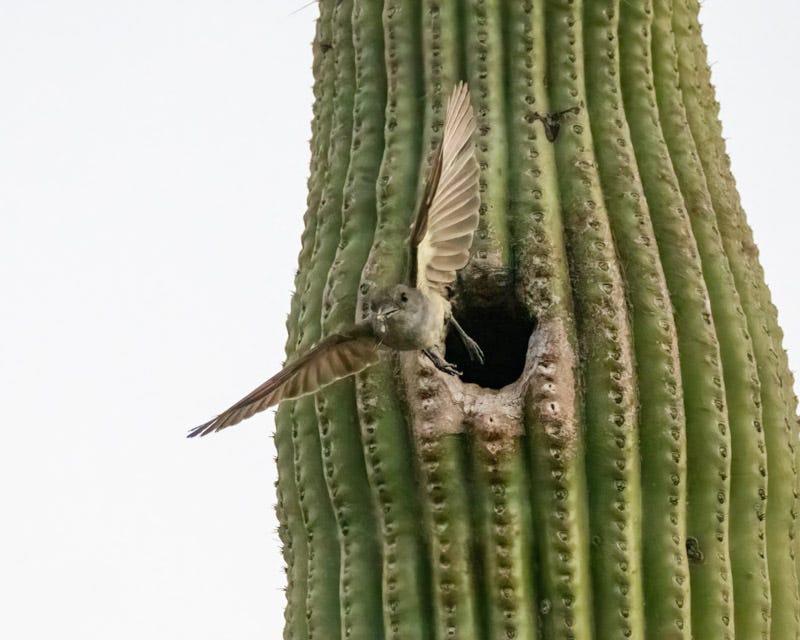
I sure wished that the Flycatcher would sit in the hole for a few moments so I could prepare for their flight but apparently their needs and mine differed.
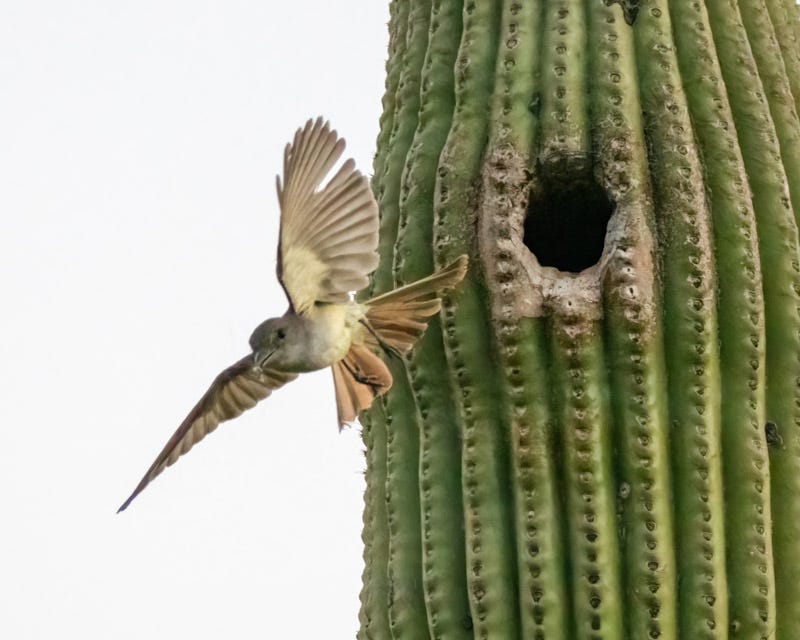
This is the same photo that I already shared with you but it is cropped differently. In this version, you can get a sense of the hillside beyond the nest. It was close to sunset and that hillside was already bathed in the golden glow of the setting sun.
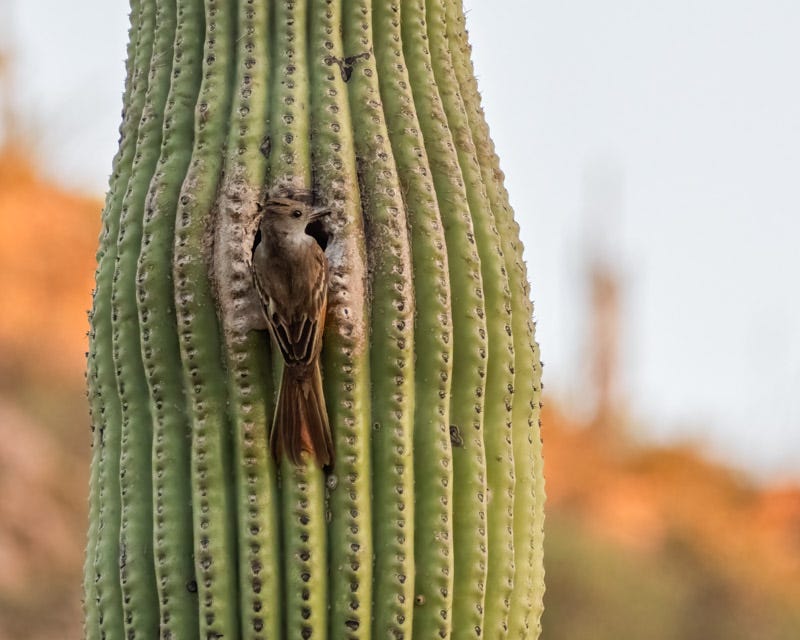
Six summers ago I was able to locate an active nest of a Brown-crested Flycatcher in my neighborhood. I spent several afternoons on the street observing the birds and, with my camera on a tripod, trying to get pictures of the birds delivering food to the young. You can look at that post here and learn a bit more about these interesting birds.
I appreciate that you don’t just take photos, you watch behavior and tell stories about the birds.
Hi Dan. Just a small correction. BC Flycatchers are not only found in AZ & TX. They nest all over the southern California desert. We used to see them all the time up in Morongo Valley, above Palm Springs & all along the Colorado River Valley. Even up by the Kern River, near Lake Isabella. They will also use other nesting sources besides saguaros, well, because there aren't any in California! In Morongo Valley once, we saw a pair using the metal upright pole of a swing set! On our property here in Portal, they use a couple of the nest boxes we have put out on our fence line and attached to the bottom of our deck, and I have even seen them use a metal gate pole out back! In the mountain canyons, like here above Portal, they nest in Sycamore cavities, like the Trogons and Sulphur-Bellied Flycatchers do. :-)