

I saw a few different butterflies while in a yard full of flowering Mexican Bird-of-Paradise plants. It was a very windy morning so it was a challenge trying to take photos of those wispy plants and the butterflies fluttering around erratically. The Western Giant Swallowtail spent a lot of time at the flowers.
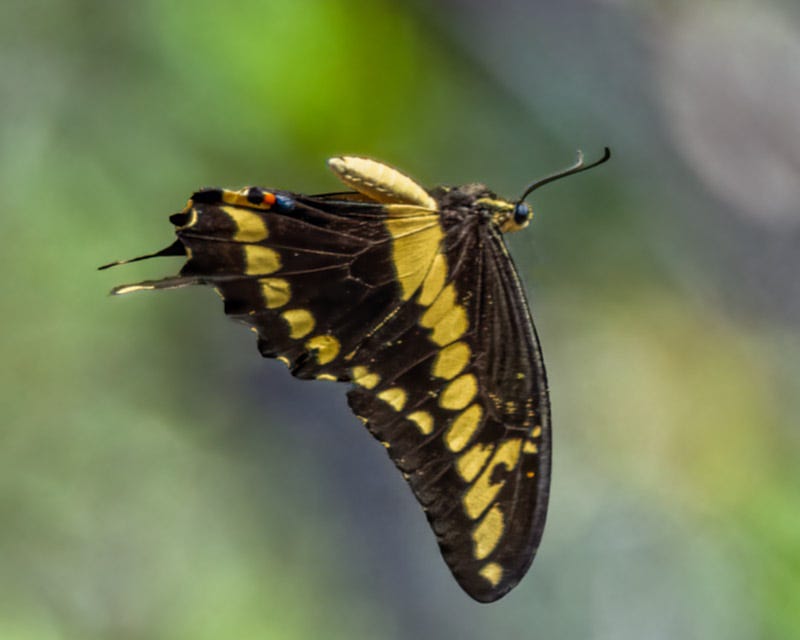
The underside of the Western Giant Swallowtail below looks very different from the upperside seen in the photo above. The contrast is purposeful. The upperside, black with a yellow stripe, is thought to attract mates while flying or basking in the sun. The underside, seen below, is thought to help camouflage the butterfly when perched due to its mottled coloring and patterns. If you look closely you can see that the front of the underwings is dusted with golden pollen.
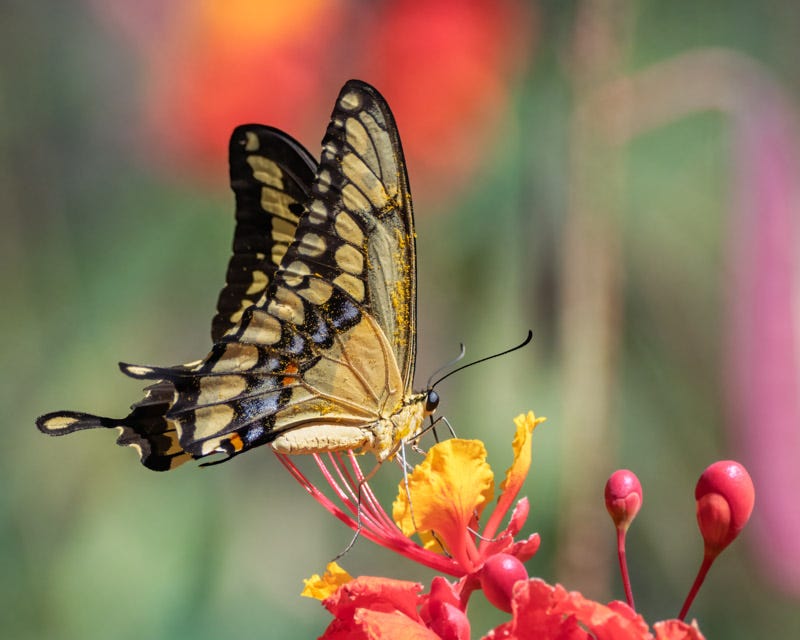
As large as its wings are, the butterfly practically disappears when seen from the front or the back.
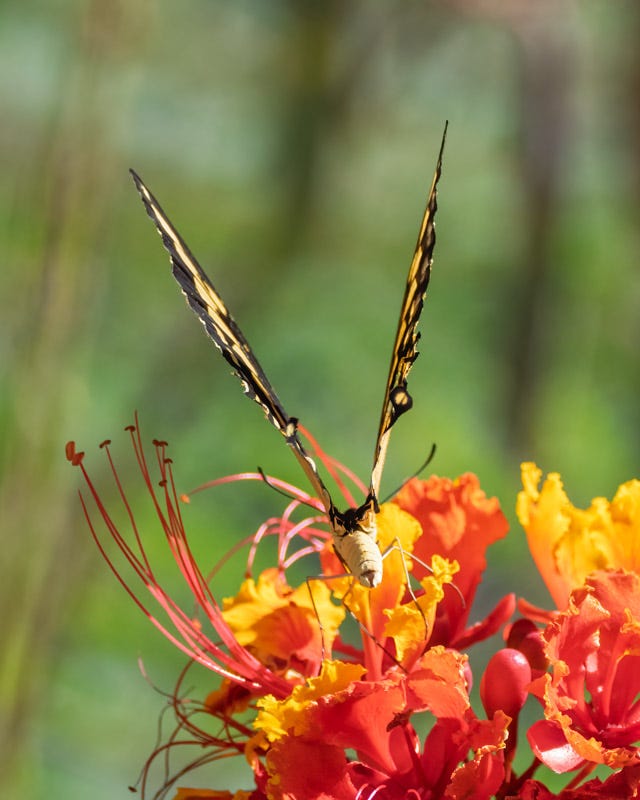
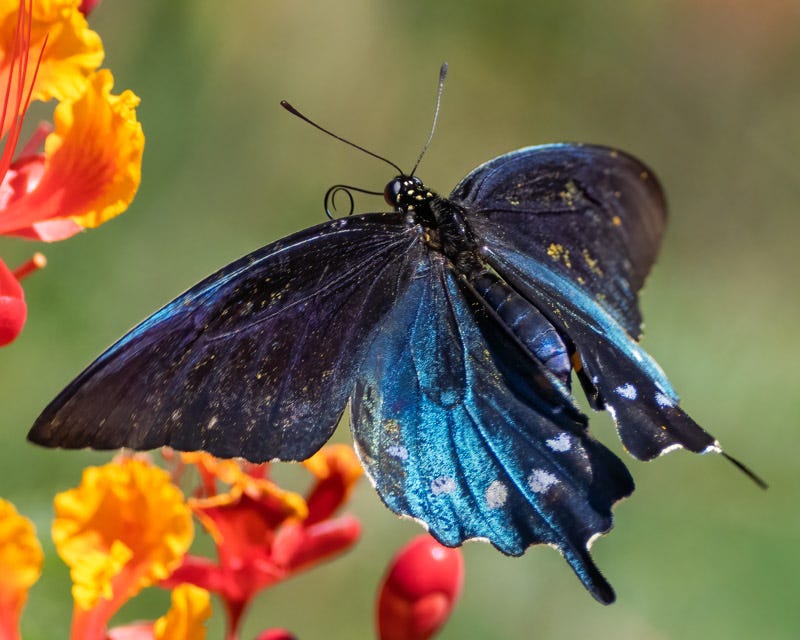
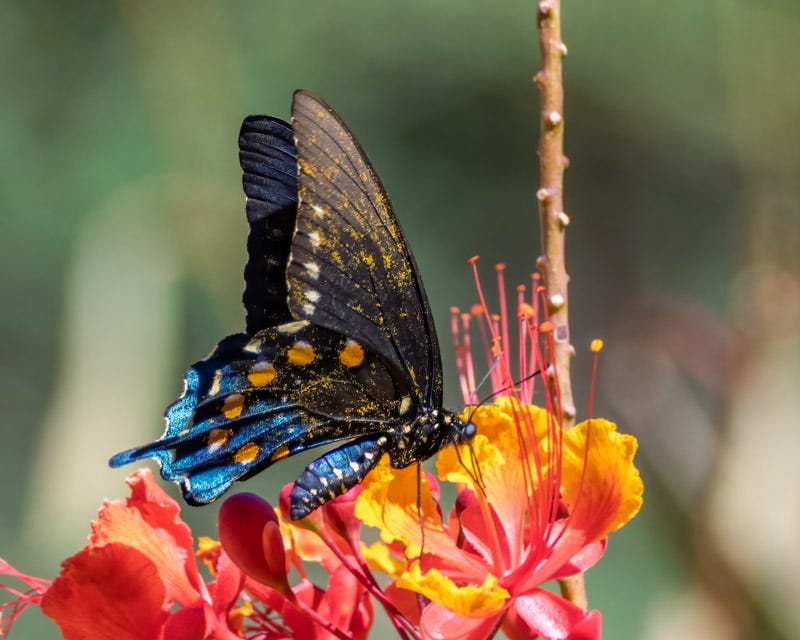
Pipevine Swallowtails are one of the common butterflies we have in the Tucson area. They are also a large species with a wingspan of about four inches. This butterfly also has been dusted with a good amount of pollen. Pipevine Swallowtails have iridescent blue wings with seven orange spots on the underwing. Those bright colors warn predators that the Pipevine is very toxic, a defense it carries over from its diet of acidic pipevine plants during its caterpillar stage.
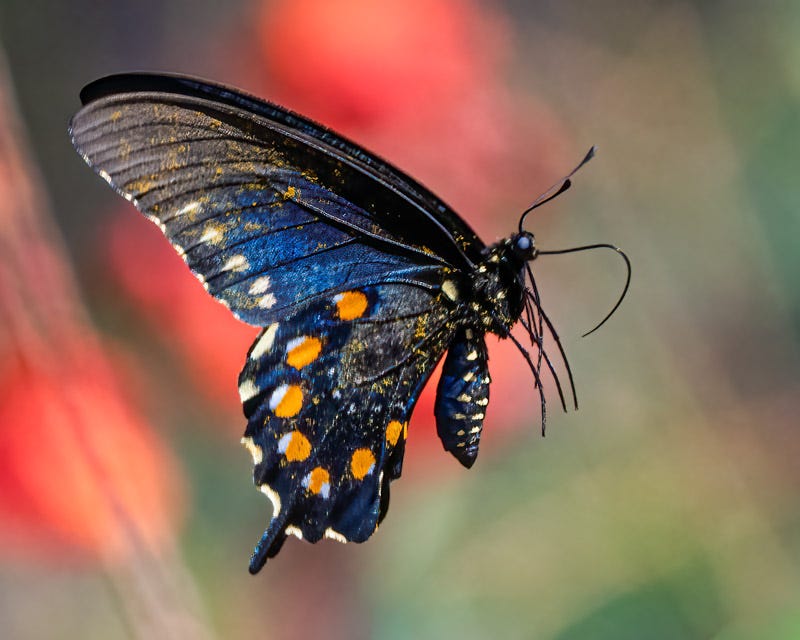
The upperwings of the Pipevine Swallowtail are also dusted in pollen. The forewing is dark while the hindwing is an iridescent blue. You can see the long tail extension that gave this butterfly its name.
You can imagine how the front of the butterfly’s wings pick up pollen. While the butterfly is taking in nectar from the heart of the flower, its wings may be flapping against the male part of the flower. (Here’s the High School Biology reminder: the tall red filament is the stamen, and on the top of the stamen is the golden anther where the yellow, powdery pollen grains are.)
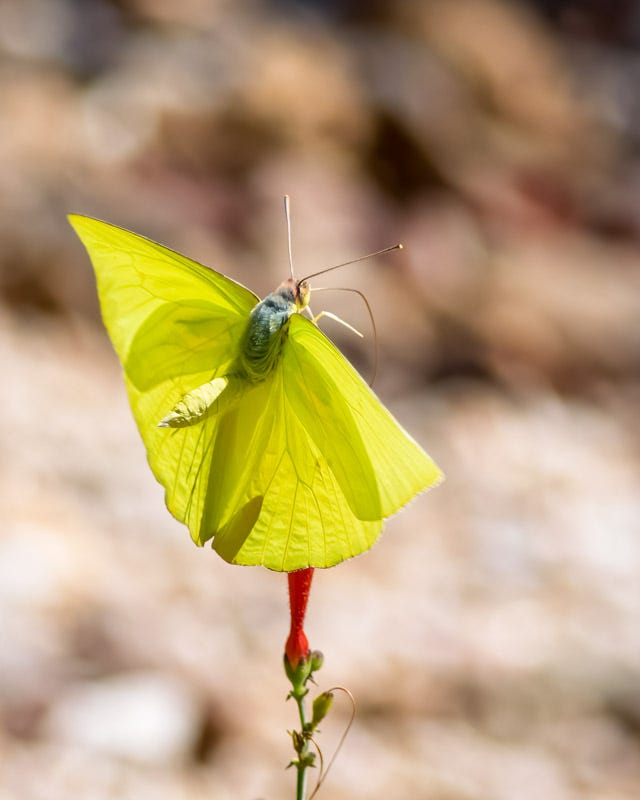
The third butterfly from that morning is the Cloudless Sulphur. I love how, when caught in flight, you can see the shadows of its body and of the layered wings. Butterflies in flight carry their proboscis coiled while in flight. The proboscis is a tube-like mouthpart used to take in nectar.
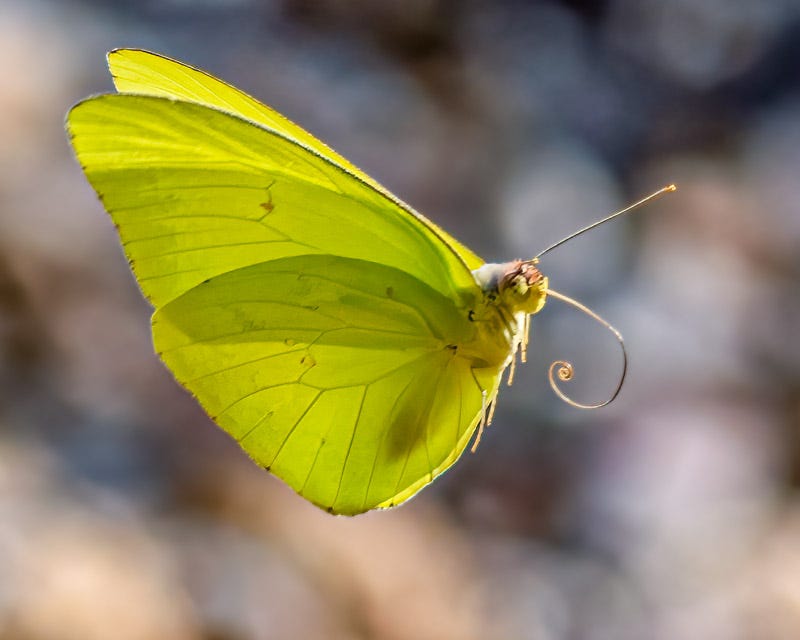
Cloudless Sulphurs are another very common butterfly species in our area. They are smaller than the Swallowtails but a good sized butterfly. While the plain yellow wings appear to have little patterning, the male Cloudless Sulphur’s wings have hidden UV patterns that the females can see. Females can recognize those UV patterns to tell the males of their species apart from other local yellow butterflies.
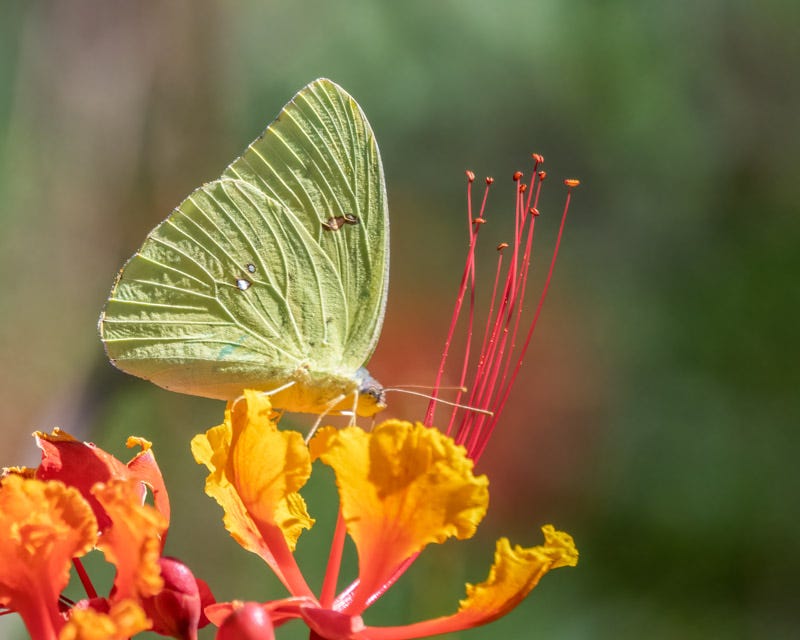
Senna and Cassia are favored host plants for the Cloudless Sulphurs. They lay their eggs on these plants which are the food source for their caterpillars. Of course, many other flowering plants offer nectar for feeding the butterflies.
“The caterpillar does all the work, but the butterfly gets all the publicity.”
― George Carlin
Beautiful and graceful, varied and enchanting, small but approachable, butterflies lead you to the sunny side of life. And everyone deserves a little sunshine.” —Jeffrey Glassberg
Popular Science summarizes an interesting study that showed how the wing patterns of butterflies create optical illusions for their predators:
Wow, Dan, I can't believe you were able to take such good photos of butterflies in wind! And some in flight. Thank you, too, for the narrative. Learned something new about butterflies.
Really like the Cloudless Sulphur photos