

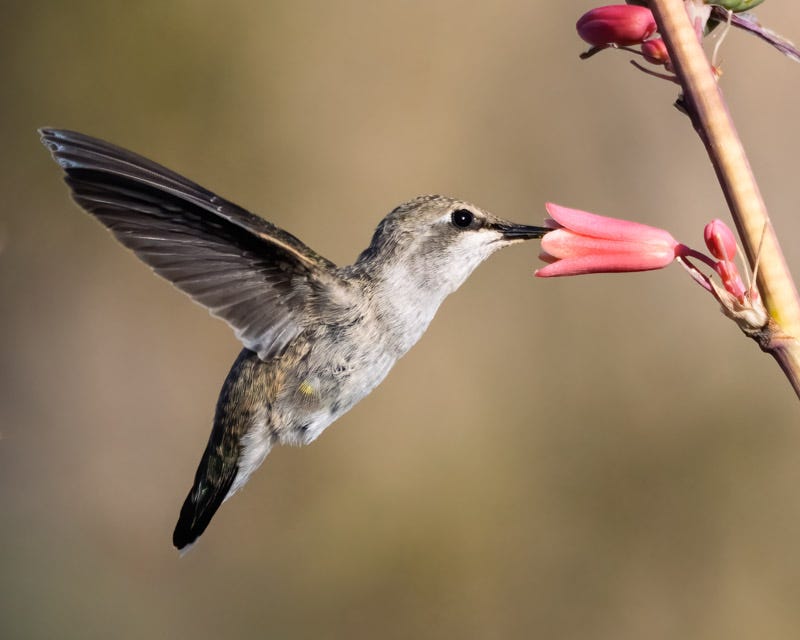
I mentioned that I have access to a private golf course on the edge of town and I’m able to bird there with friends once a month. Below is a collection of photos from one of our recent trips. Many plants were flowering and the hummingbirds were taking advantage of the new sources of nectar.
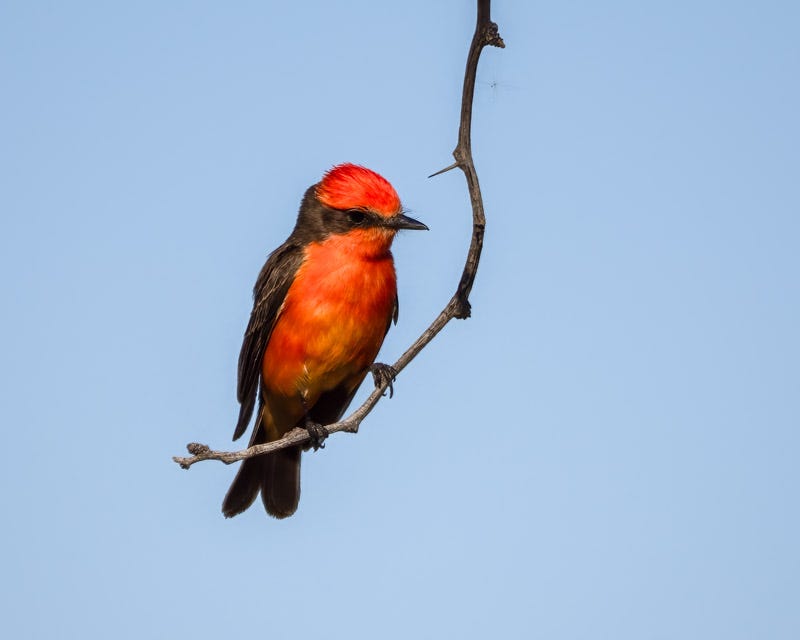
Vermilion Flycatchers are residents of this course. You can find them on pretty much any field or grassy area throughout the Tucson Valley. The male Vermilion, perching in the open with its bright, red color, always attracts attention.
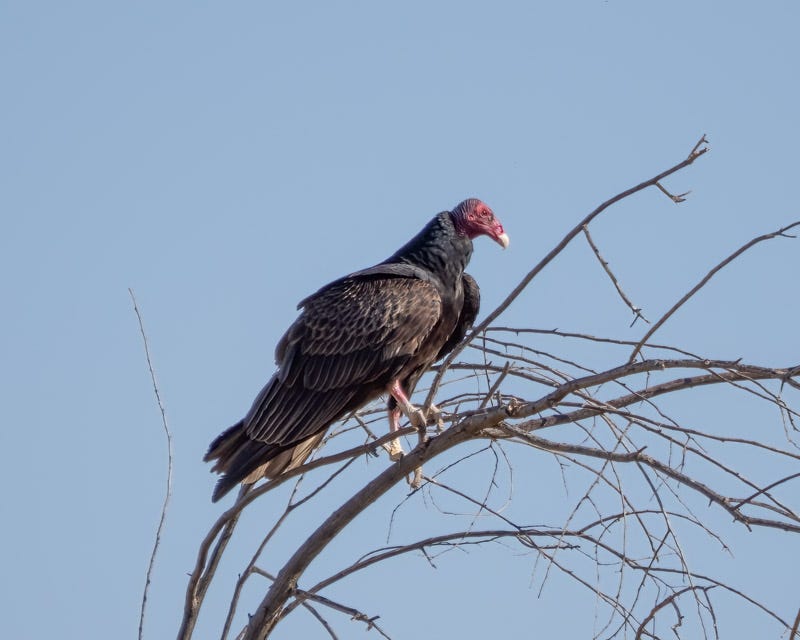
One Turkey Vulture was perched on a tree all by itself. Usually this is a species that you notice soaring lazily overhead so it is always a treat to come across one that is perched. The morning hadn’t heated up yet and this bird was waiting for the thermals to develop to help take him up into the sky.
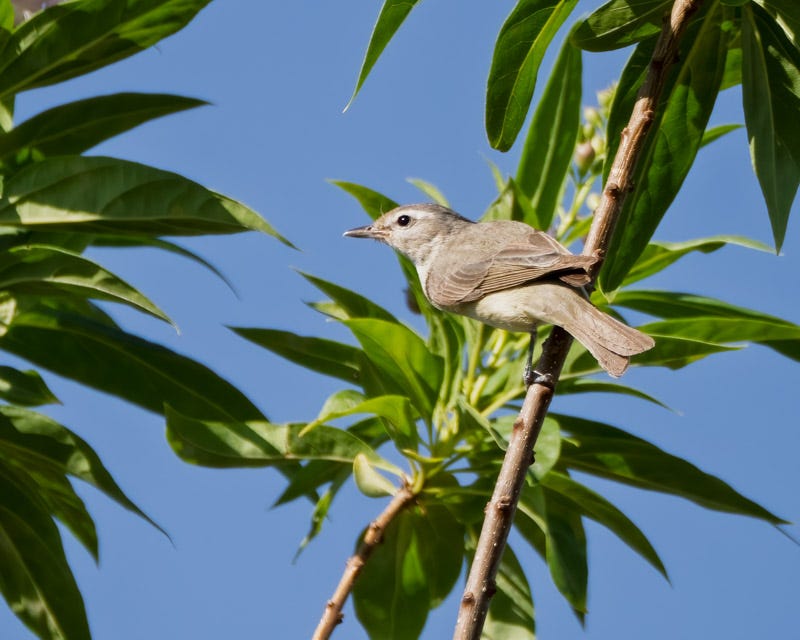
Bell’s Vireos are always a sign of summer in Tucson. You can hear them singing in any desert thicket around town, but it is hard to get a glimpse of them. Listen to the very first song at this AllAboutBirds site to hear the common Bell’s Vireo call. Some people describe it as the bird asking a question, and then answering the question. The Desert Museum shares a bit more about these birds.
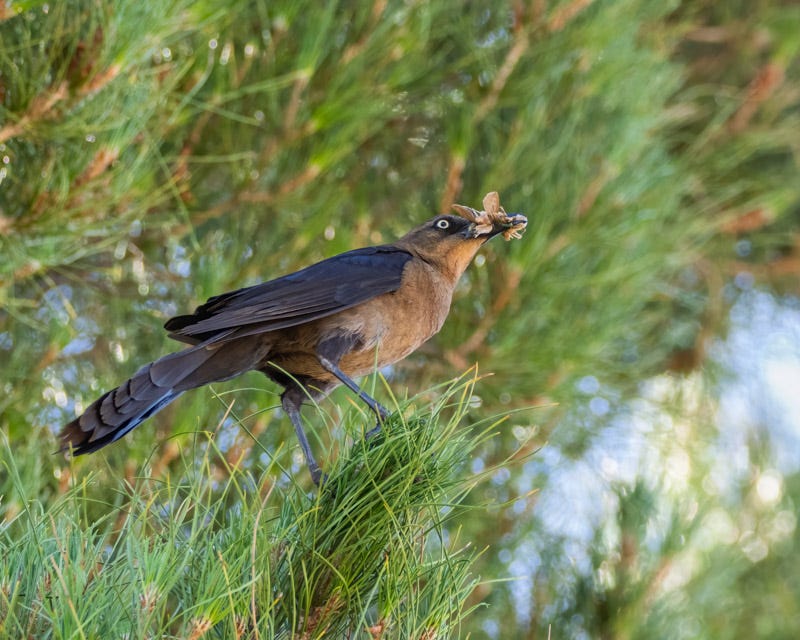
This golf course has quite a bit of water throughout. There are small creeks and ponds. The ponds are thickly lined with reeds, and wherever you have thick reeds along water, you will likely have Red-winged Blackbirds and Great-tailed Grackles nesting. This female Grackle obviously had some babies in the nest to feed. She had hunted successfully and, with a mouthful of groceries, was ready to head back to the nest.
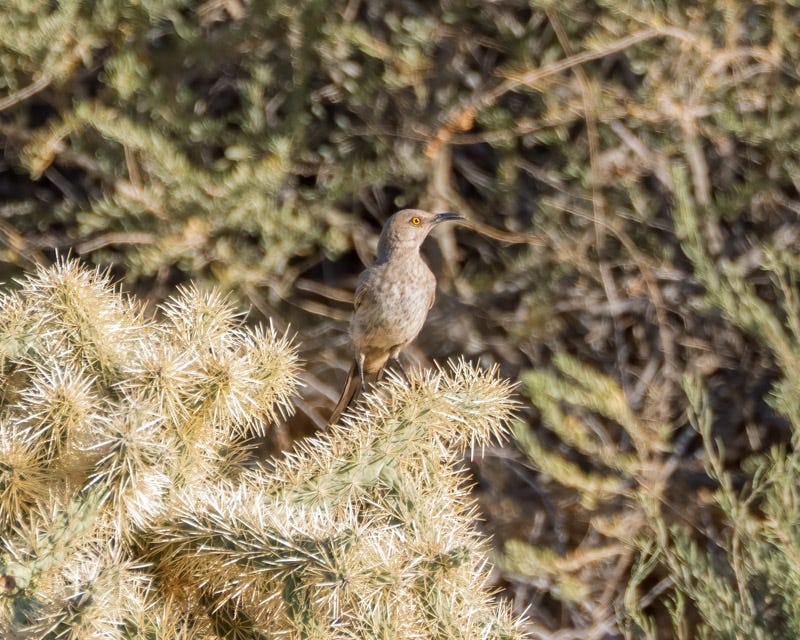
Alongside the course are extensive tracts of desert. Where you have cholla cactus, you will have Cactus Wrens and Curve-billed Thrashers. It is always fascinating to see these birds calmly walking across Cholla Cactus that I wouldn’t dare to get close to! The Curve-billed Thrasher moved smoothly and without hesitation across the sharp spines.
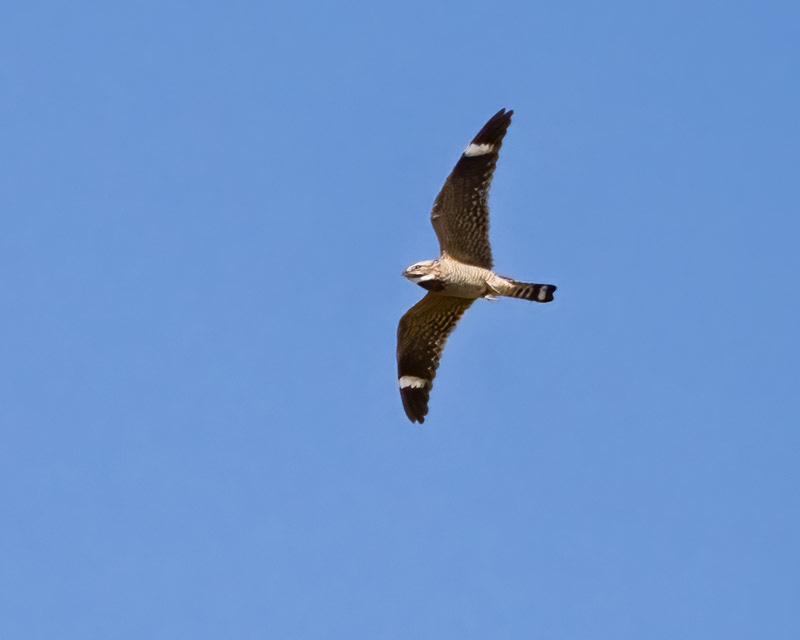
We had yet another surprise that is typical during springtime in the desert. At this time of year, we expect to see Lesser Nighthawks in the evening skies. These birds come to Tucson from Mexico during breeding season. They generally never fly during the daytime, hence their name “Nighthawks”. But when they have young on the nest or the night is short, Lesser Nighthawks may be seen during summer mornings continuing to find food for hungry babies back on the nest.
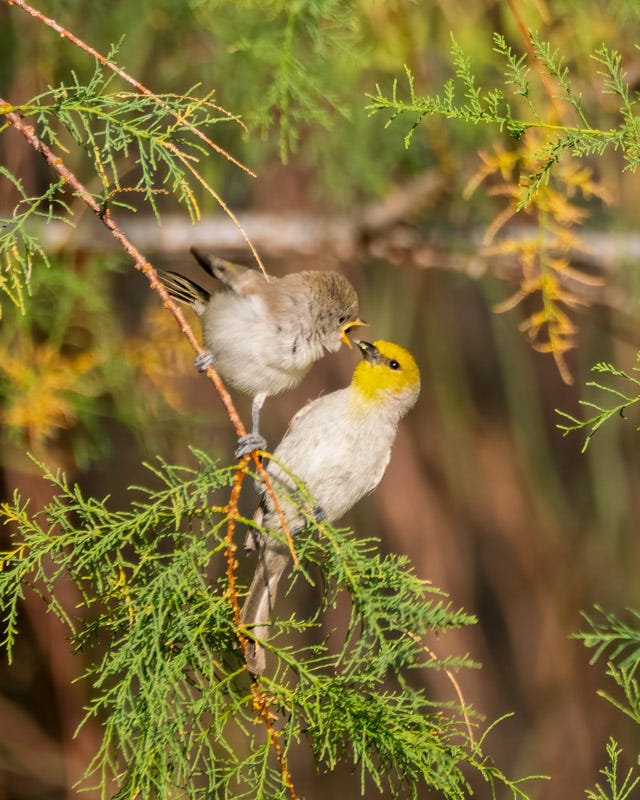
The springtime breeding season sights continued. We saw two juvenile Verdins in the trees alongside a small creek. They spent their time flapping their wings and begging for food. The adults kept busy finding little tiny insects and feeding their young.
This particular morning, the heat of summer had yet to arrive so we spent several nice hours on our adventure.
What a terrific array of fabulous birds.
Thanks, Dan!
Patti
The Verdin parent feeding the youngster is so precious!!