

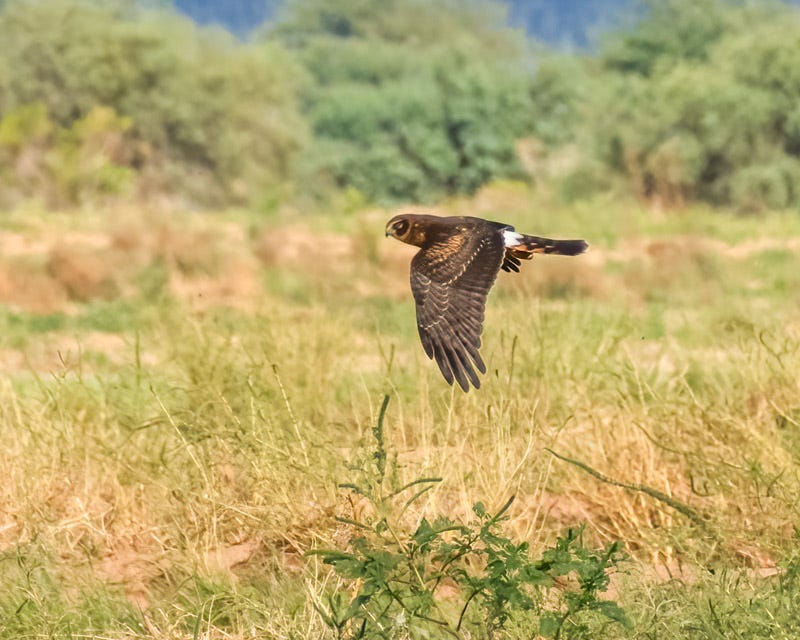
In mid-September I saw this good looking female Northern Harrier repeatedly flying over a local farm. Northern Harriers aren’t really found in southern Arizona during the summer breeding season but many of them come to our area for the winter. In the photo below, you can see that the tail’s ‘deck feathers’- the two middle feathers- are darker than the other tail feathers. This is a characteristic of adult female and juvenile Northern Harriers.
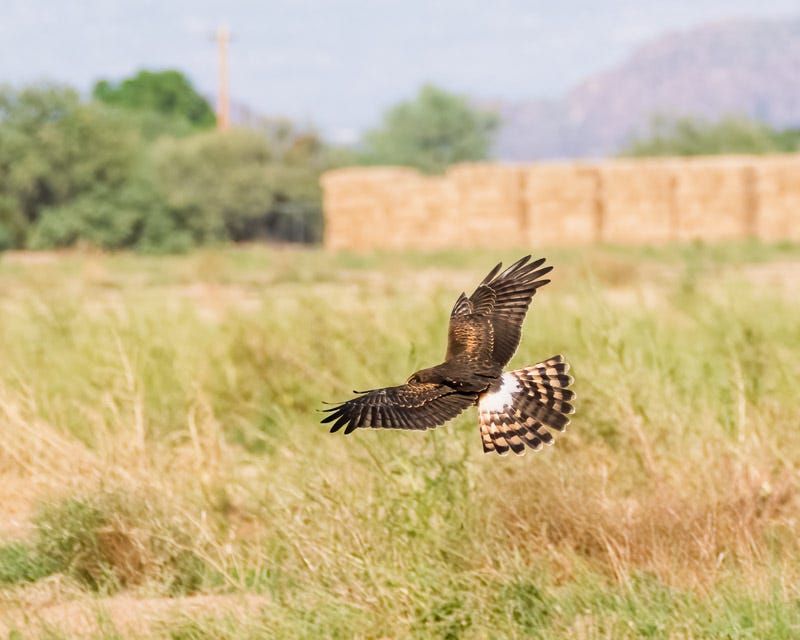
Northern Harriers, formerly called Marsh Hawks, have an interesting hunting style. They are one raptor that depends on sound as much as site to find their prey. They will course back-and-forth low over the land. The Harriers are looking for and listening for their prey.
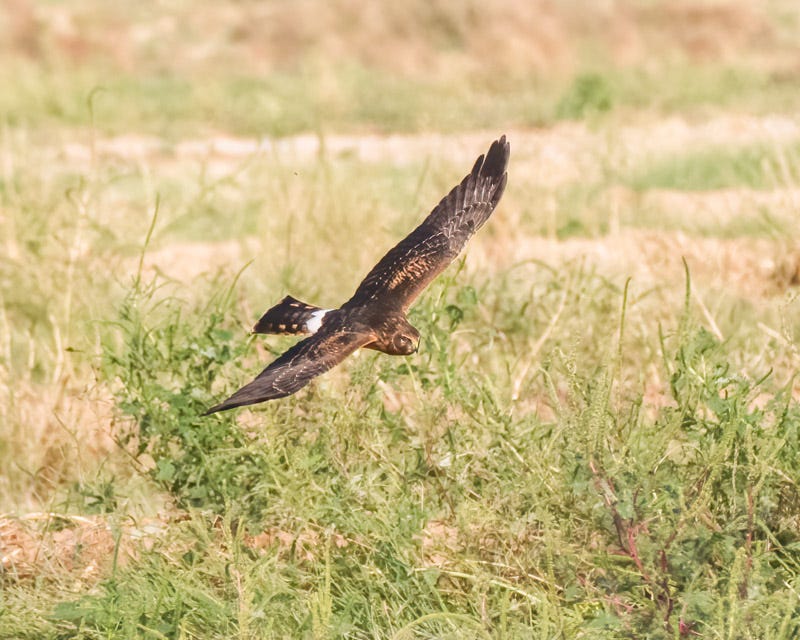
The primary prey for these Raptors are small mammals particularly the wide variety of rodents in the Sonoran Desert. They may also prey on small songbirds or reptiles. Northern Harriers are opportunistic hunters.
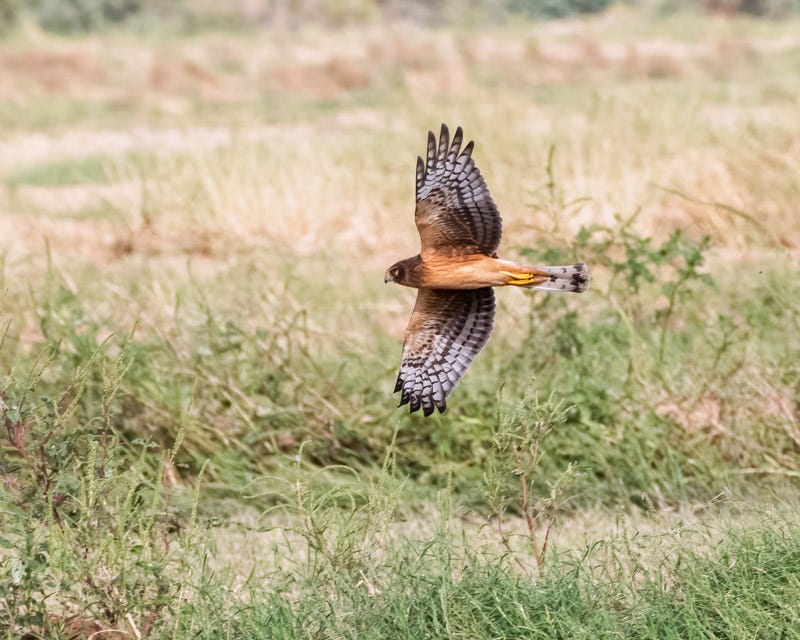
If they don’t find anything after passing over a field or expanse of land, they may fly a little higher to get a broader look over a larger area of land. Those long wings allow for buoyant flight. The females are dark brown above and both male and female Northern Harriers have that white rump patch.
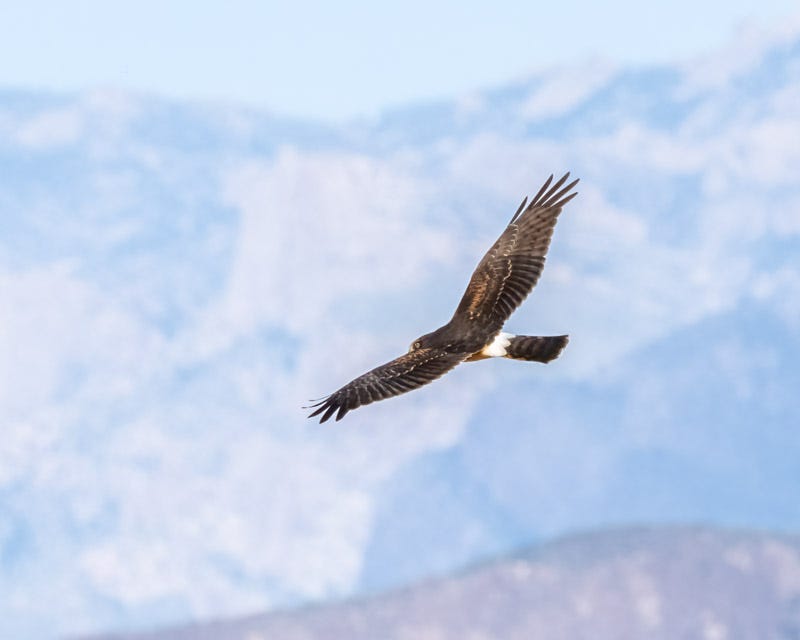
This farm was in the Avra Velley and you could see both the Tucson mountains and the Catalina mountains in the background
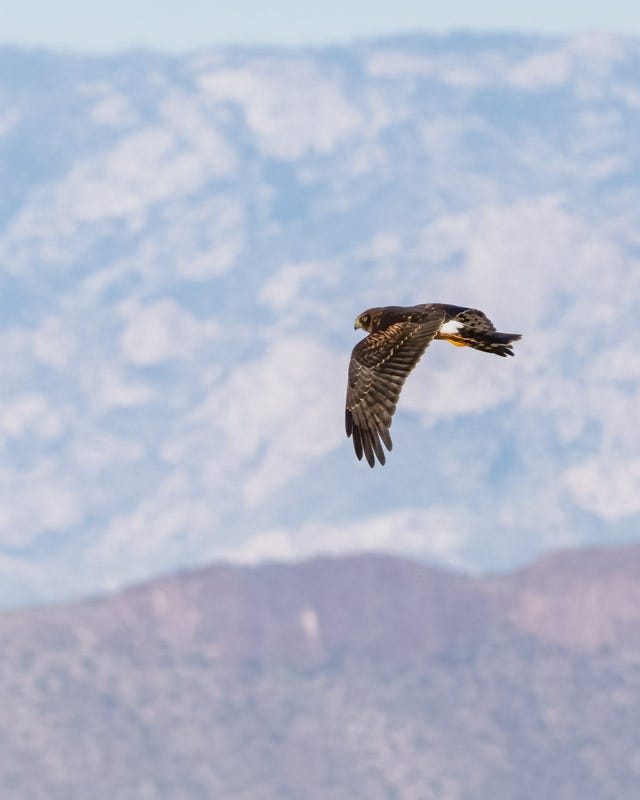
Each of these series of photos are meant to show how this raptor uses her wings to sustain flight when she is higher off the ground. Much of its air time then is spent seemingly coasting without rigorous wing flapping.
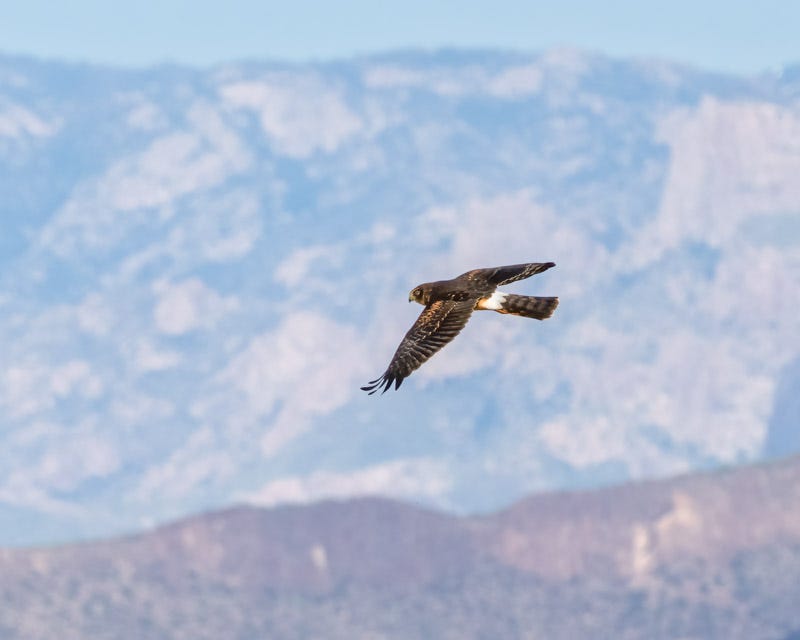
To capture prey though, the Northern Harrier must be low to the ground. In the picture below, you can see the outline of the bird’s facial disc. Much like the face of owls, the Northern Harrier’s face is meant to help them hear and capture sound. The feathers inside that facial disc all help move sound to the bird’s ears as it quietly moves across the landscape.
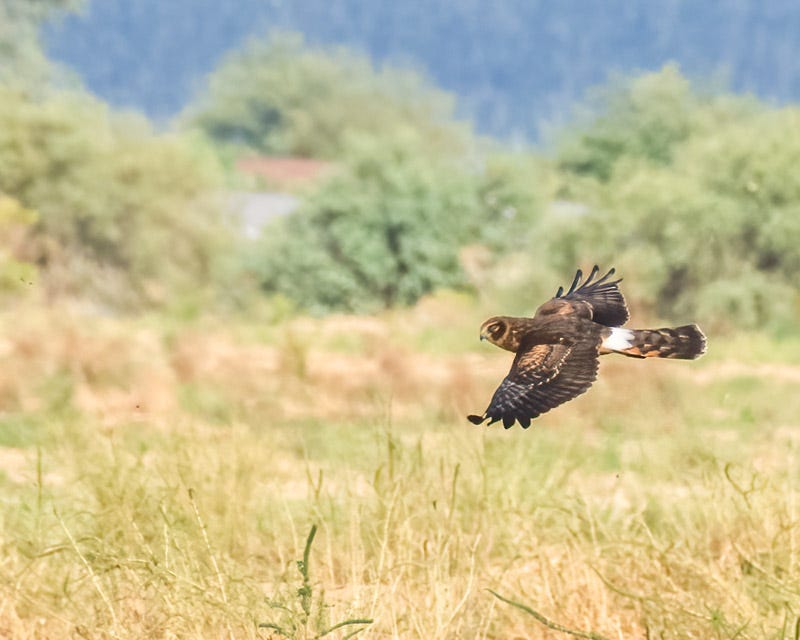
When it hears a sound it will turn quickly to angle towards the source.
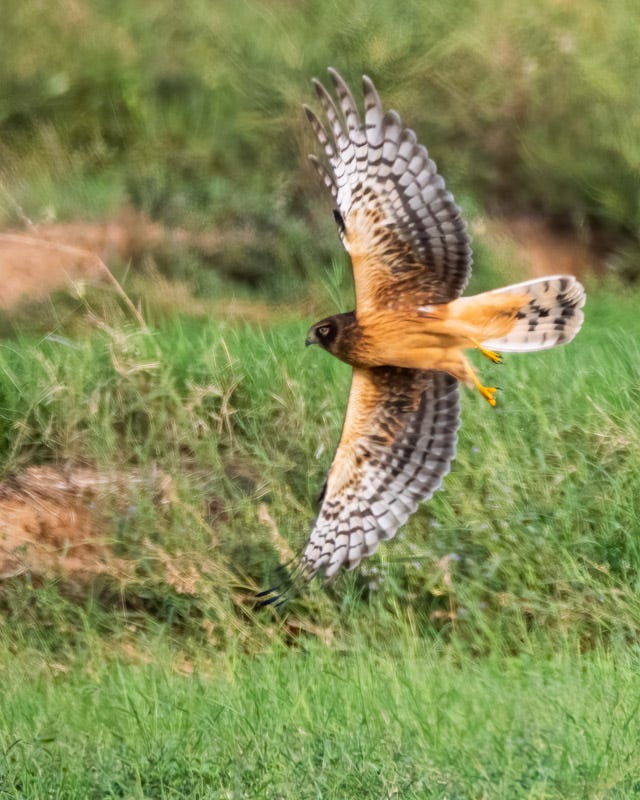
The final photo below just might be my favorite. The bird looks like it is intent on hunting and is just a foot or two above the surface of the field where an unsuspecting field mouse might be found.
It was a real treat to watch this Harrier hunting back-and-forth over the farm field. I look forward to seeing more of this species throughout the winter season. In southern Arizona they may be found in wide open landscapes where little vegetation blocks their view and they can use their low-flying, sweeping search style. They may be seen in the agricultural areas northwest of Tucson, the grasslands southeast of Tucson and even in open desert scrub with sparse vegetation. In town they may be found over some local golf courses and Sweetwater Wetlands.
If you’d like to see more about Northern Harriers, you can view my previous post about a male “Gray Ghost” Northern Harrier here and another post about Northern Harriers here.