

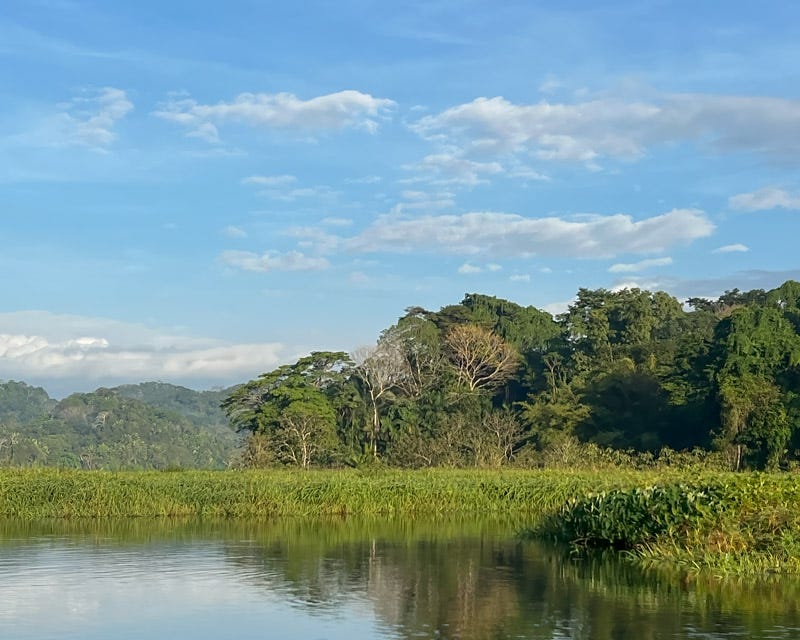
The 105-mile-long Chagres River is the largest river in the Panama Canal’s watershed, crucial for operating the canal by supplying 80% of its water. It runs northwest to the Caribbean but is dammed to form Gatun Lake and Lake Alajuela, allowing flow into both the Caribbean Sea and the Pacific Ocean. From our stay at the Gamboa Rainforest Resort, we took an early morning ride. The photo below shows a typical view of our ride through the river.
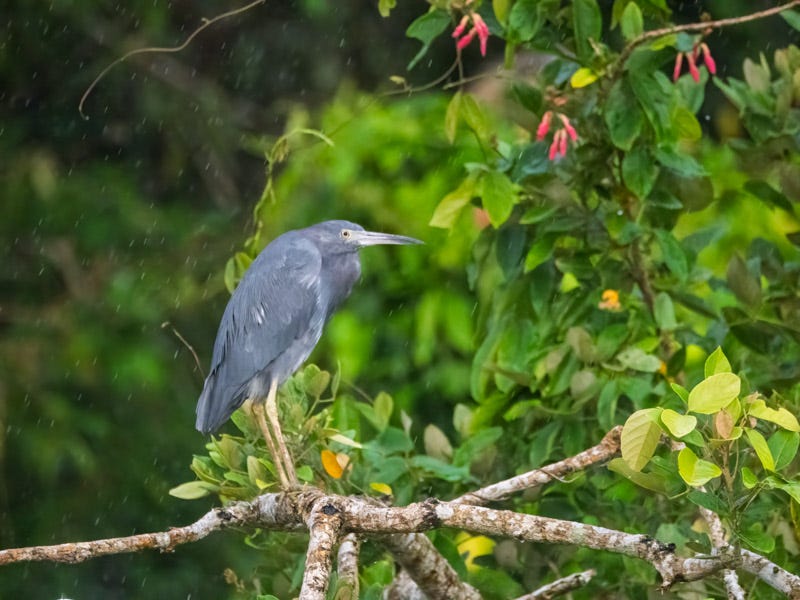
We traveled to Panama during the “dry season”, but apparently dry season doesn’t mean there is no rain, it just means there is little rain. As soon as we got on the boat at 7:00 AM, it began pouring rain. It rained for perhaps a half hour. My camera had already fogged up due to the high humidity and temperature. That plus the movement of the boat combined with the rain did not help me get any decent photos early on. As the rain was letting up I was able to get a shot of this Little Blue Heron. You can see the rain falling in this photo.
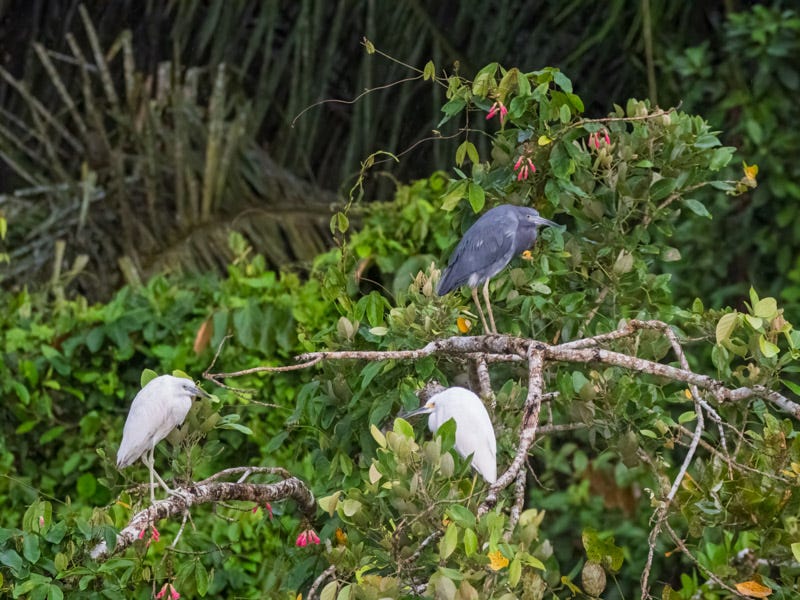
Seconds later the rain stopped and the Little Blue Heron and two juvenile Little Blue Herons brightened my morning. The juveniles are the white birds in this shot. There are Little Blue Herons in the US, but they are not typically seen in Arizona as this range map indicates. The juvenile Little Blue Herons look very similar to Snowy Egrets. If you look closely at these white birds, you will see that they have a gray bill with a black tip. Snowy Egrets have all black beaks. Snowy Egrets have black legs and these two juvie Little Blues have rather pale legs.
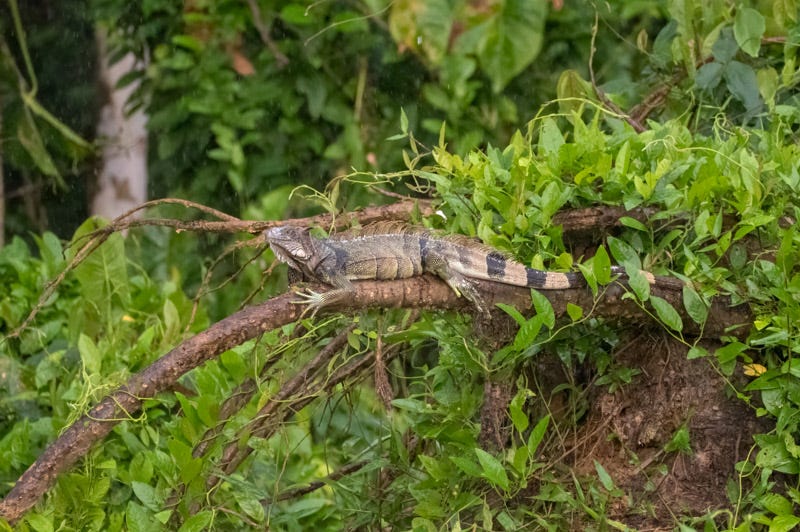
Just to the right of those birds sat a Green Iguana. Juvenile Green Iguanas are green, helping them to blend into the forest. As they mature, their color changes. They are large reptiles. Locally known as “la gallina de palo” (chicken from the tree), they face hunting pressure as a source of food. Green Iguanas can grow up to six feet long and weigh between 10 and 20 pounds.
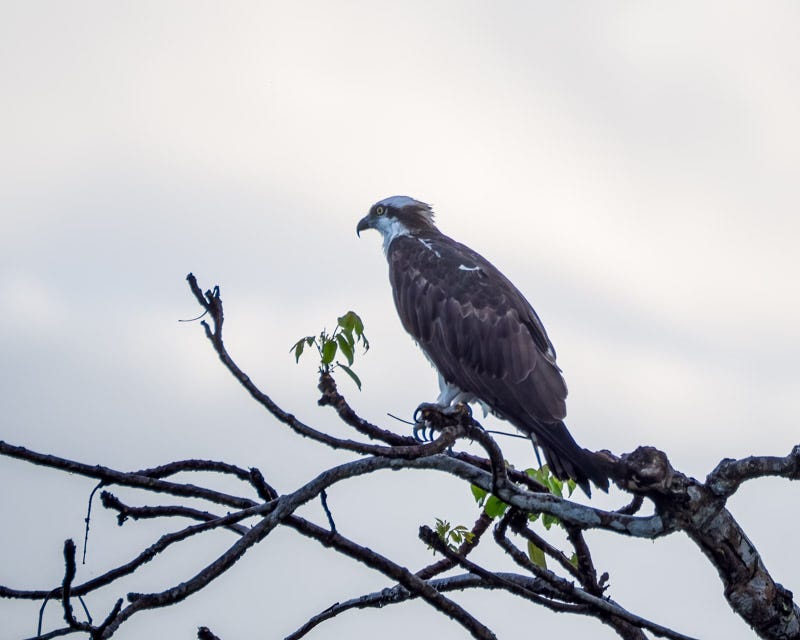
While it was still cloudy and gray, we passed an Osprey that was overlooking the river. Osprey almost exclusively hunt fish. We may see a few Osprey in Tucson during migration season or during winter when they discover some of Tucson’s well stocked urban fishing lakes. The mascot of the Seattle Seahawks Football team was inspired by these birds.
We saw a group of Smooth-billed Ani on one floating island of vegetation. These large birds are part of the cuckoo family, the same family as our Roadrunners. The large beak on these birds is so unusual looking.
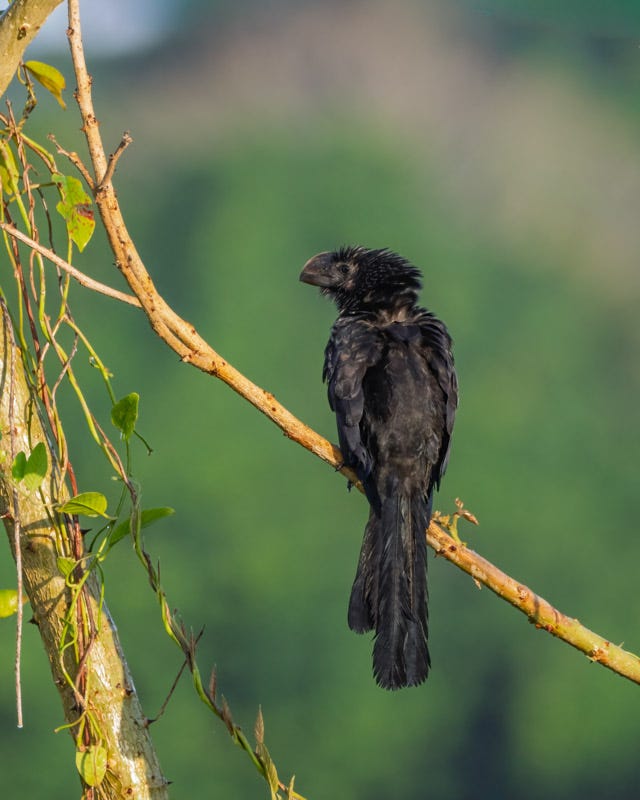
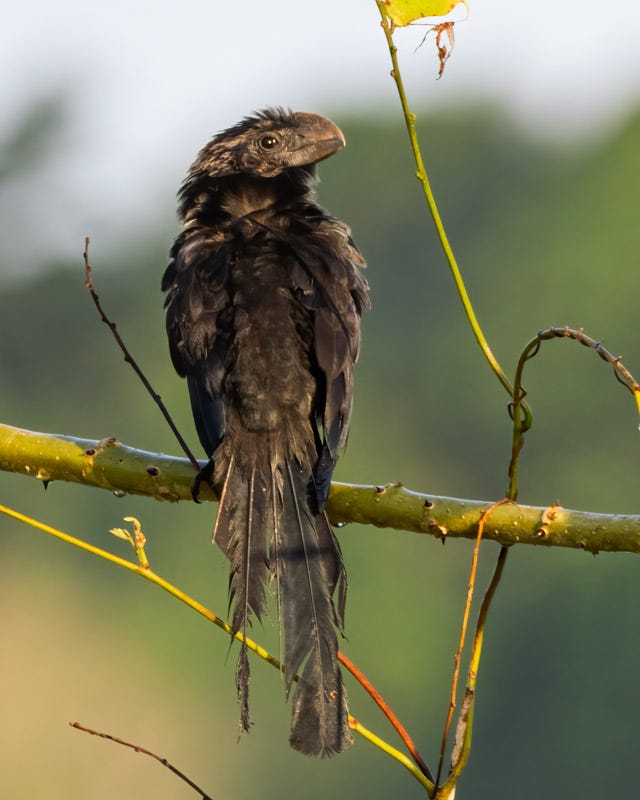
This Smooth-billed Ani may have had a smooth bill, but its tail feathers were pretty tattered. I’m sure this bird will drop those feathers at some point and grow new ones. You can learn more about these Ani from the Audubon bird guide here. https://www.audubon.org/field-guide/bird/smooth-billed-ani
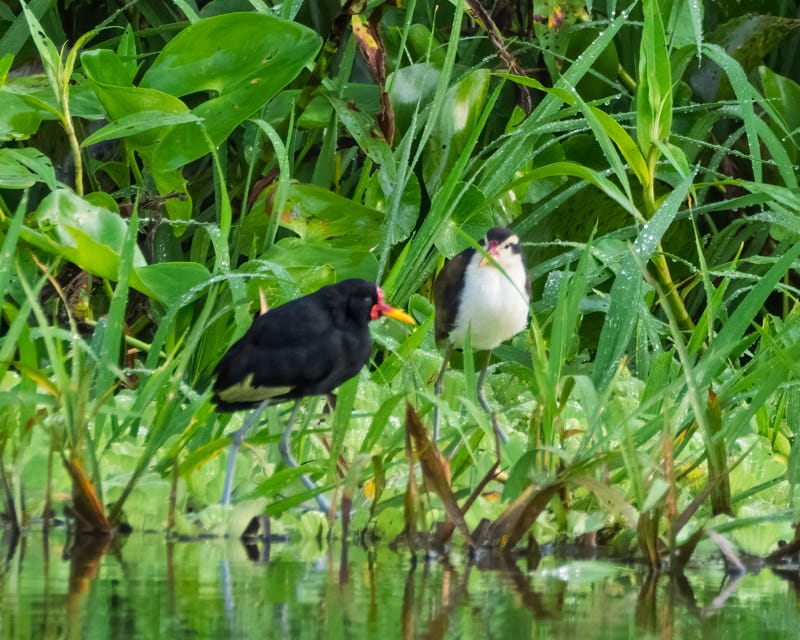
The Wattled Jacana is a marsh bird, all black with a red forehead and a red “wattle” hanging down from its face. The adult is seen here with a juvenile Wattled Jacana which has a white stripe over its eyes and white underparts. This species is present throughout the tropics and subtropics of South America and is found in just about all freshwater wetlands there. While these Jacanas look like our American Coots, they are not related at all. Convergent evolution has resulted in their similar appearance but they belong to very different families of birds.
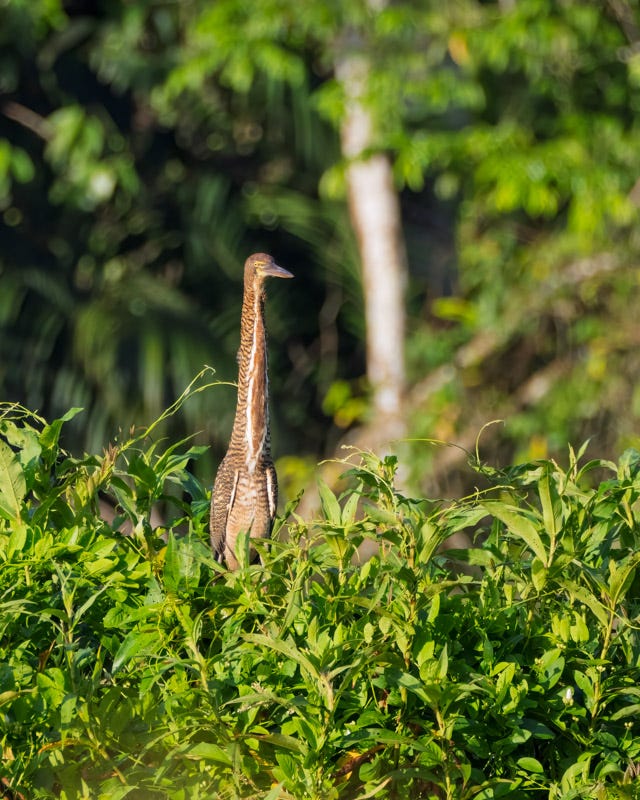
One of the nice ‘finds’ of that boat ride was a very distant juvenile Rufescent Tiger-Heron. These birds are residents from southern Mexico down through northern Argentina. They look similar to other birds in the Egret and Heron family. The Rufescent Tiger-Heron is smaller than our Great Blue Herons and Great Egrets but larger than Little Green Herons or Snowy Egrets.
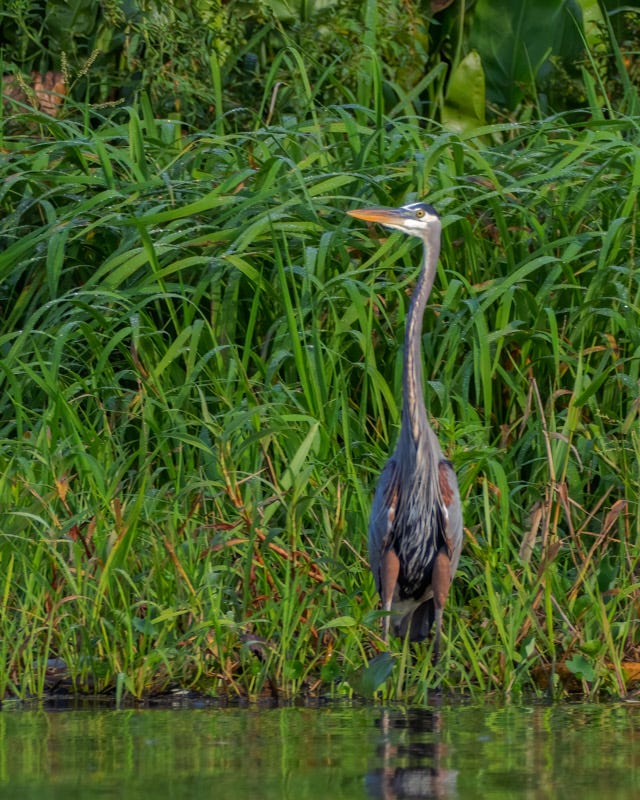
This Great Blue Heron was on an opposite bank to the Tiger Heron. Its colors looked very rich in that dark and wet environment compared to what I usually see in the Tucson area.
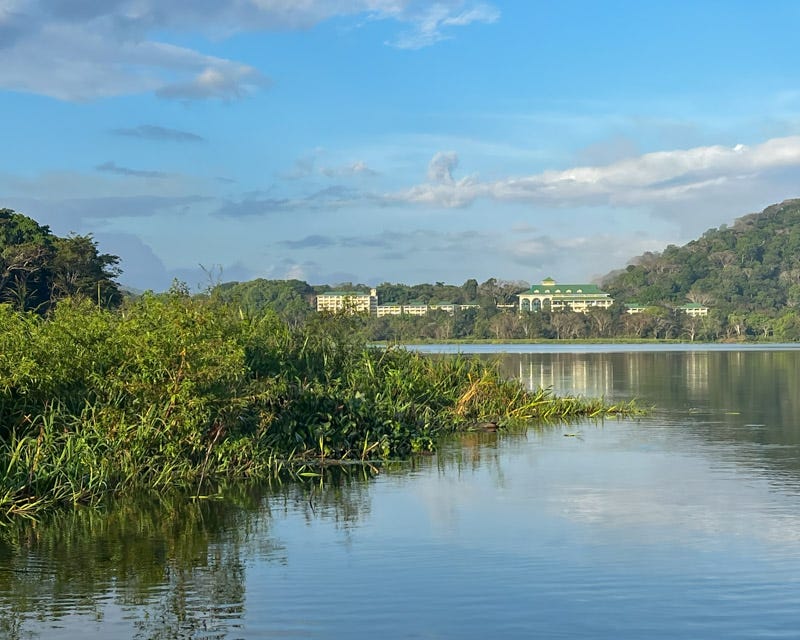
Heading back to the dock we had a nice look at the Rainforest hotel we were staying at.
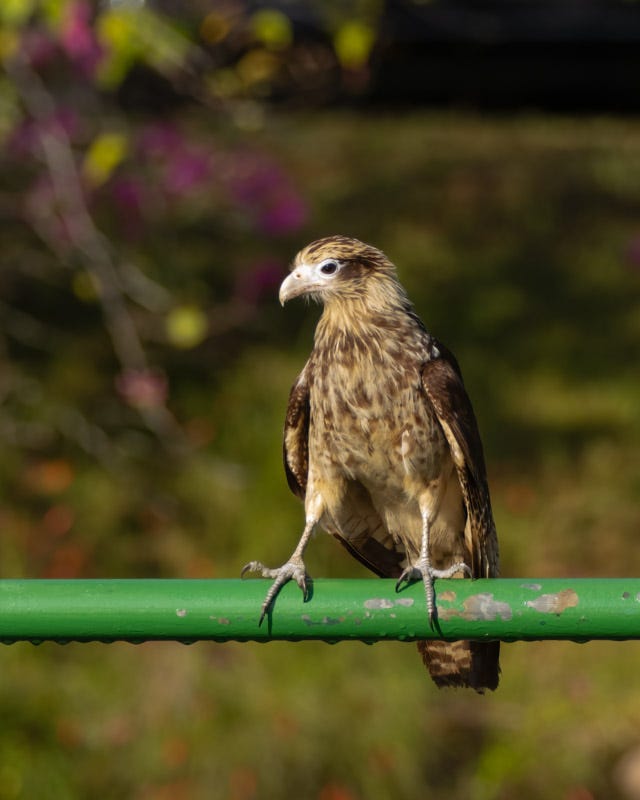
As the boat docked, there were a number of juvenile Yellow-headed Caracara on the ground and on the rails. I thought it was so unusual to see raptors so “tame” around humans. They may have been looking for scraps of fish from other fishing boats. Who knows, but it was fun to see them.
Traveling through this rich riverside rainforest was very special.
What a great trip! (I misread and thought that the Wattled Jacana had white underpants!)😅
What a great outing! Thank you!