

On a recent Wednesday, I signed up for one of the Tucson Bird Alliance’s regular weekly field trips to Sweetwater. A pair of Cooper’s Hawks successfully nested at Sweetwater again this year. The three young have left the nest and are hunting successfully on their own. As we began our bird walk, one of the youngsters flew into a cottonwood tree ahead of us.
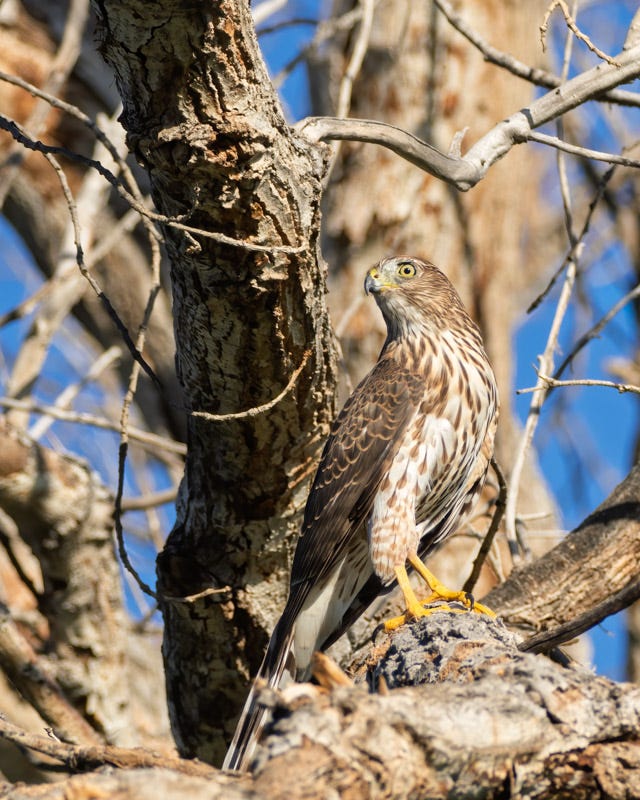
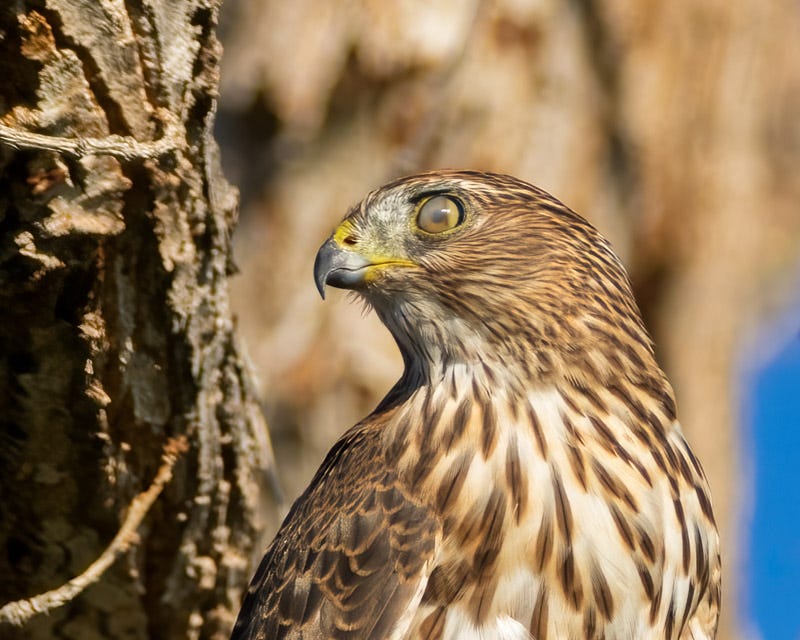
Cooper’s Hawks are so common throughout the Tucson area. They are a woodland bird that has adapted extremely well to the urban Tucson setting. Our city has enough trees, water, and prey (doves and sparrows) so that the Cooper’s Hawks live an easy life here. They have habituated to human presence and are fairly comfortable around people. As we watched this Hawk, I captured a ‘blink’ of its nictitating membrane, described by Birdnote here.
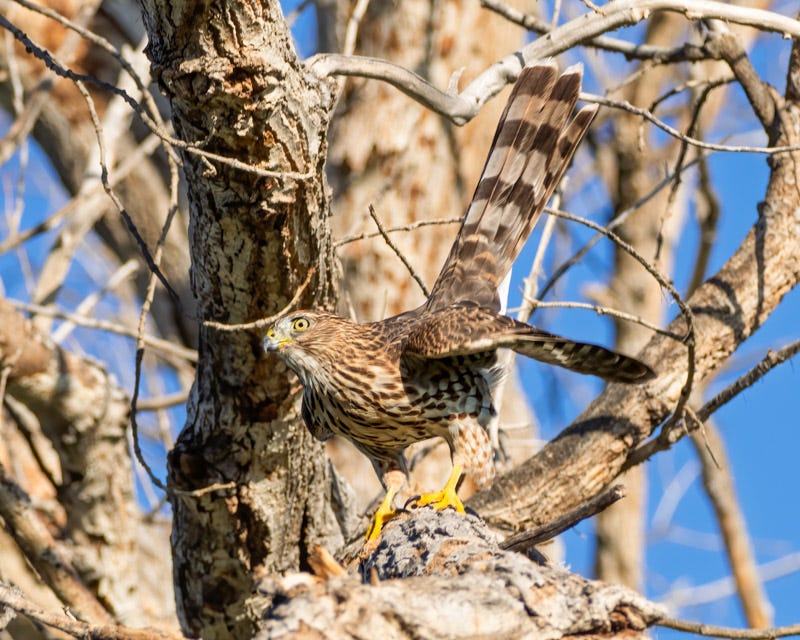
The Cooper’s Hawk decided to move on.
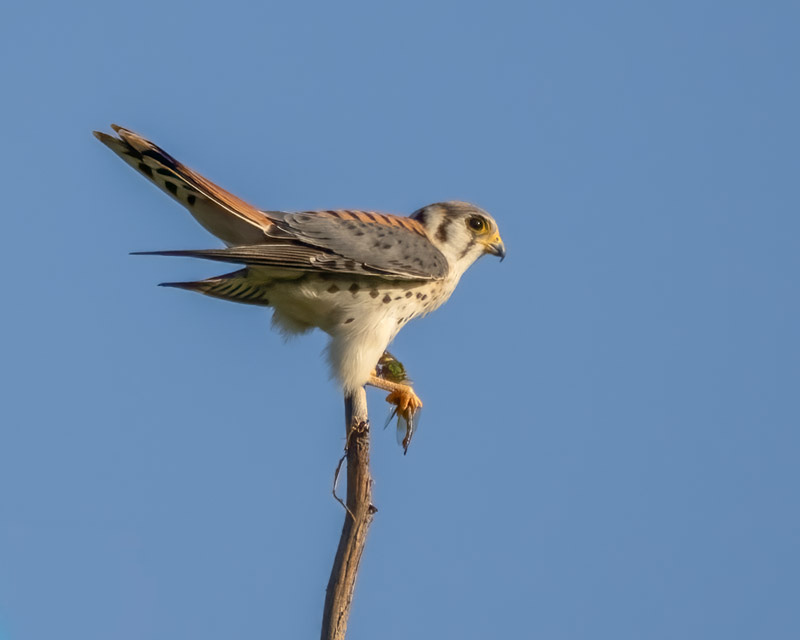
A male American Kestrel perched on a tall snag. It spotted a dragonfly and swooped down, capturing it in one motion and returning to its high perch.
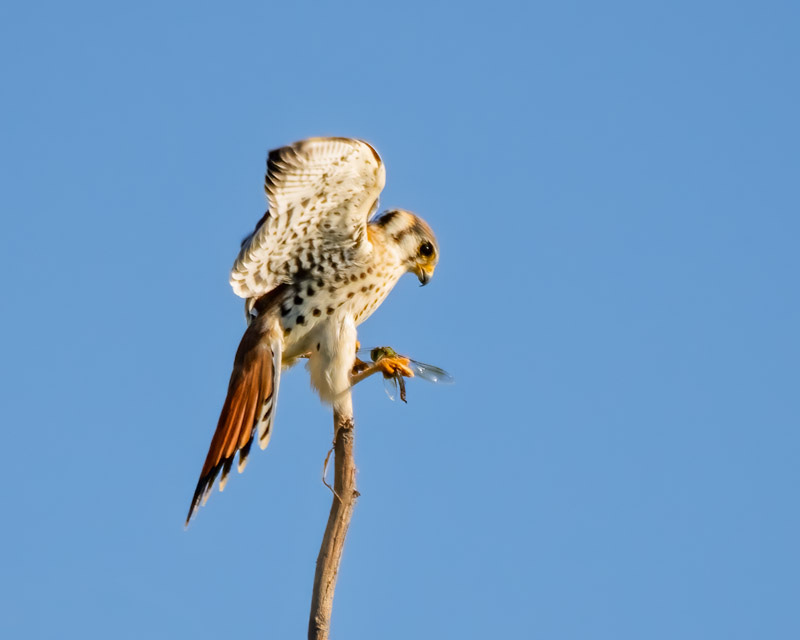
The Kestrel caught what I think is a Green Darner. At this time of year insects make up a large portion of the Kestrel’s diet. The blue-gray wings and the spots on its belly tell us this is a male American Kestrel.
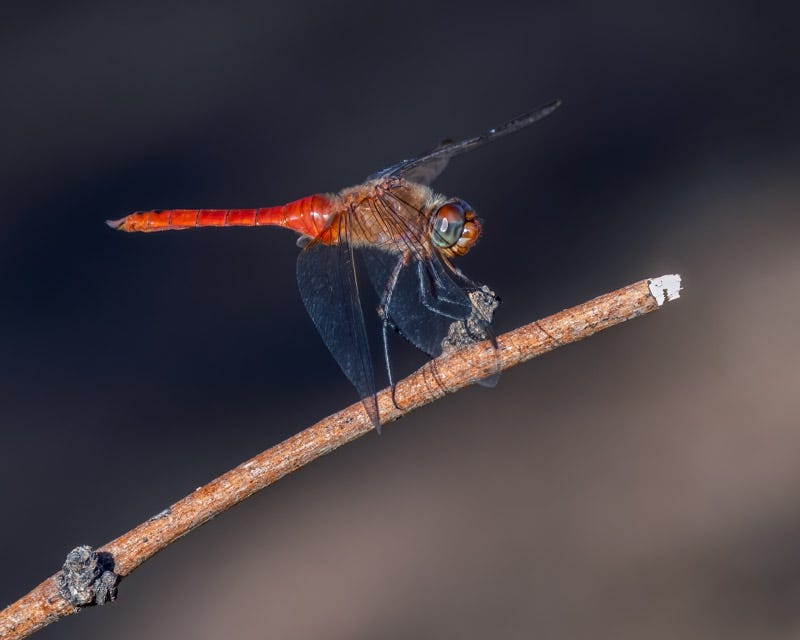
A Red-tailed Pennant was perched prominently. This dragonfly’s abdomen is a brilliant red, a striking look.
We have Great Blue Herons year-round in Tucson. One place that you are almost guaranteed to find them is on Silverbell Road at Danny Lopez Park, once known as Christopher Columbus Park. We saw a flyover of a few Great Blue Herons who were probably just on an outing from Danny Lopez Park which is directly across the Santa Cruz River from Sweetwater.
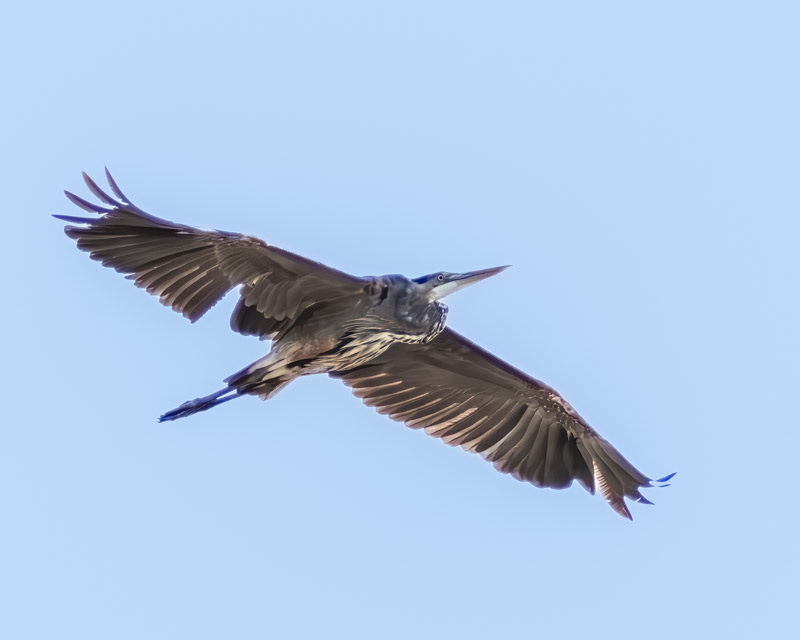
In flight, Great Blue Herons look prehistoric with their six-foot wingspan, slow wingbeats, and their long legs trailing behind.
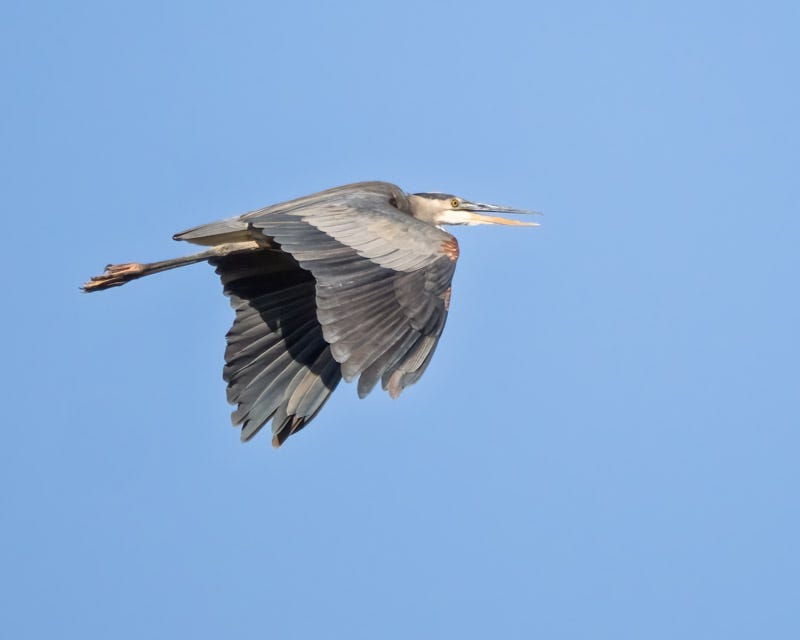
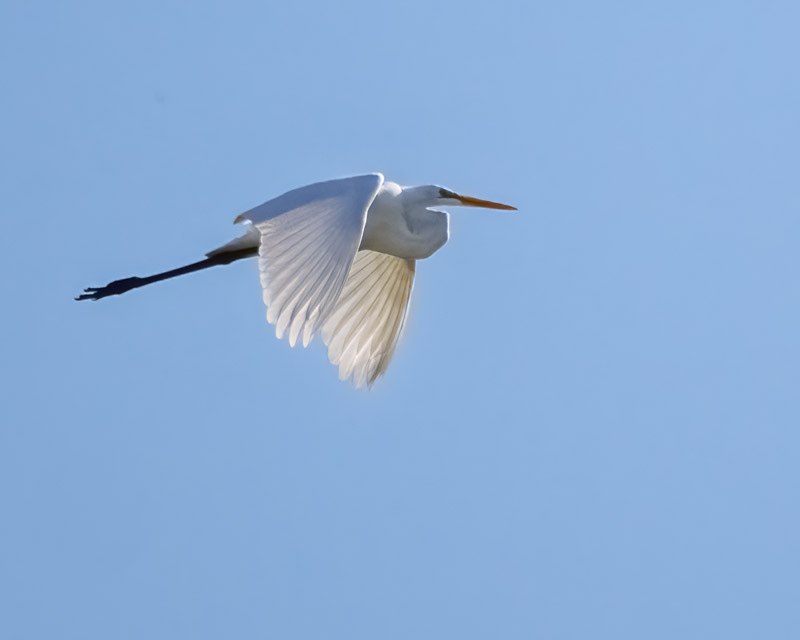
Not to be outdone, a few Great Egrets took to the air also. They are not as bulky as Great Blue Herons, but are another large species. Their wingspread is about five feet and their slow wingbeats measure only two per second.
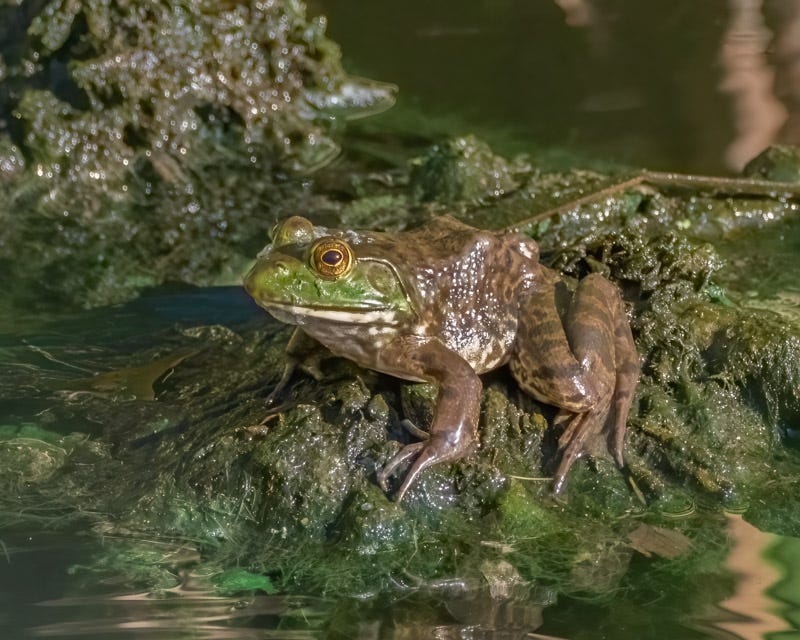
American Bullfrogs are not native to our area but were introduced as a prey species in the 1920’s before ecological risks were understood. These Bullfrogs will eat anything aquatic that they can fit in their mouths. Their population has exploded and they are now present in most of southern Arizona’s waters. Thankfully, Herons and Egrets will eat Bullfrogs, but there just aren’t enough of these predators around to stunt the population of the Bullfrogs.
Tucson Bird Alliance has several bird walks to Sweetwater every Wednesday morning open to members and non-members alike.