

A Pondhawk is neither a bird nor a raptor
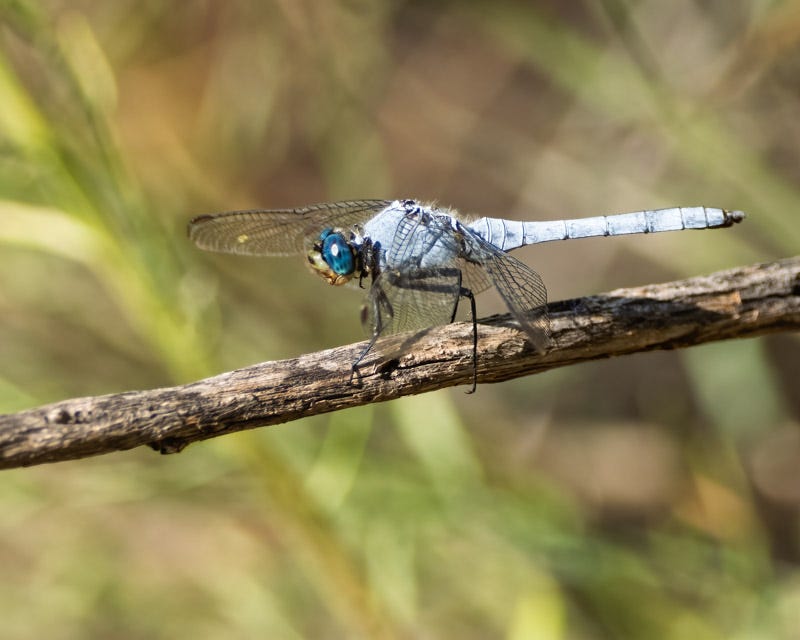
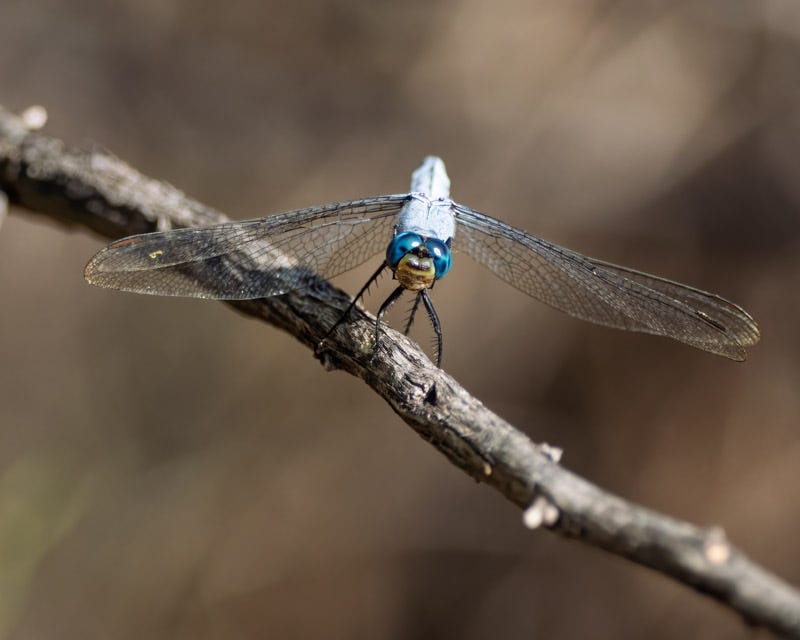
A Western Pondhawk is a dragonfly that is common across the western United States. I spent a little over an hour at El Rio Preserve recently with some friends looking for dragonflies. We arrived very early but it was humid and became hot very, very quickly. We did find what we were looking for. Below is a male Western Pondhawk. Those deep blue eyes against the green face are just stunning. The soft bluish thorax and abdomen is described as pruinose. That means it has a white powdery or waxy substance covering it.
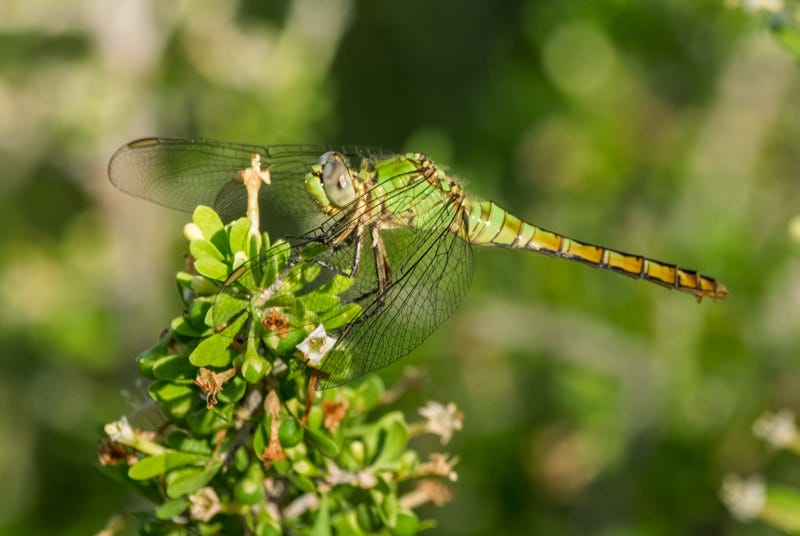
The female Western Pondhawk is also a stunning color in her own right. She has grayish eyes with a green face and a lime green thorax. Her abdomen is colored green and orange. The way the dragonfly’s faces are built makes the dragonfly below appear to be smiling, but that’s just me applying human emotions to an insect. Most dragonflies hold their wings flat and horizontal when they are perched, but Pondhawks’ wings have a slightly downward tilt.
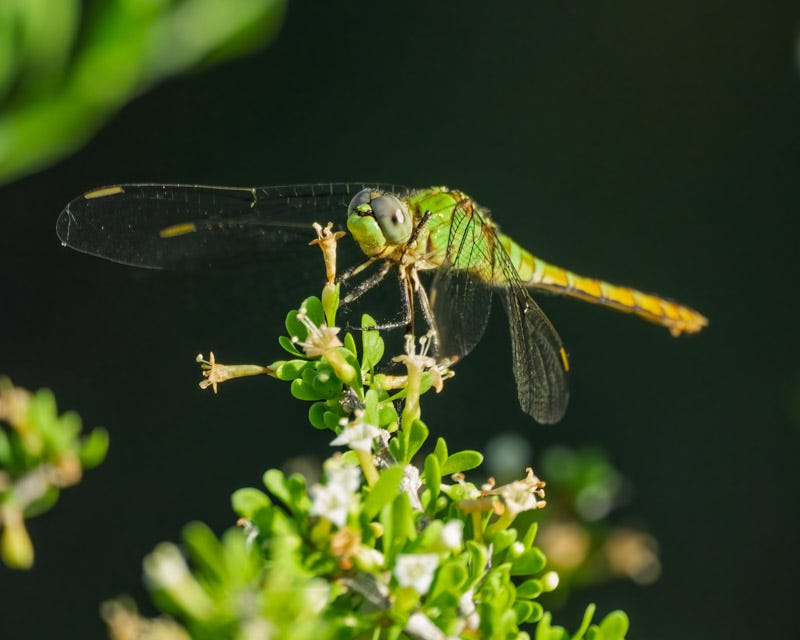
This Western Pondhawk’s body is reflecting the bright early morning sunshine. Dragonflies generally rest with their wings set flat and perpendicular to their body. The Pondhawks’ wings, as noted above, have a downward tilt but also have a slight forward angle to them.
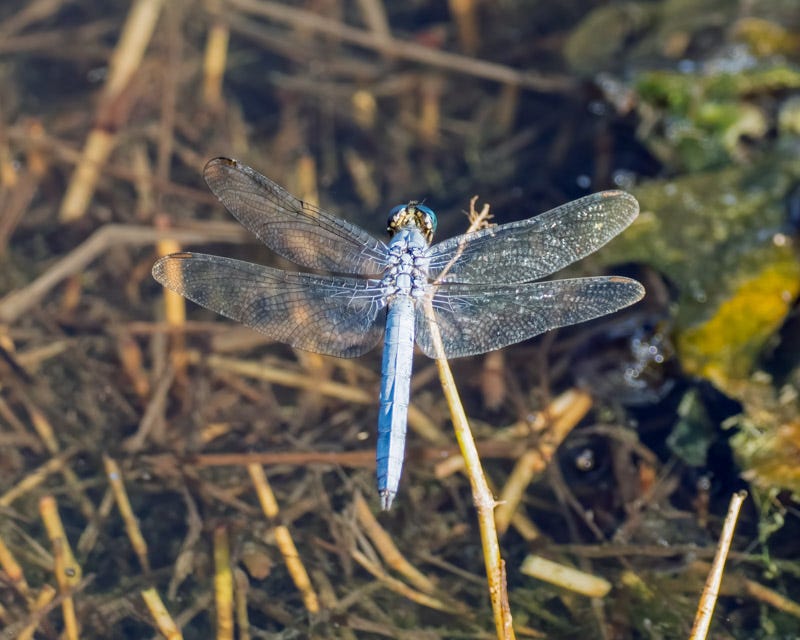
The female Western Pondhawk below is resting on a perch allowing us to see the forward angle to her wings. Dragonflies often return to a few favorite perches over and over again. If you see a dragonfly leaving a spot, be patient and the odds are that the dragonfly will return to that exact same spot very quickly.
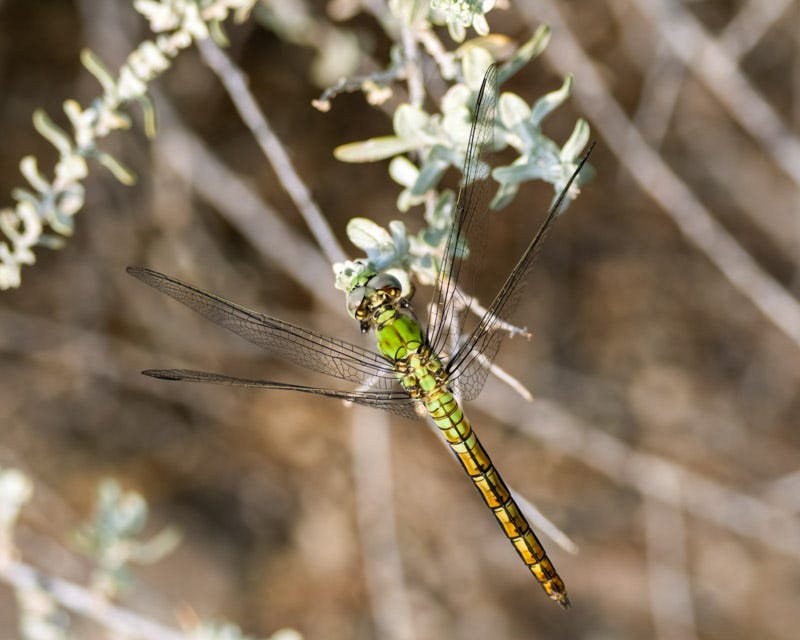
Being face-to-face with the male western Pond Hawk gives one a real sense about how large the dragonfly’s eyes are. A dragonfly’s eyes take up almost its entire head. If human eyes were the same size proportionally, each eye would be the size of a basketball. In addition, our human eyes have only one lens in each eye. Dragonflies have up to 30,000 lenses per eye, the highest in the insect world. Those complex eyes combined with an incredibly fast processing speed and a nearly 360° field of view are part of what makes dragonflies such formidable hunters.
The female Western Pondhawk blends in with the green vegetation surrounding the water at El Rio Preserve. Recent rains have helped the desert to turn green in what some people call our “Second Spring”.
The Western Pondhawks were fairly common at El Rio that morning. I saw one male perched at the end of a twig and I thought I saw its face moving a little bit. Even with the telephoto lens on my camera, I couldn’t figure out what the dragonfly was doing while I was taking its photo. It looked like it was eating something, but all I could see was the greenery of the vegetation. It wasn’t until I got home and processed the photo on my computer that I saw that the male dragonfly had been consuming a female Western Pondhawk!
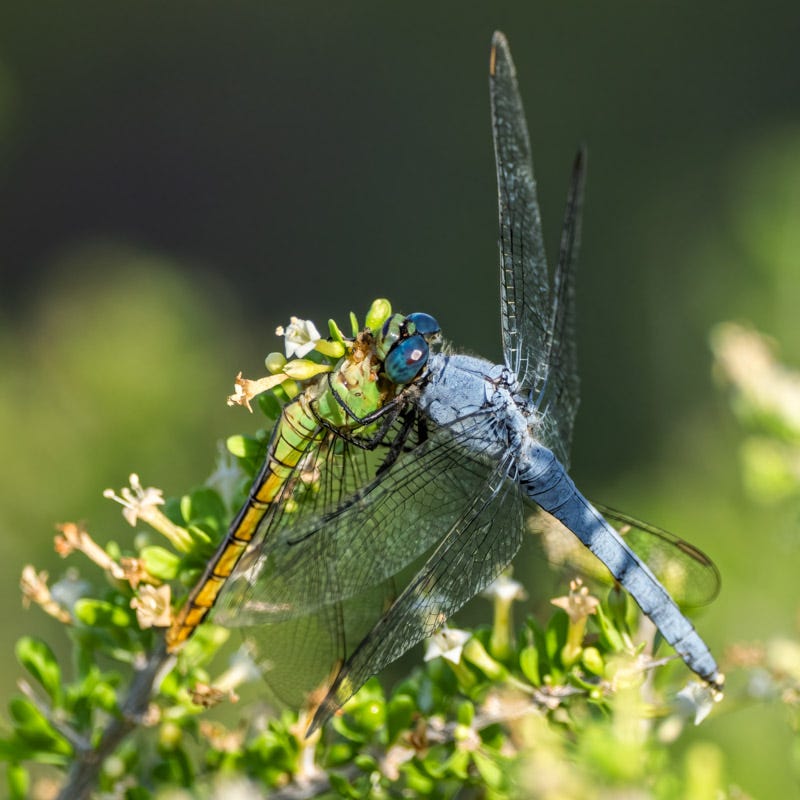
Dragonflies are incredible hunters. Estimates say that dragonflies are successful on over 95% of their hunts. If the dragonfly chases its prey, it’s going to catch the prey. Male dragonflies are also very territorial and it’s likely that this dragonfly victim had strayed into the territory of the male. Dragonflies are very aggressive and successful hunters. Pondhawks get their name because of their preferred habitat- ponds and still bodies of water. And Pondhawks are aggressive by nature, chasing down prey the same way that hawks do. This Western Pondhawk certainly lived up to its name acting like a hawk at a large pond.
Vibrant colors!
Incredible pictures Dan! Your story is so informative, then to find out what he is eating! Yikes, no wonder he's called a Pond Hawk!