

Shelly and I took a trip to Panama recently with Caravan Tours. Titled “Tropical Adventure”, it gave us an overview of the country without a specific focus on birds. We had a very nice time and I returned with a few photos that I’ll share over the next few weeks. This set covers our first look at the country.
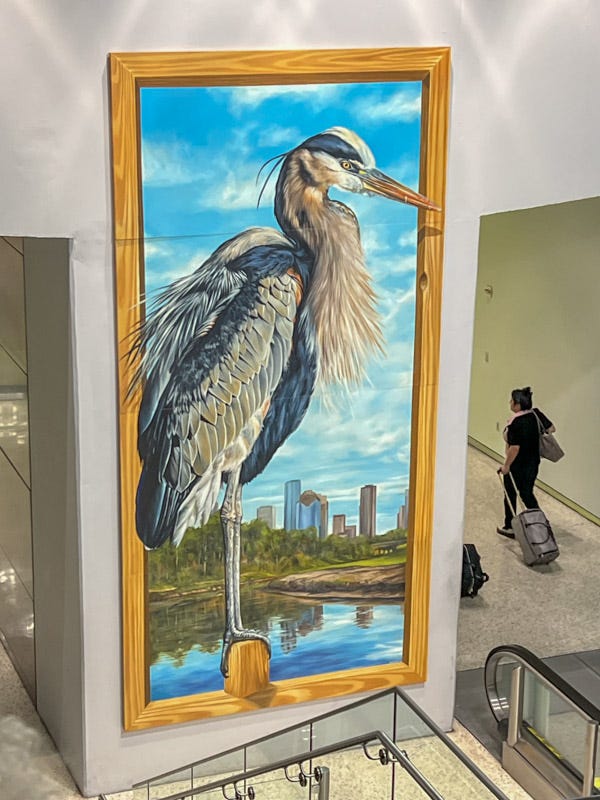
On our way to Panama, in the massive Houston International Airport, we came across this 16’ tall mural of a Great Blue Heron as we moved from Terminal B to C . The Great Blue is by Houston artist Anat Ronen. It has been described as “ is an oversized painting of a blue heron, a bird that is indigenous to the region. It has the Houston skyline and the bayou behind it.” I personally thought this was a sign that we were in for a good week!
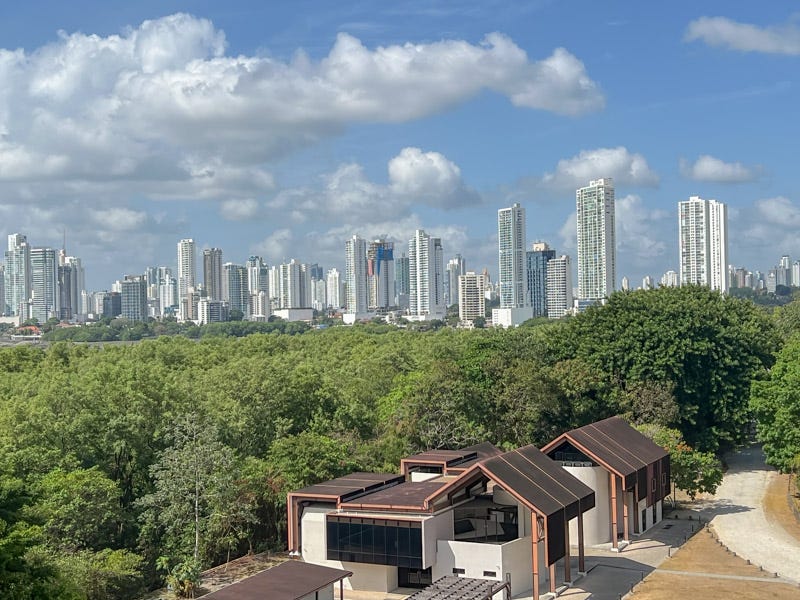
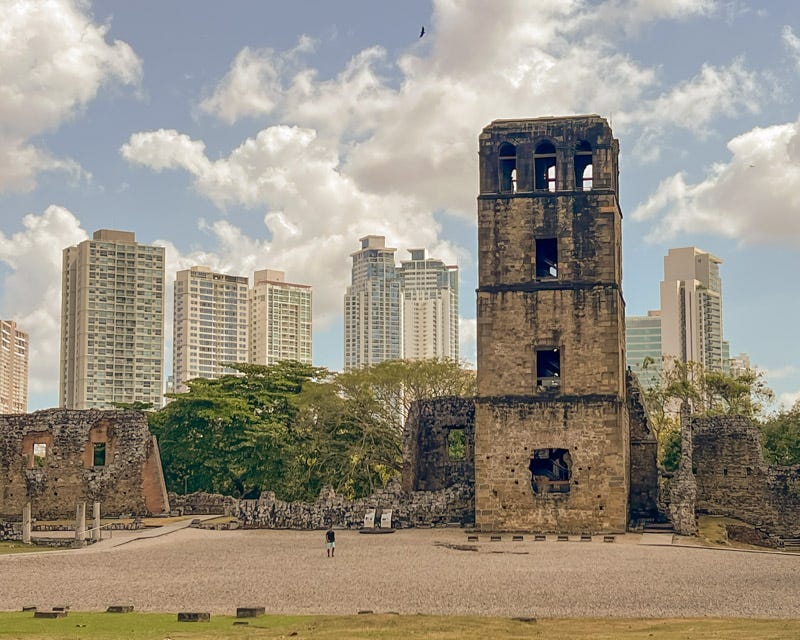
During our first day, we visited Panama Viejo (Old Panama). It is the UNESCO-listed archaeological site of the first European settlement on the Pacific coast, founded in 1519. It features extensive ruins of the original city destroyed in 1671 by the pirate Henry Morgan. This is a view of some of the support buildings in front of the thick forest with “new” Panama in the background.
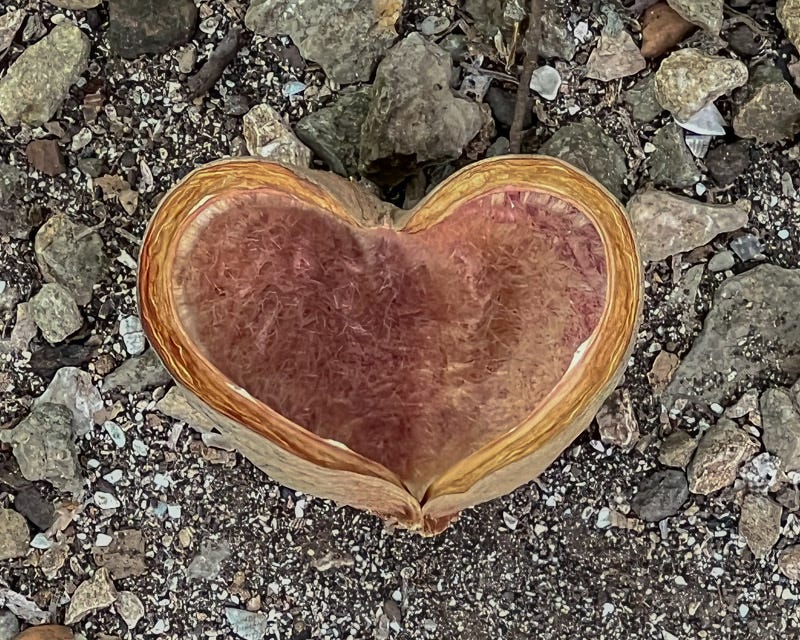
On the walk through the ruins of Panama Viejo, one of the trees we passed was a Panama Tree, the national tree of Panama. The seed pod for the tree splits open and, when dried, resembles a heart.
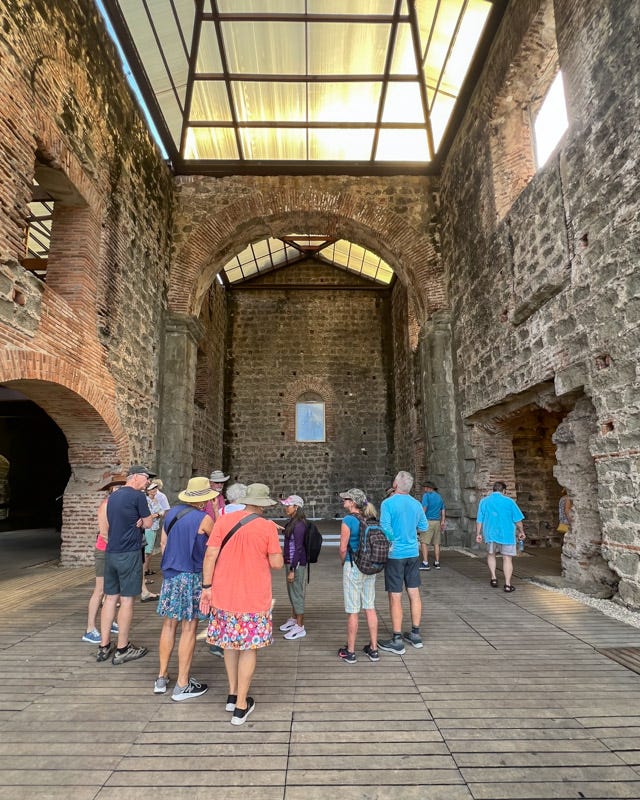
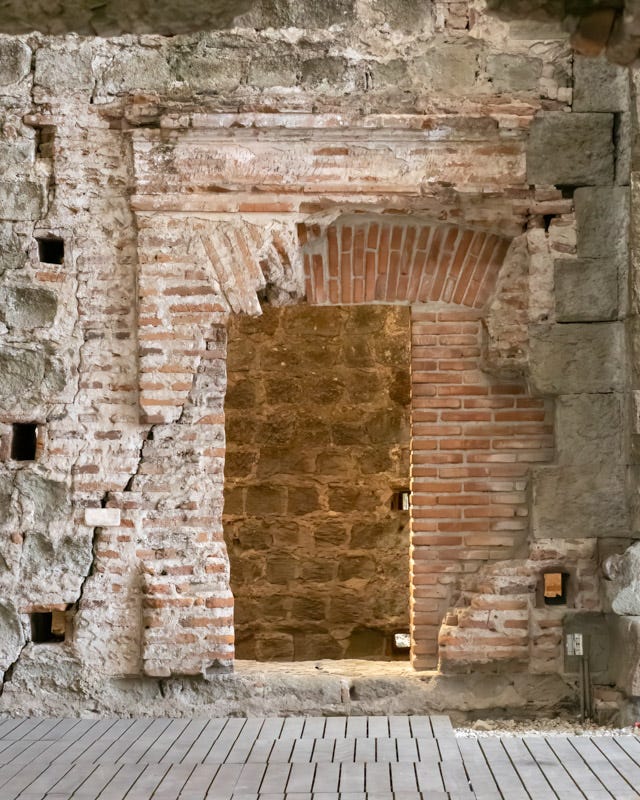
The old Cathedral has not been fully restored but is left in its original state. Some preservation work has been done to make the building safe for visitors. Built in the early 1600’s, it was destroyed when the original city and cathedral were sacked and burned during the 1671 attack by the pirate Henry Morgan. (PS If the name Henry Morgan sounds familiar, it may be due to his name and ‘image’ being attached to a popular caribbean rum. Here is a brief bio of him.)
A doorway in the Cathedral with old and new materials.
The Tower of Panama Viejo’s Cathedral offers a contrast to the “new” Panama buildings in the background.
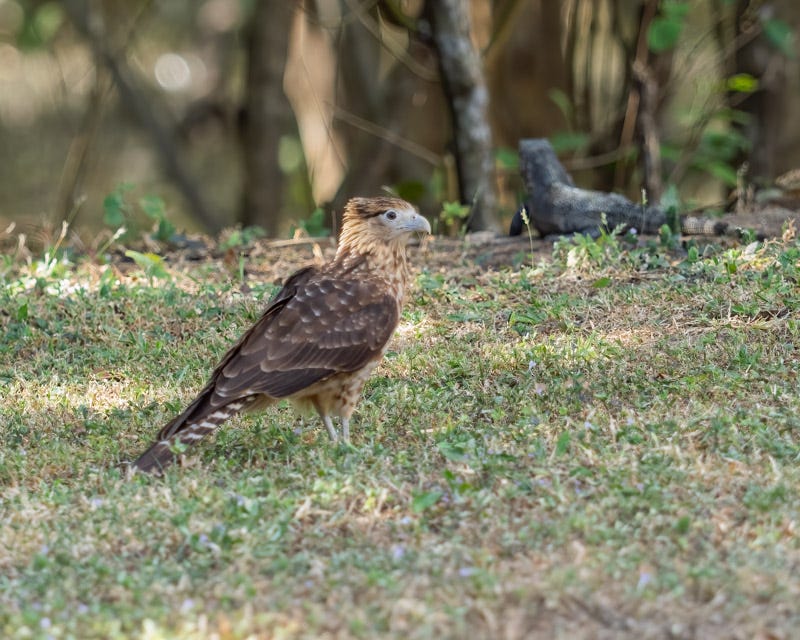
A few juvenile Yellow-headed Caracaras were on the grounds finding food. These raptors were very common throughout our visit to the country. The juveniles don’t have the clean, light yellow head of adults and are streaky on their breast. A neotropical species, we don’t have these birds in southern Arizona. We do have their cousins, the Crested Caracara, though.
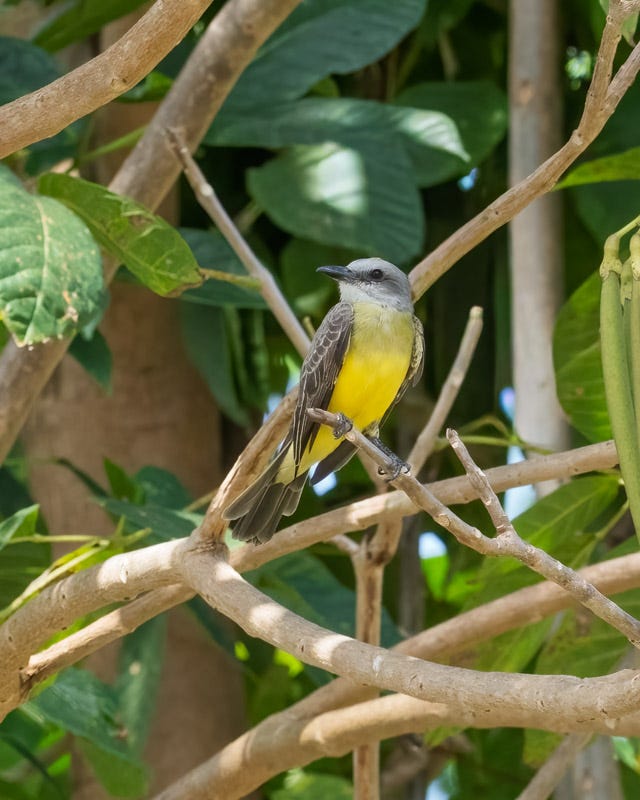
One of the first birds I saw was this Tropical Kingbird. These birds can be seen in Tucson during the summer, so it was interesting to actually see this one in the ‘tropics’ rather than at Sweetwater Wetlands or elsewhere in our area.
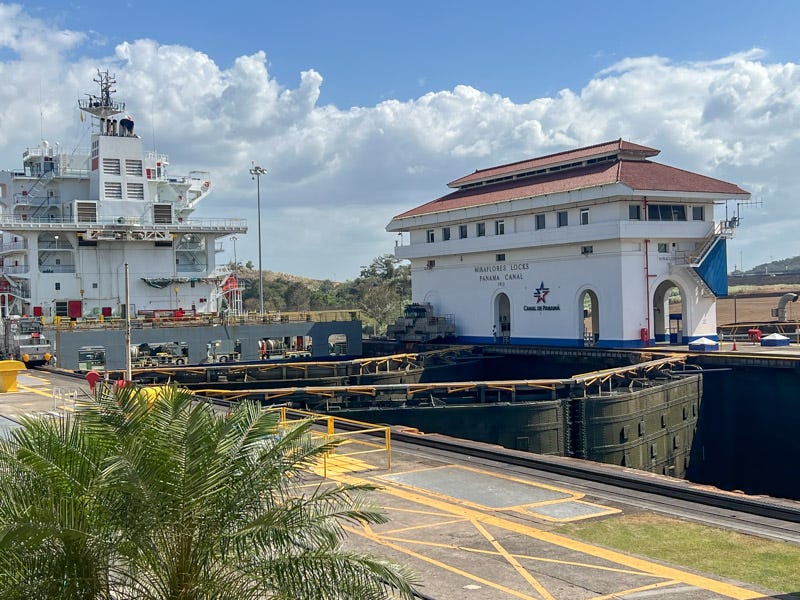
We also visited the Panama Canal of course. Tourists observe the operation of the canal at the Miraflores Locks where water in the locks is raised and lowered by over 50 feet to allow ships to move through the channel. In this shot, a huge container ship has just passed through (heading to the left). You can see that the water in the locks behind the ship had been lowered, exposing much of the curved gate.
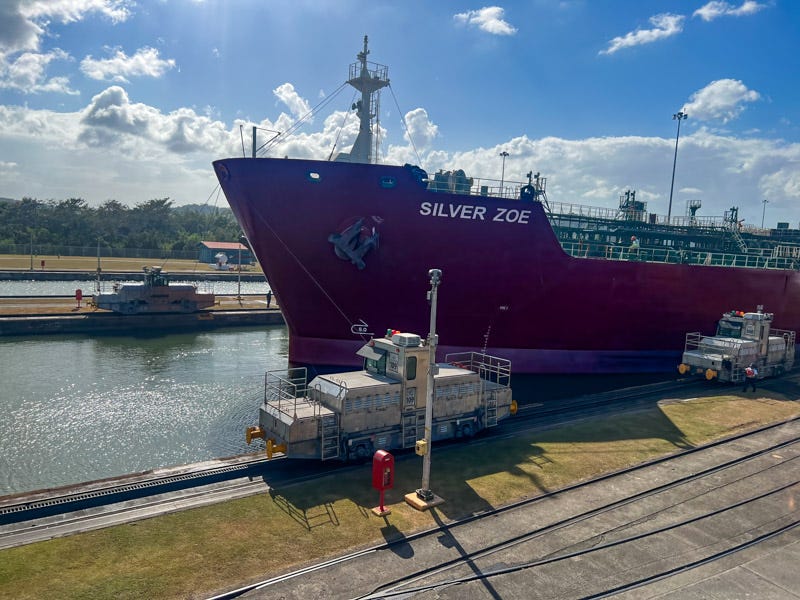
A short while later, the Silver Zoe tanker begins its passage. You can see that the water level has now been raised to allow the ship to enter the lock and the water level is now over 50 feet higher than it will be when it is lowered. The ship is 183 meters long, making her as long as two football fields. The electric locomotive “mules” keep the ship centered. The lock is 33 meters (100 feet) wide.
More to follow......
What a nice overview of Panama! Thank you Dan☮️
The church reminds me of Tumacacori