

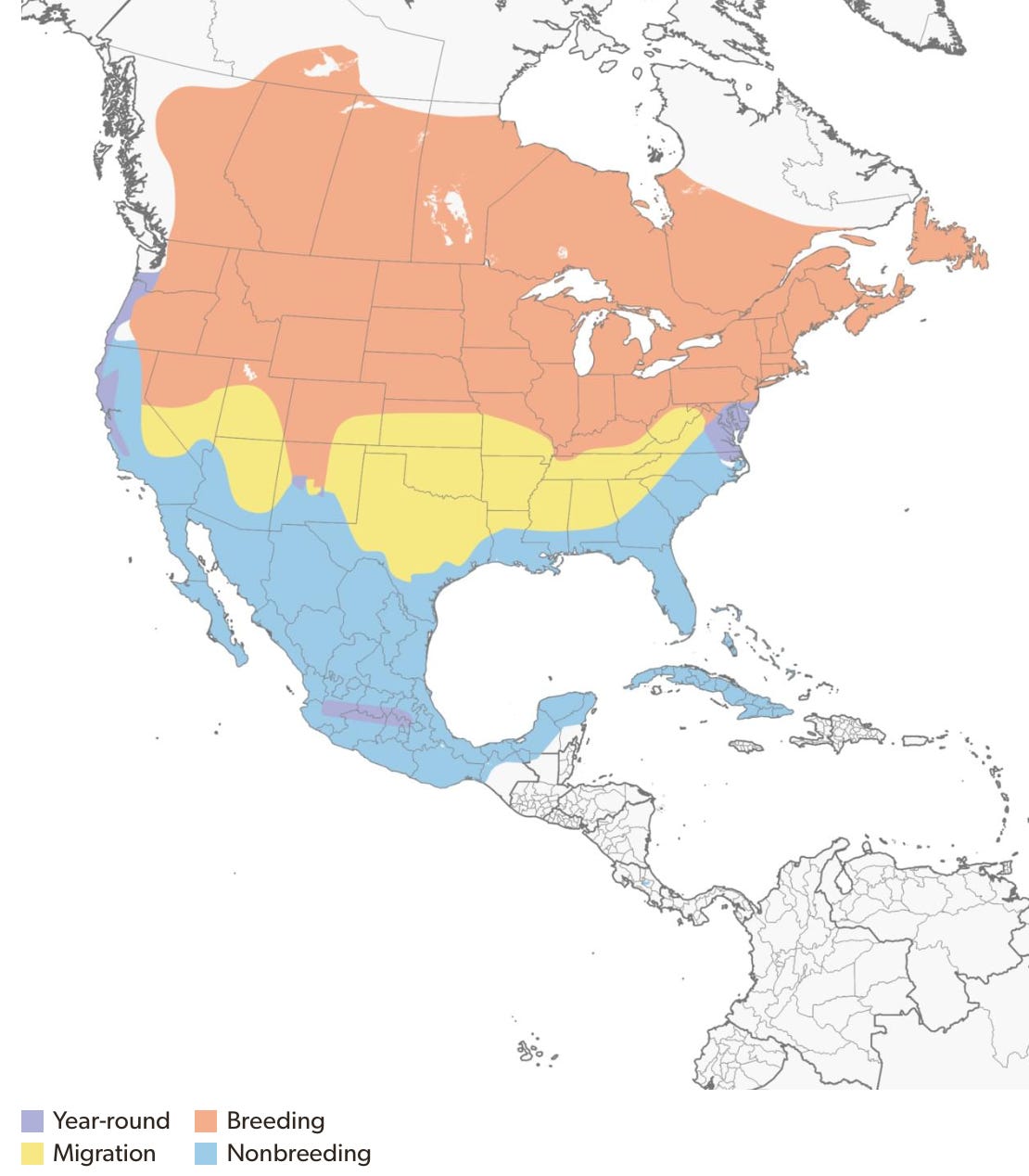
An American Bittern showed up at the El Rio Preserve this week. Only a few American Bitterns winter here annually. They require dense freshwater marshes which are uncommon in the Sonoran Desert. Even when one of these marsh birds arrives in Tucson, they are difficult to see because they are secretive and their plumage helps them blend into the reeds. The range map shows where American Bitterns winter, mostly in larger wetlands or coastal marshes in Mexico and the southern United States.
One afternoon I had a few free hours and drove to El Rio Preserve. I had only walked the water’s edge for a short while when it began to rain. I headed back to the parking lot where I met a friend. As we talked, the rain subsided so we decided to search for the Bittern. Minutes later another friend on the opposite side of the lake waved frantically to us so we hustled the half mile to where he was waiting and he pointed the Bittern out to us!
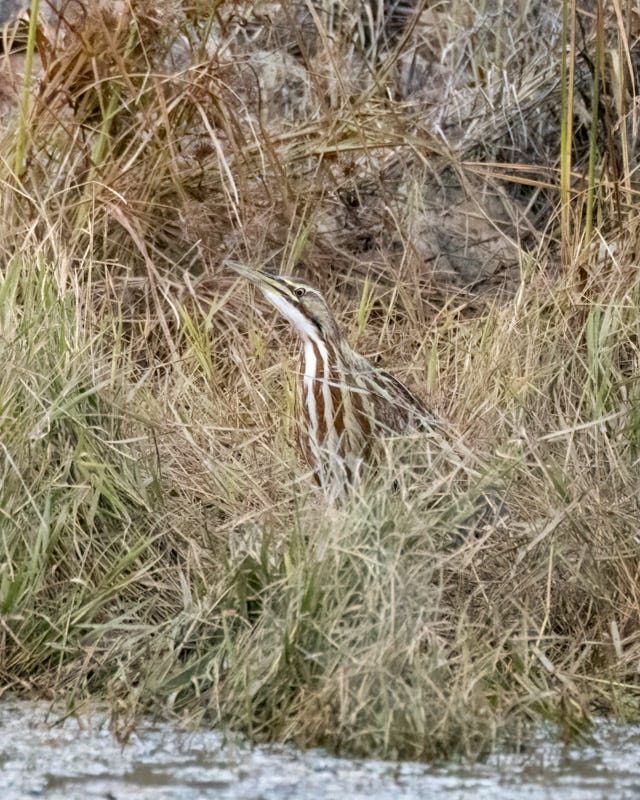
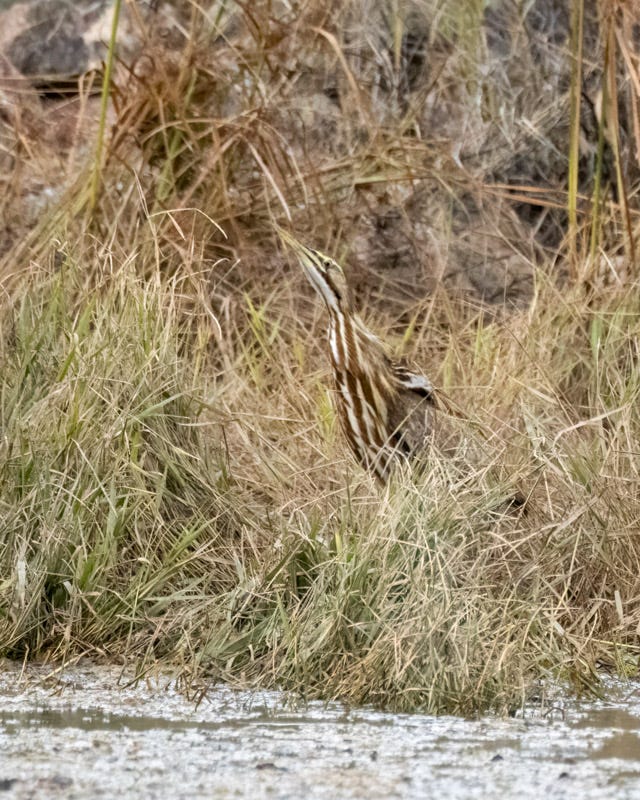
American Bitterns are medium-sized Herons with a thick neck and a thick body. Their neck is heavily streaked which helps them blend into the background of reeds and grasses at the water’s edge. As with many Herons, they are stealth predators who stand motionless waiting for prey to approach. When alarmed, American Bitterns will stand with their bills pointed up to further blend into the background.
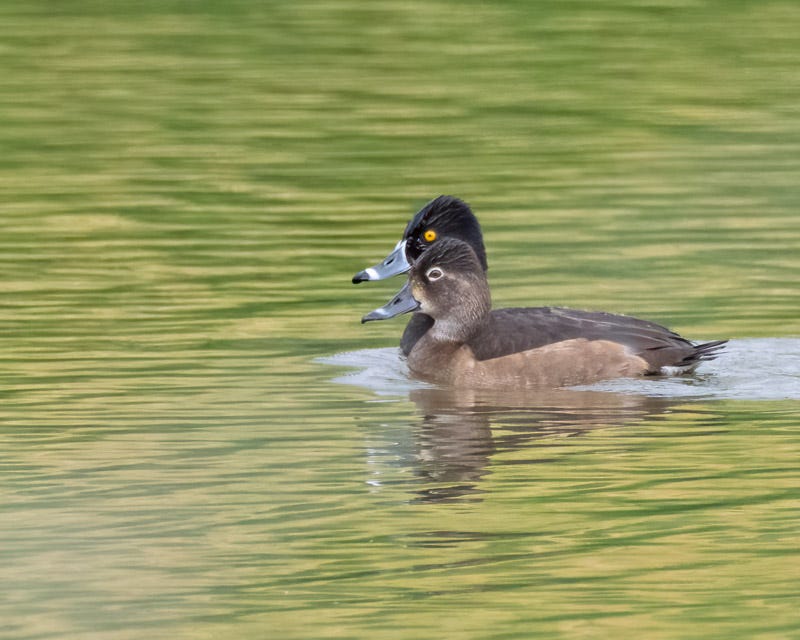
The rain returned and as it poured we hurried back to the cars. Below are some photos I captured during my short time at El Rio prior to the rain. Ring-necked Ducks are common in Tucson every winter and a small flock has arrived at El Rio. As this pair swam together it was easy to see the different look of the female with her white eye-ring compared to the male with his bright yellow eye.
A few Green-winged Teal were on the water. The male remained hidden behind a small island but one of the females was out in the open. The green wing patches that this species is known for remains hidden while this duck is on the water. She has a gray bill and plumage described as a mottled brown.

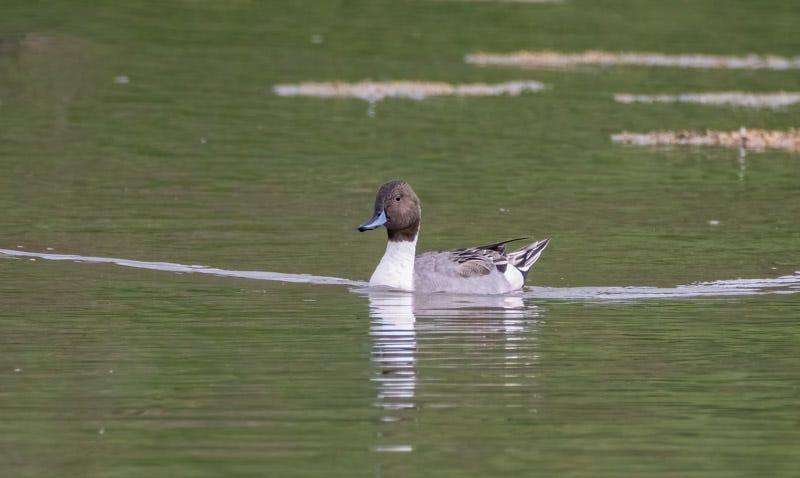
A male Northern Pintail stood out from all the other ducks. It is a fairly large duck and that gleaming white breast shined like a beacon across the water.
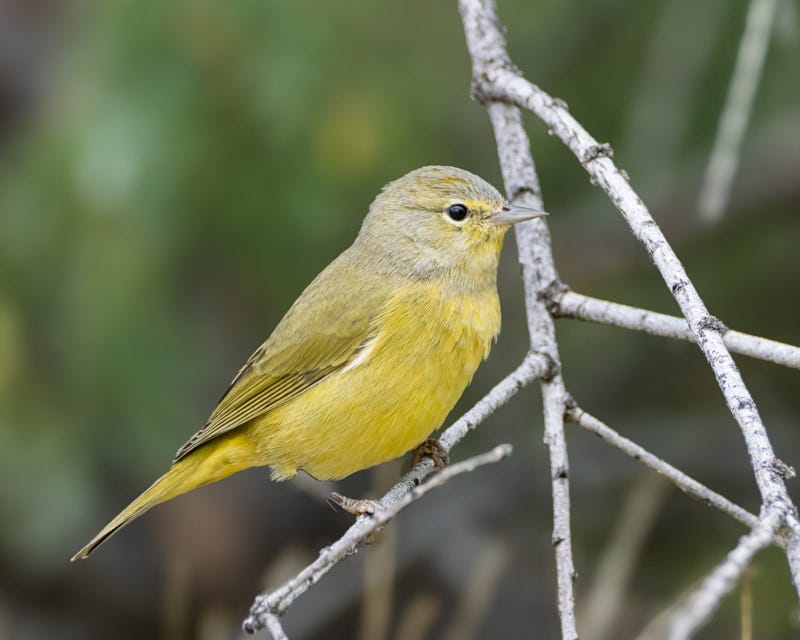
Orange-crowned Warblers are fairly common winter visitors to Tucson. They have the thin sharp bill of a warbler and a dark eyeline. Their back is described as an olive-green and their underparts as a dull yellow-green. The brightest yellow feathers are under their tail. The orange crown patch for which they are named remains hidden unless the bird becomes very agitated.
I keep thinking of that Bittern. American Bitterns are well known for their ‘booming’ calls. During the breeding season they use those calls to establish territories and attract mates. During the time of year they are in Tucson, they are focused on feeding so they mostly remain silent. Birdnote tells us more about their unique calls here. Even though I’m not likely to hear their famous sound, I hope to see this Bittern again on my next visit to El Rio.