

Falcons, Phainopepla, and a Phoebe
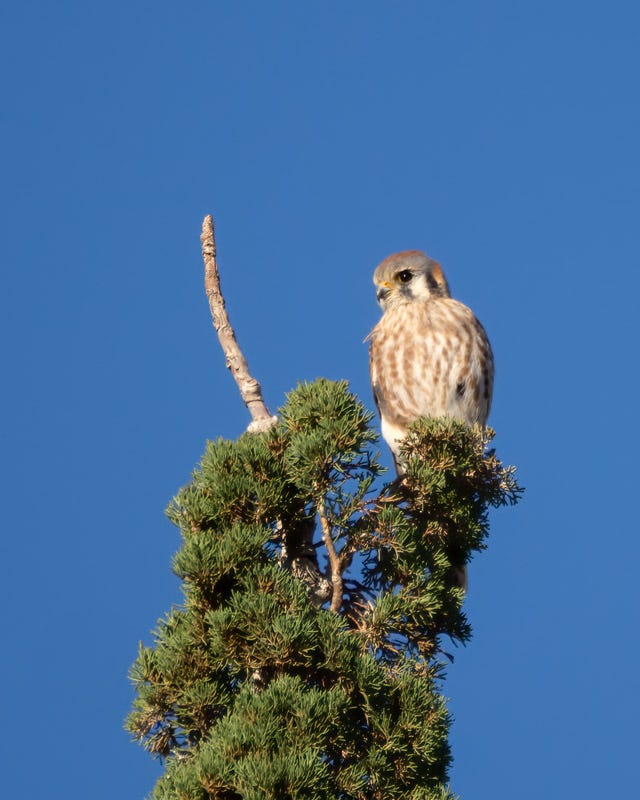
The Altar Valley is a large watershed southwest of Tucson. It lies east of the Baboquivari Mountains and runs from the Mexican border north to Three Points and the Ajo Highway. Across the Ajo Highway, the area becomes the Avra Valley which continues north through Marana. It is an interesting part of the Sonoran Desert. A friend and I drove through the Altar Valley recently and we saw a few birds. Perched at the top of a cypress tree was a female American Kestrel.
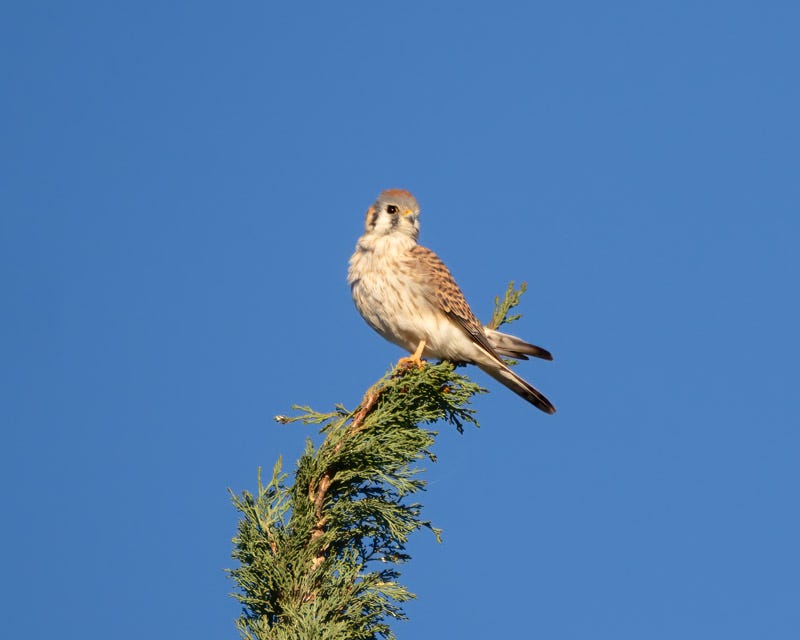
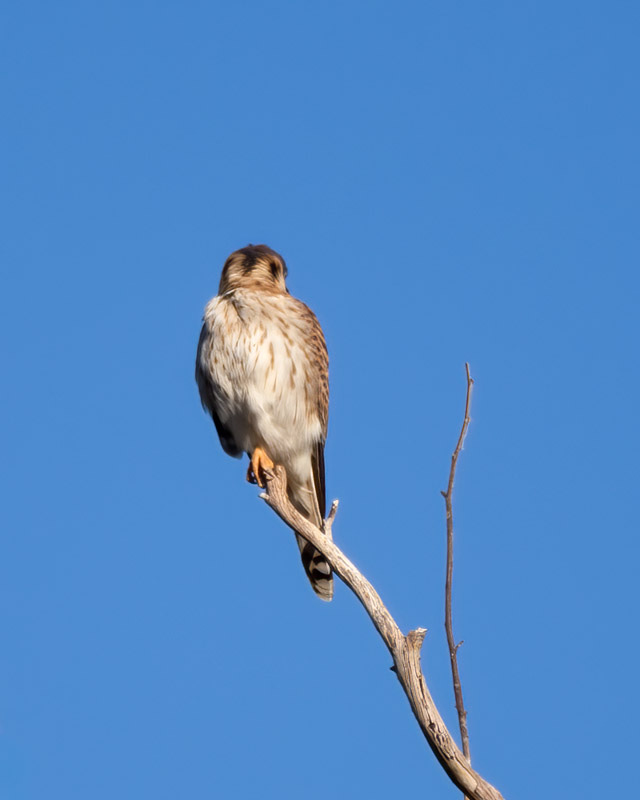
We saw a Gila Woodpecker fly directly at the Kestrel, circling her twice, and then it flew across the road, landing in a dead tree. The Kestrel remained on the cypress tree following the flight of the Gila with its eyes intently before chasing the Woodpecker off the tree. The Kestrel landed in the Woodpecker’s tree and then continued to watch the Gila Woodpecker retreat. With its head turned, you can see the false eyes on the back of the Kestrel’s head. Those dark feather patches mimic the look of actual eyes and may deter other birds from attacking the Kestrel while its back is turned.
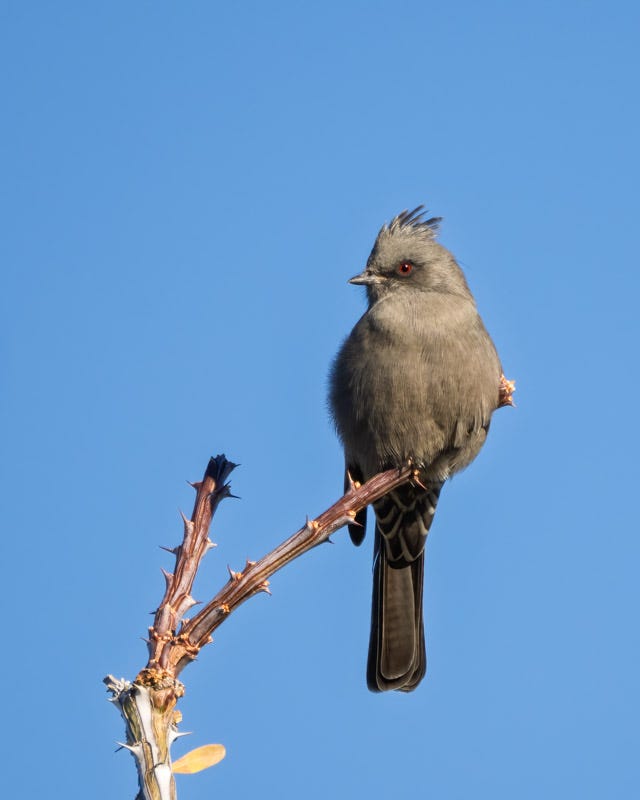
Driving down the road we found a female Phainopepla perched atop an ocotillo branch. Many of our area’s Phainopepla leave the desert during our hot summer months. They don’t migrate, but rather head to higher elevations in nearby mountains. Once the weather changes, they return to the desert floor.
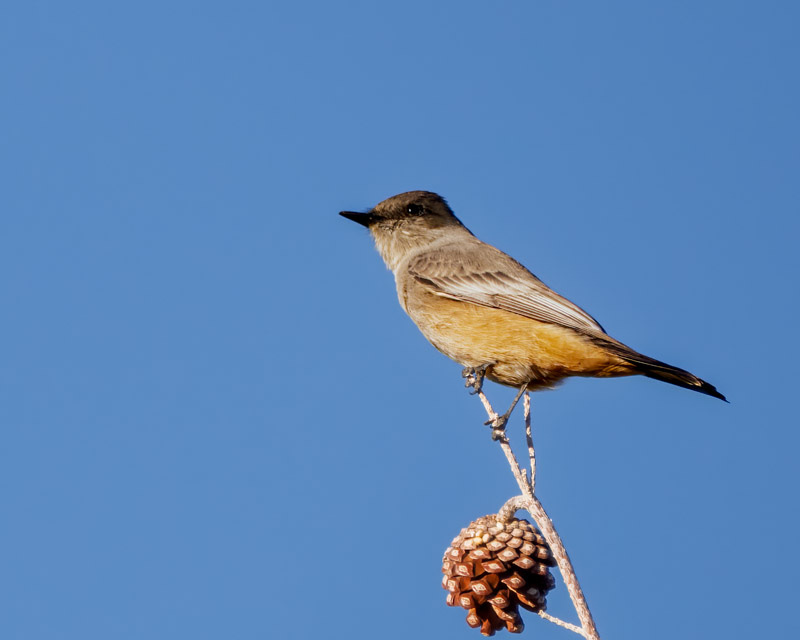
We were driving through an area of scattered homes, and a Say’s Phoebe did some hunting before landing at the top of a pine tree. Say’s Phoebes are year-round residents of southwestern deserts. They are medium sized flycatchers with a light brown back and a light orange belly.
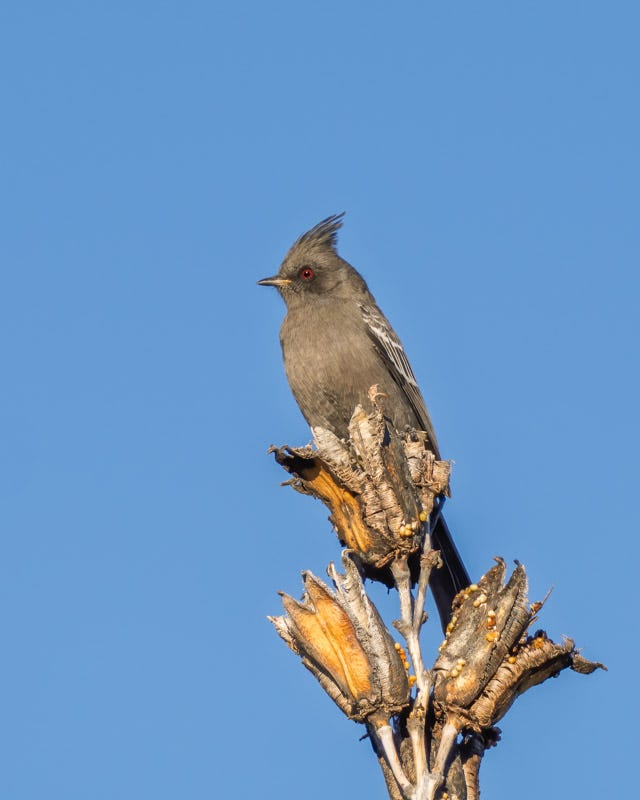
Another female Phainopepla was perched nearby on the seed pods of a yucca plant. Phainopepla have a ruby red eye that contrasts with their gray plumage.
Further down the road we came across another female Kestrel. The striping on this bird’s breast is darker than on the first Kestrel we came across.
Each of these three species of birds perch on the tips of a tree for similar reasons. They each sit and wait for their prey. Even though the Phainopepla is known for eating mistletoe berries, it is a flycatcher and hunts insects just like the Phoebe does. The high perch offers a hunting lookout, a spot to defend their territory and a way to watch for any approaching predator.