

Tucson Bird Alliance offers many field trips for the public. You can find those on its website. One of the regular monthly trips is led by Peggy Steffens, a great leader. I hadn’t been back to El Rio since it was refilled with water so I decided to join a recent trip there. You may remember from earlier posts that the City of Marana drained the lake this fall in order to do work removing reeds and other unnecessary vegetation. The water is back and so the birds are back now too! There were a few Song Sparrows singing in trees near us.
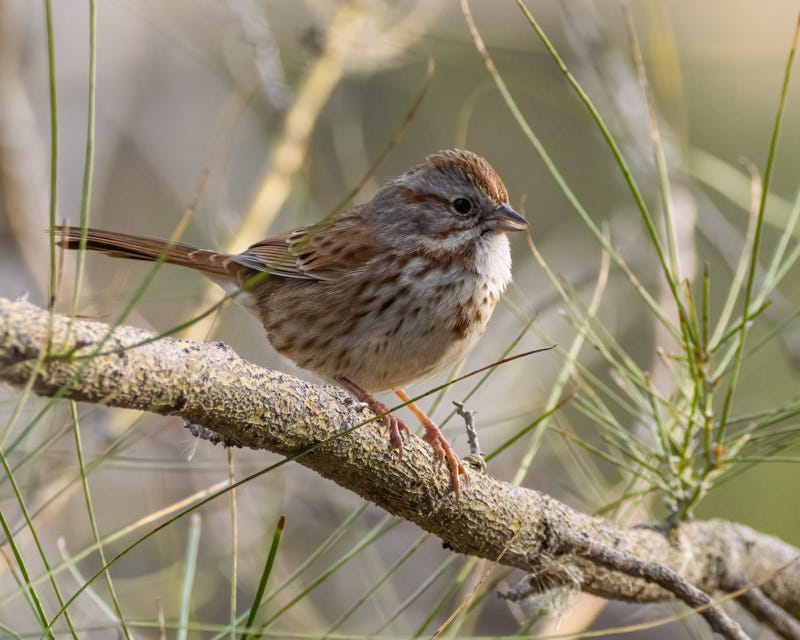
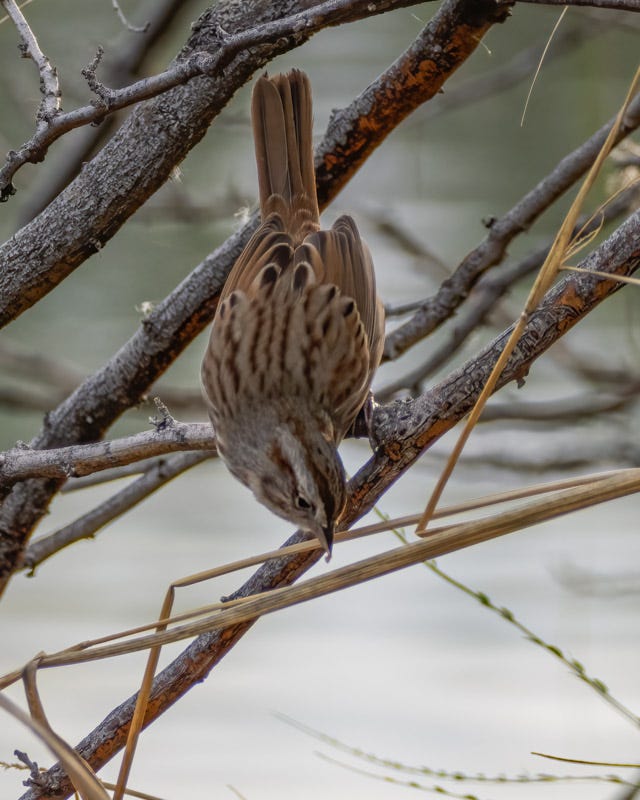
It was a cold morning and the birds were not scared by our close presence. They were very busy hunting for the tiniest morsels of food. I’m not sure what they were hunting for, but the Song Sparrows seemed to be successful. Birdnote shares how Song Sparrows learn to sing their beautiful songs.
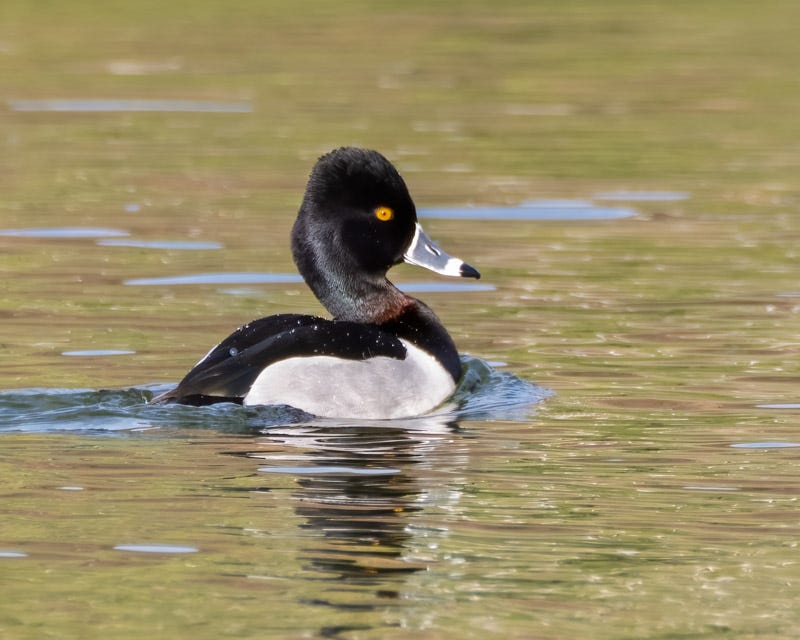
We saw 31 species of birds that morning. A number of them were ducks. Ring-necked ducks, like the one below, are one of the more common species of ducks in Tucson every winter. If you look closely, you can see a coppery colored ring around this duck‘s neck. Ordinarily it is very hard to see that ring, but that’s what gave the duck its name. The duck has a prominent and easily seen ring on its bill, but it is named for the hidden ring around its collar.
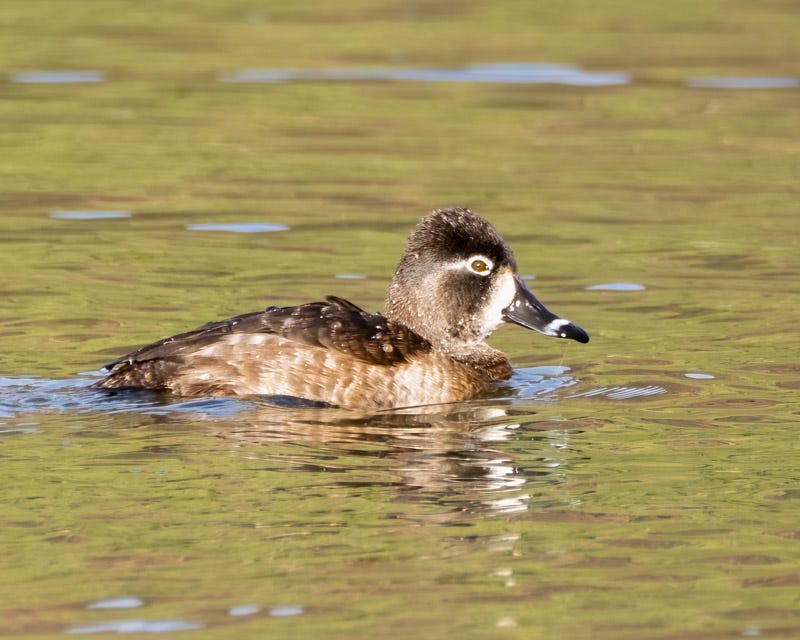
Below is a female Ring-necked Duck. Other than a white ring around her dark bill, similar to the males, she looks very different than the male does.
There were several Green-winged Teals in the water. Below we have a male leading the female. The male has such interesting plumage with its light brown face and green eye stripe, a white stripe at his shoulders, and cream colored tail feathers.
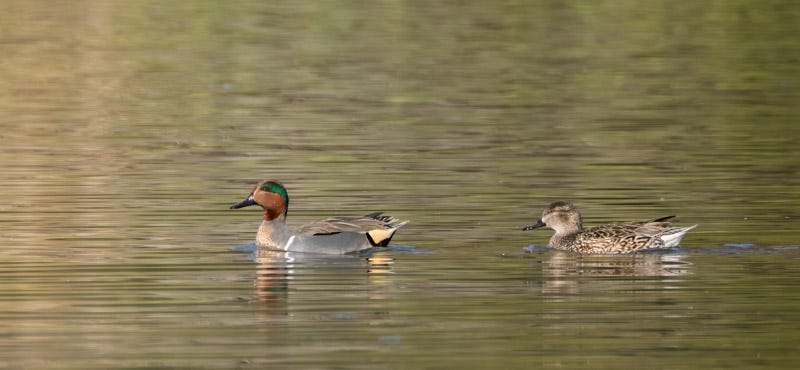
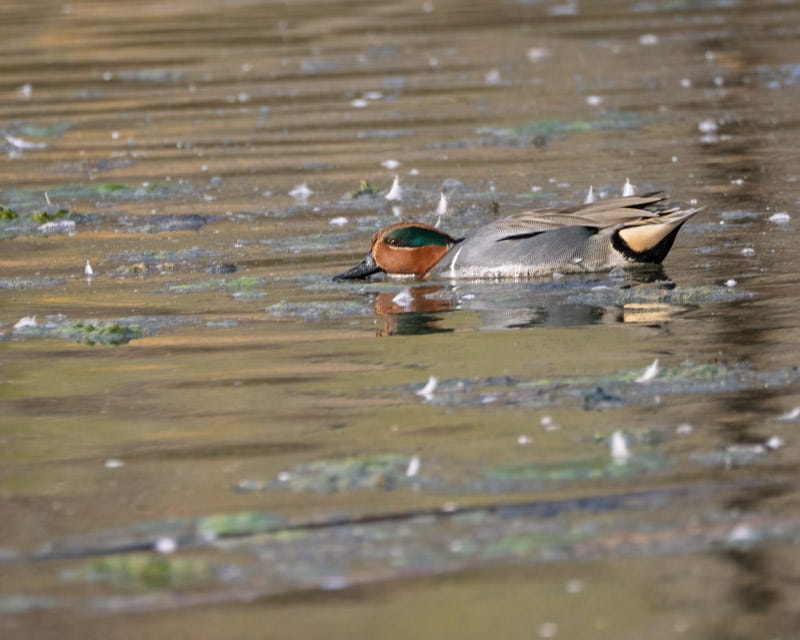
The Green-winged Teals were busy feeding at the north end of the lake. They are dabblers, a term referring to ducks that find their food at the surface of the water. Apparently the winds had come from the south and many of the downy feathers from the bodies of the many different ducks had been blown to the north end of the pond.
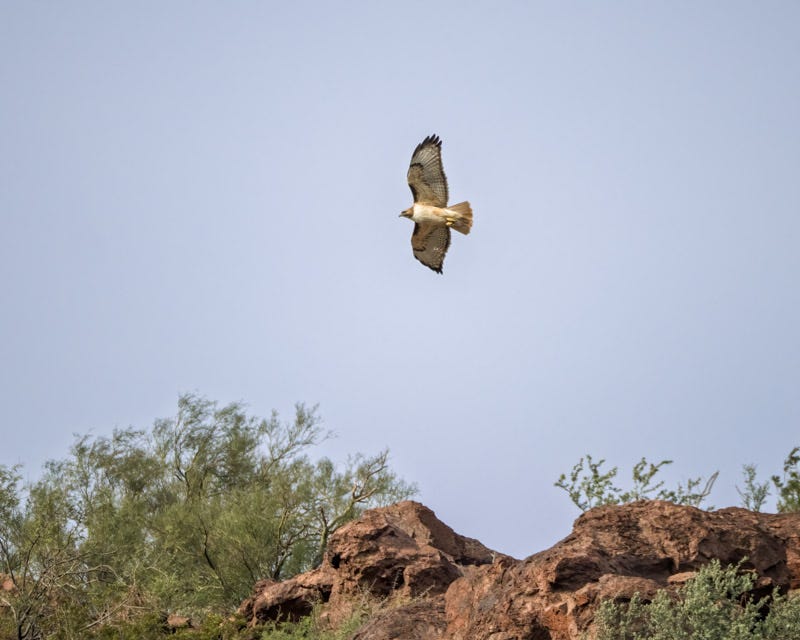
The lake at El Rio Preserve is adjacent to Pointer Mountain at the very northern end of the Tucson Mountains. Almost every time I’ve been there I’ve seen Red-tailed Hawks soaring above the mountain. They use the updrafts of the winds blowing against the mountain to be able to soar effortlessly.
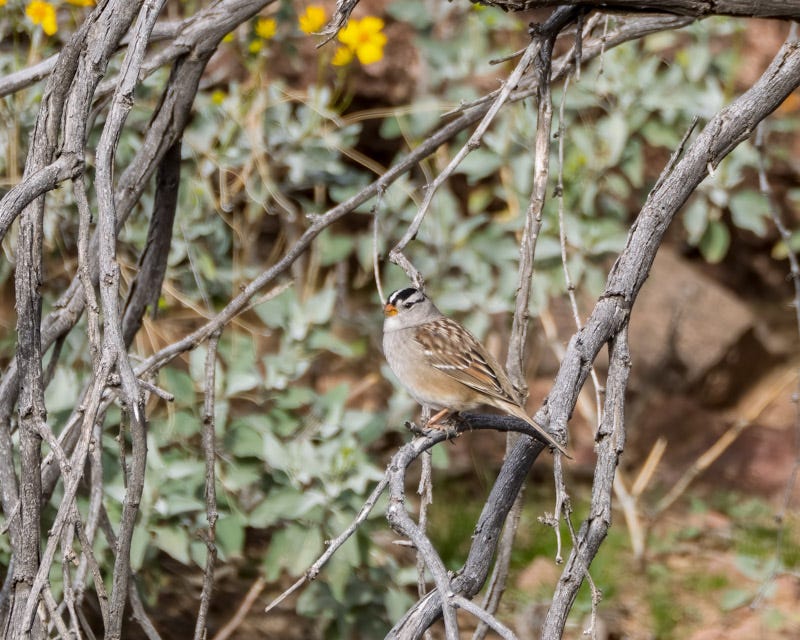
Between the lake and Pointer Mountain there is a small strip of desert. This was the first time I had walked through that strip of desert to bird and it was very interesting. White-crowned Sparrows are common during Tucson winters. This male White-crowned popped up onto a Mesquite tree and perched in front of a large field of brittlebush plants with their yellow flowers.
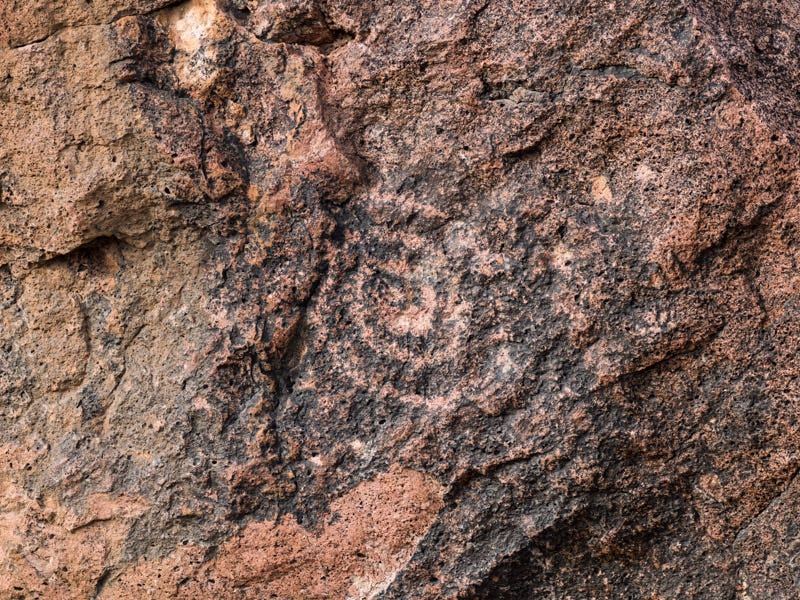
This area of Marana was an important area historically for Native peoples in the past. The proximity to the Santa Cruz River provided many resources. On Pointer Mountain, there are a number of rocks with petroglyphs from hundreds and hundreds of years ago.
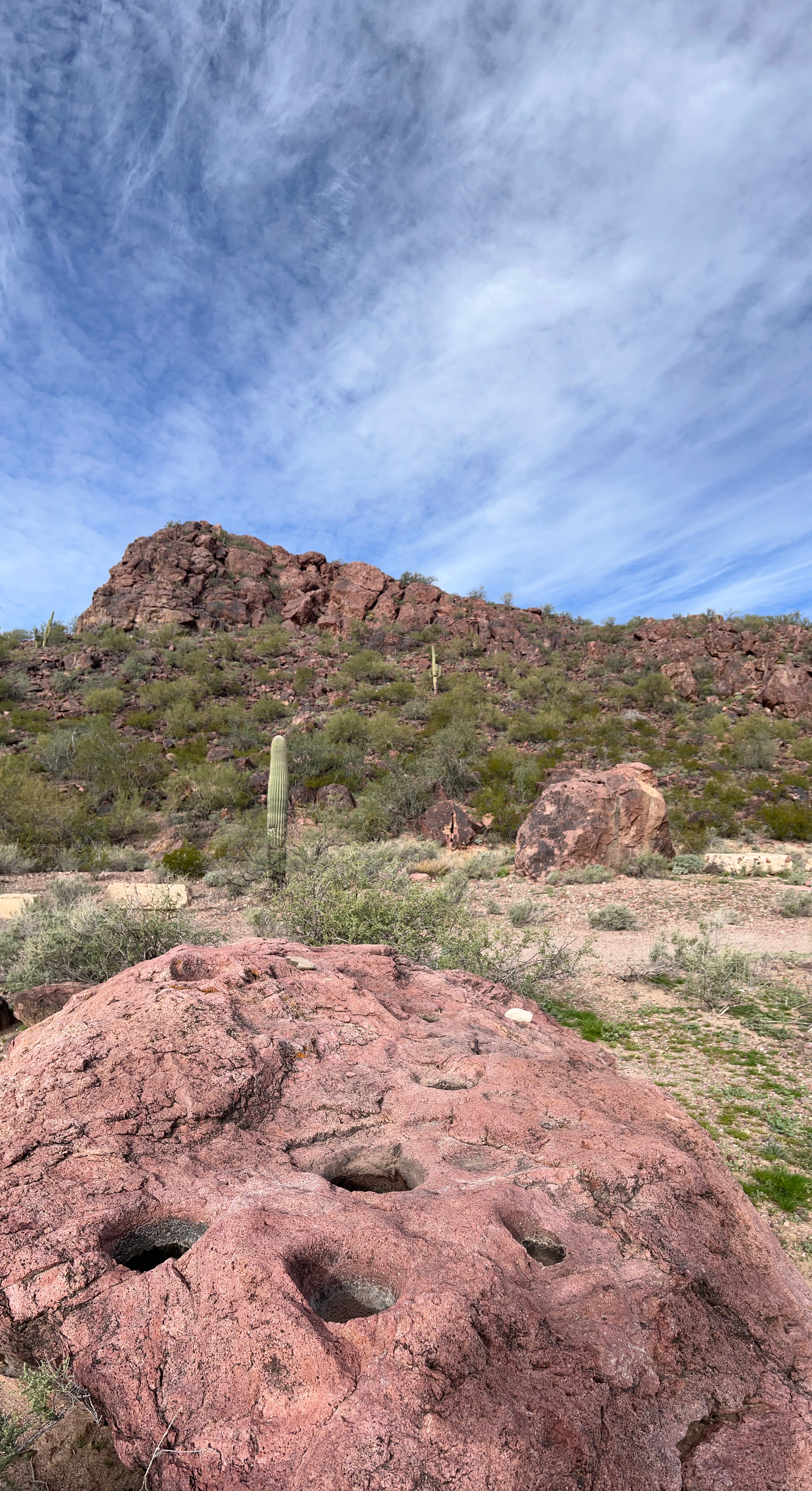
I took this photo with my cell phone, showing a large rock with many bedrock mortars in it and Pointer Mountain in the background. Those mortars may be 1000 years old. A large Native American village existed at this site and the core area of that ancient village has been set aside as Marana’s nearby Los Morteros site.
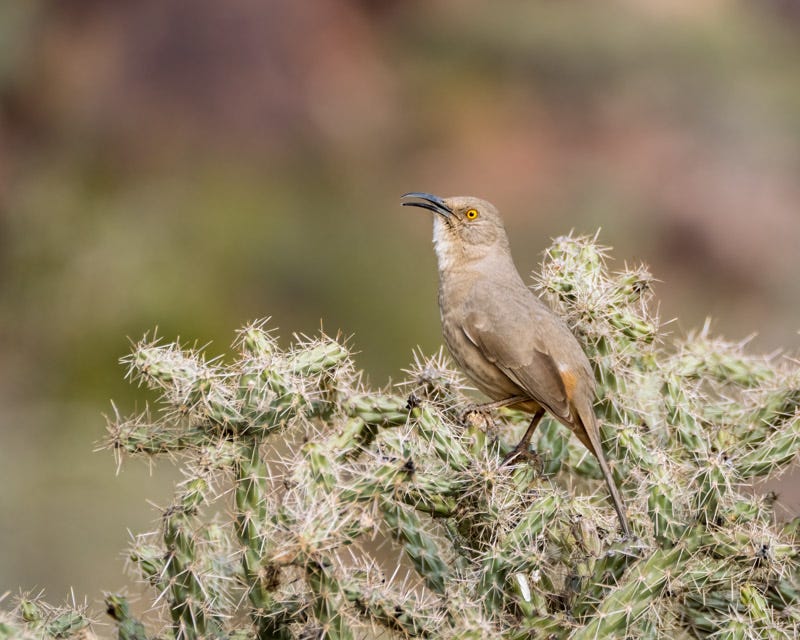
It feels like springtime already in Southern Arizona and some male birds are starting to claim their territories. The birds are becoming more vocal and displaying. This Curved-billed Thrasher was doing what Curve-billed Thrashers do. It was singing loudly and nonstop from the top of a Cholla Cactus. There was a large nest inside the Cactus and this thrasher was proudly declaring it as its spot in the desert. You can listen to some of the Thrasher’s songs here.
It was a stellar morning in that we saw many different species. The lake was back to life with water in it. But what made it even more special for me was seeing this Steller‘s Jay. The spelling of the word is different but the bird itself is stellar! This winter has seen a large number of these birds in the Tucson Valley. Usually Steller’s Jays are seen at upper elevations in the Sky Island Mountains in coniferous forests. Their presence makes us think that there is less food than normal in the mountains. For whatever the reason, it is unusual to see them down here.
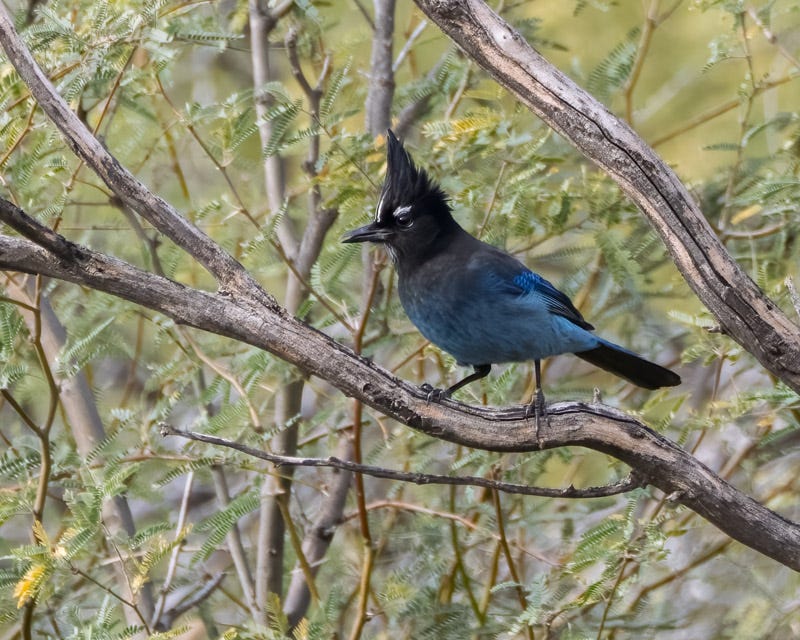
The Steller’s Jay popped out from the base of a thick mesquite grove in the desert wash at the base of Pointer Mountain and perched in the open for a minute or two. It was such a treat to see this large Jay. The dark colors with the white accents on its face are really unusual.
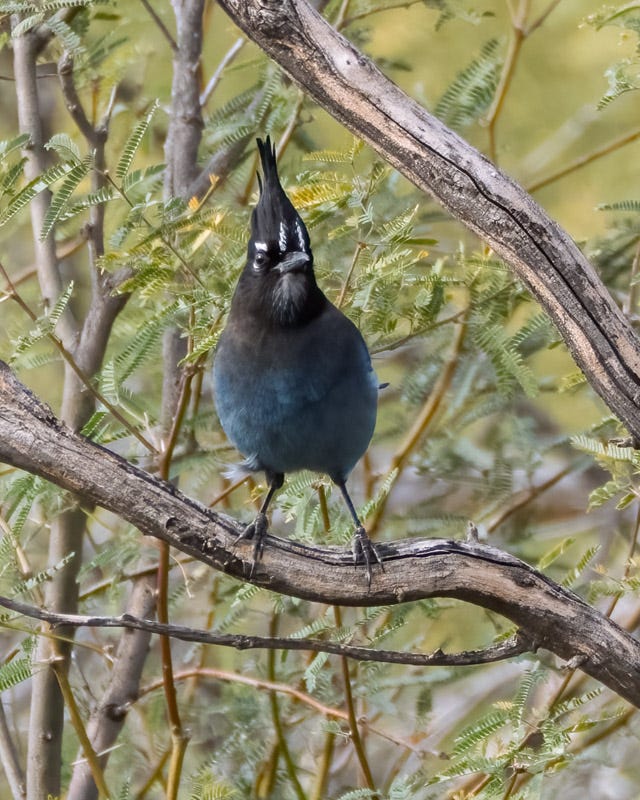
It looked and looked at the group from the same spot, changing perspectives, and changing how it perched. After a while, it dove back down into the base of the mesquite thicket and disappeared.
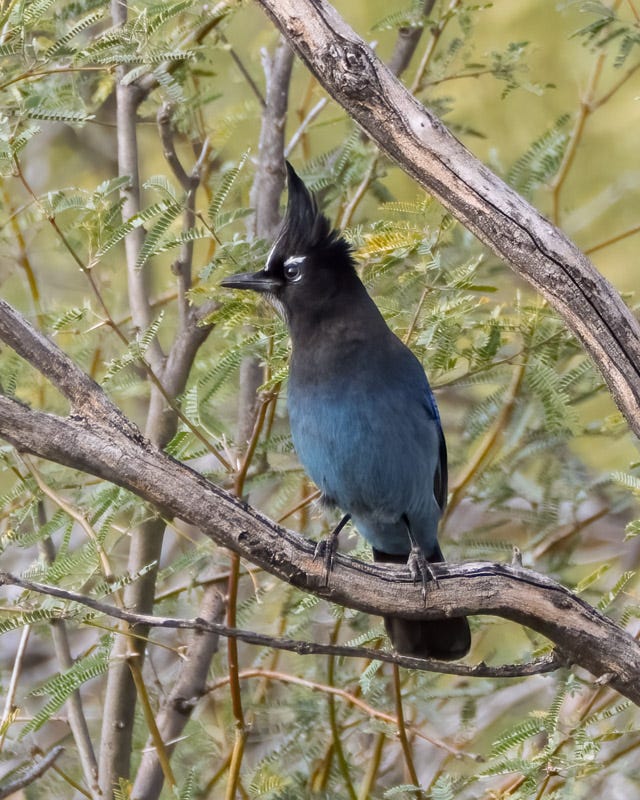
That Steller’s Jay was a wonderful end to a stellar morning. If you’re in town, you might want to look into joining one of the Tucson Bird Alliance field trips. You won’t be disappointed.
Your posts offer a welcome moment of joy in the present hell we inhabit. And I always learn something. Thank you.
love your birding adventures posts! I need to get out more for sure!