

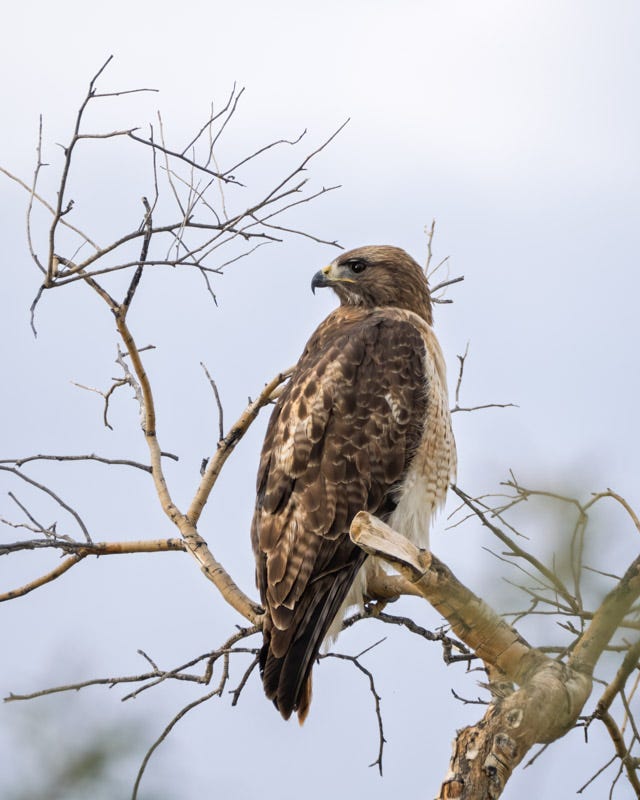
We have Red-tailed Hawks in southern Arizona year-round and the numbers increase dramatically as Red-tails move south for the winter. I am beginning to see hints of that surge already. I see Red-tailed Hawks regularly through the year. This spring, one was perched in a dead tree. Hawks and all raptors can easily turn their head 180° to face backwards.
A few weeks ago I saw a Red-tailed Hawk on a telephone pole, not the most photogenic perch. I was able to notice when it was ready to take off. These Hawks often have a “tell” when they are ready to fly. They will either rouse, shaking their feathers, or they will poop to lighten their load. I don’t remember how this bird signalled me but I was ready to catch the slow beginning of its flight. Its legs were still dangling as it gained speed and its tail was spread wide.
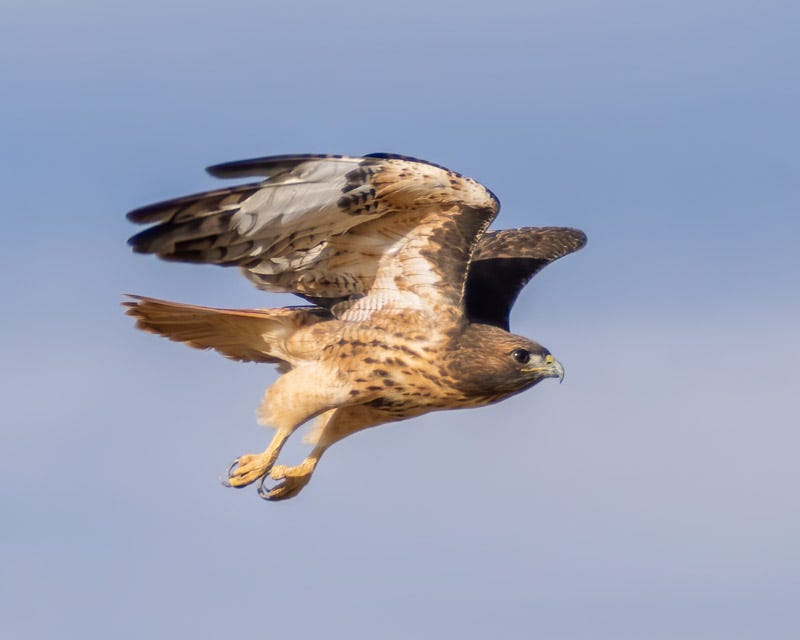
The strong downward stroke helped to build speed and momentum.
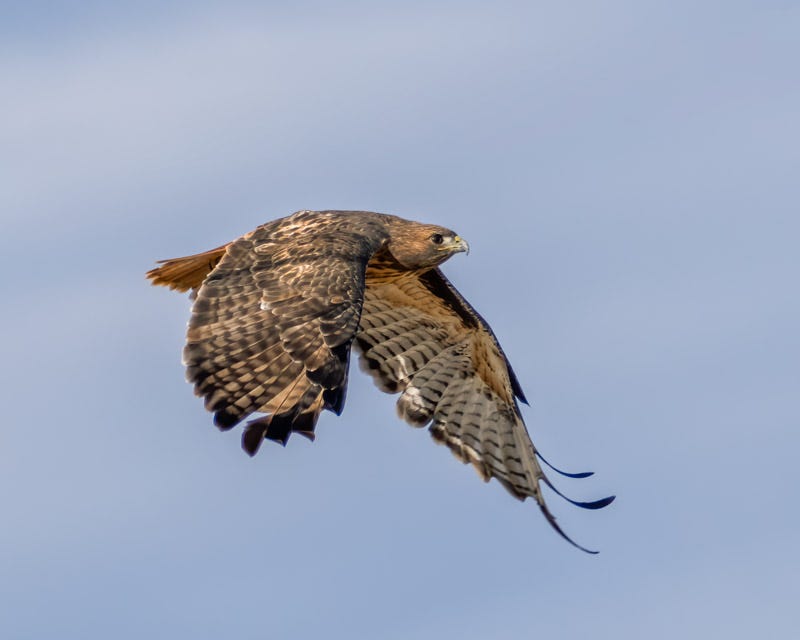
The Hawk began to tuck its legs in as it reached up for its next powerful stroke.
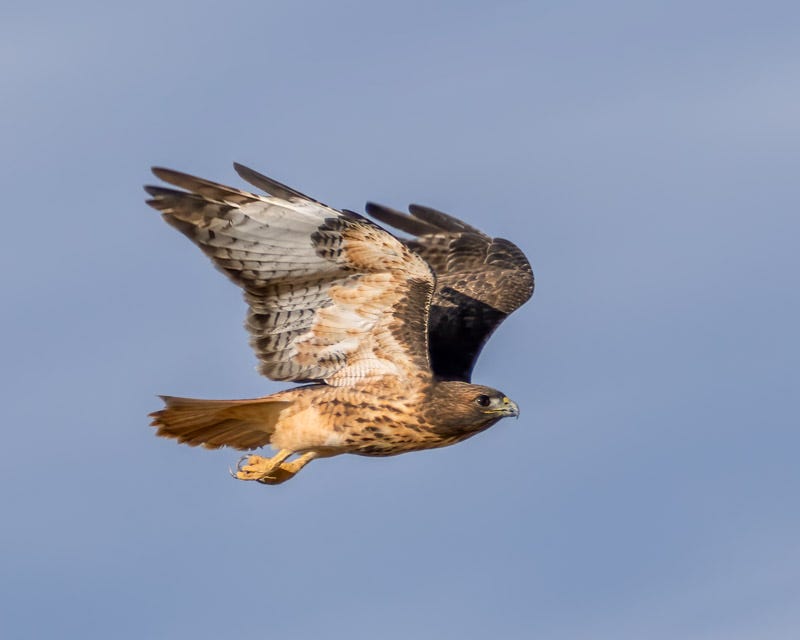
This bird was an adult Western Red-tailed Hawk. The red (actually rufous) colored tail lets us know this bird is at least into its second year. The dark, trailing edge of its wing feathers is another sign that this bird is an adult.
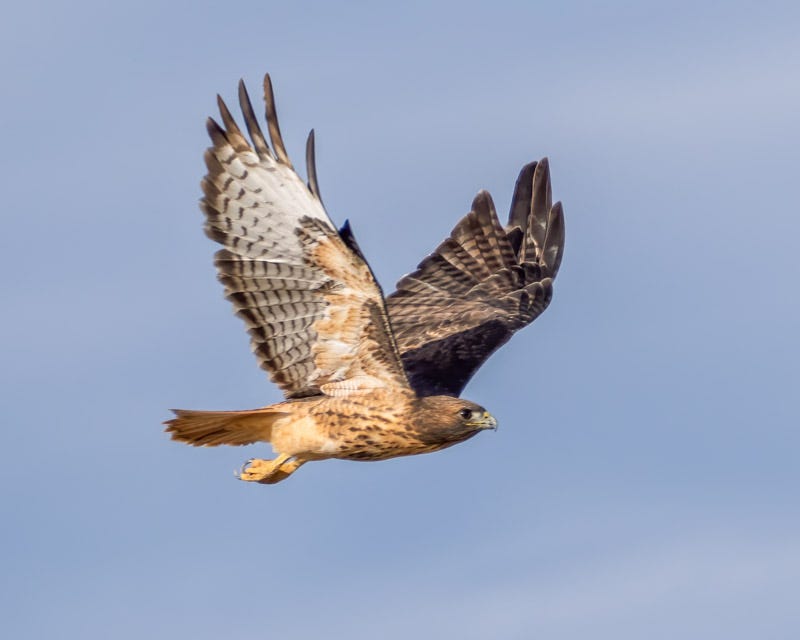
Red-tailed Hawks come in a variety of plumages, called morphs. Most can be identified as a Red-tail by their body size and shape plus two features that this bird had. Another great identifying mark for Red-tailed hawks can be seen in the photo above. The dark leading edge of its underwing in the shoulder area, from its body to its wrist, is called a patagial mark. Most Red-tailed Hawks have a patagial mark. This bird also had a ‘belly band’, those dark streaks across its belly. That is another distinctive sign of a Red-tailed hawk.
“I am the hawk... share in the freedom I feel when I fly.” — John Denver