

A neighbor two streets up from me has had a nesting Hooded Oriole each of the past two summers. Last year I bought an Oriole nectar feeder and was pleased to see how quickly his Oriole found my feeder and came to feed in my yard often. I’ve waited all winter for him to return and last week I finally placed the feeder out again. The Hooded Orioles have returned to the Tucson area for their breeding season so I was hoping to attract the same Hooded Oriole once again. Imagine my surprise when I looked at the feeder the first afternoon it was out and I saw a Bullock’s Oriole!! I had never seen that bird in my yard ever.
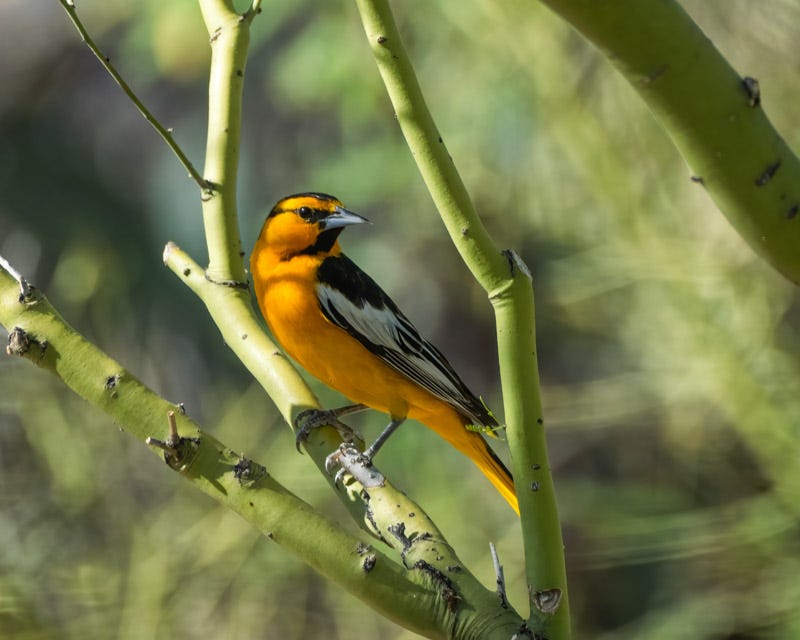
Birdnote tells us more about Bullock’s Orioles. While listening to the story, you can hear their call and imagine what the bird in the photo below sounds like.
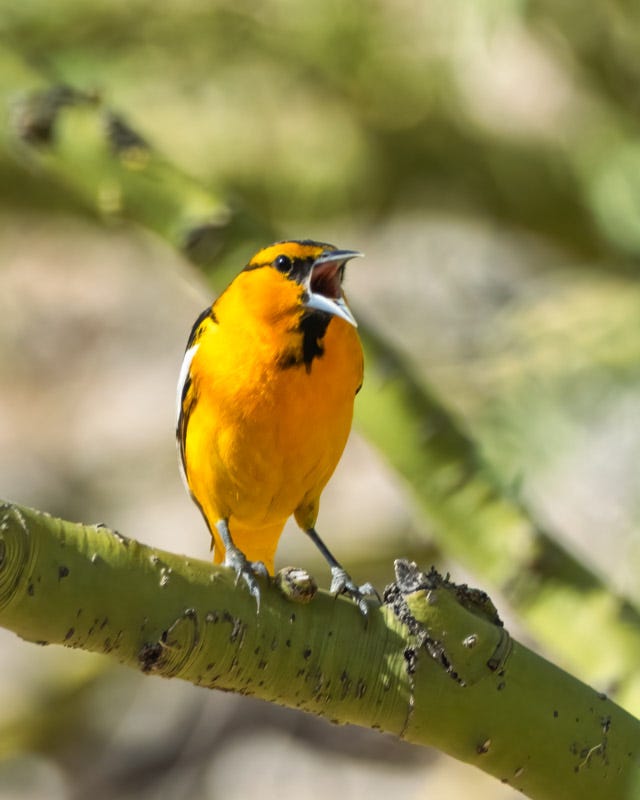
Those of you who come from or still live in the eastern half of the United States may be familiar with the Baltimore Oriole (the bird, not the baseball team). The Bullock’s Oriole is the western North American counterpart to the Baltimore Oriole. The two were considered separate species, then were combined into the “Northern Oriole” between 1973 and 1995, but have since been separated back into distinct species.
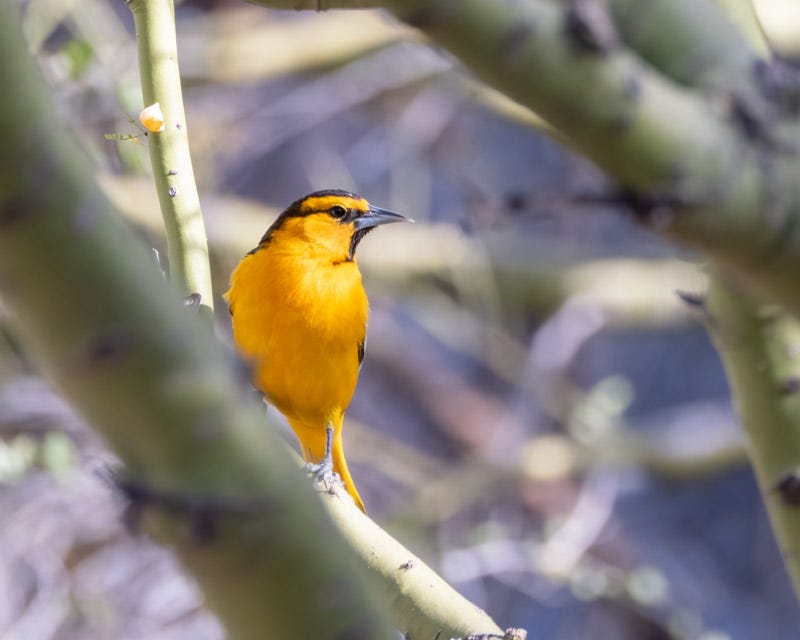
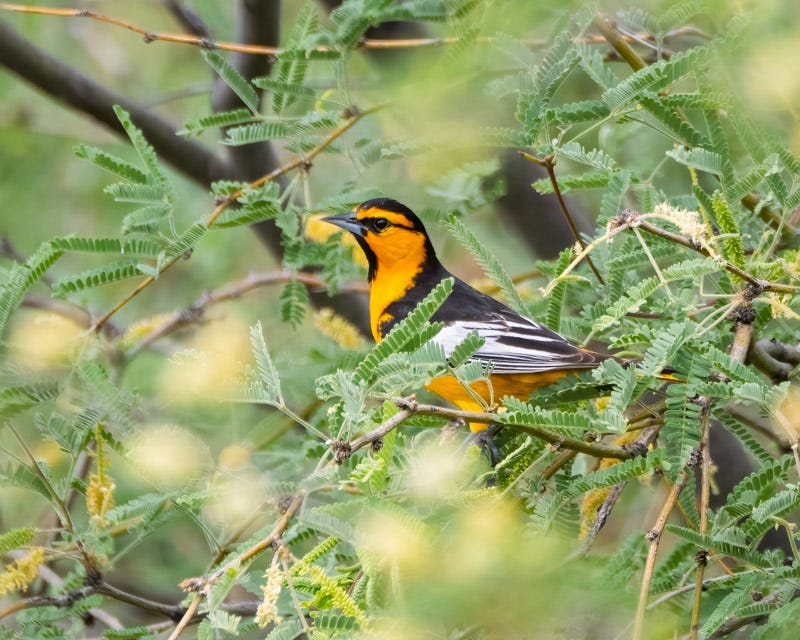
There are actually two different males coming into the yard. I have seen both at the same time. Both of the adults seem to be shy. By that I mean that they often approach but remain hidden in trees close to the feeder. They hesitate before coming into the palo verde tree that the feeder is hanging in. Sometimes they will fly off without feeding if something spooks them.
Orioles are attracted to the color orange and associate that color with food so specialized Oriole feeders are colored orange. This nectar feeder is designed similarly to many hummingbird feeders, but it is colored orange rather than red. The feeder’s ports that the Orioles drink nectar from is larger than the ports in hummingbird feeders in order to accommodate the Orioles much larger beaks.
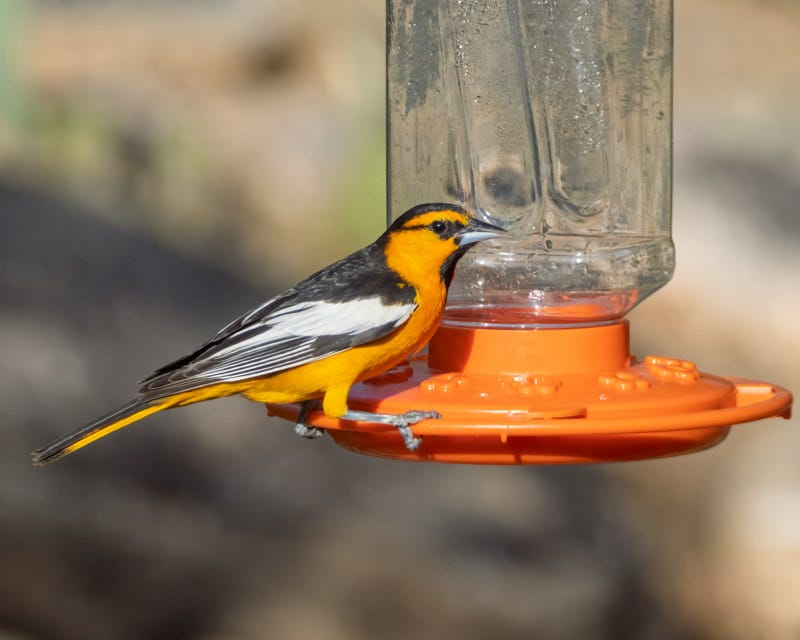
The Oriole seems to always be alert while it approaches the feeder. I can tell that it sees my movement through the windows of my house. It is also on the lookout for approaching Gila Woodpeckers. Those two birds will wait for the other to finish feeding. They may also chase the other away from the feeder.
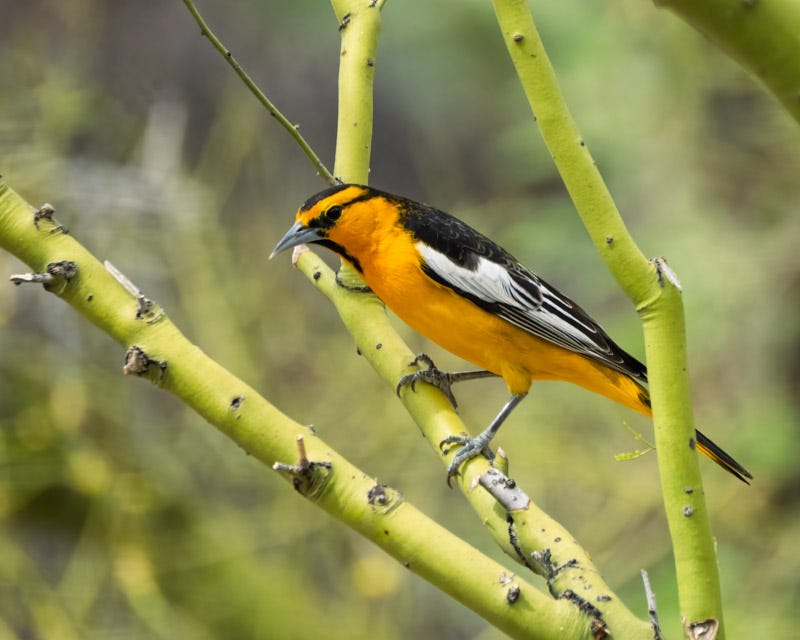
The bright color of the male Bullock’s is an orange/yellow. The vibrance or brightness of that color depends on the bird’s diet during the fall molt when their new feathers grow in.
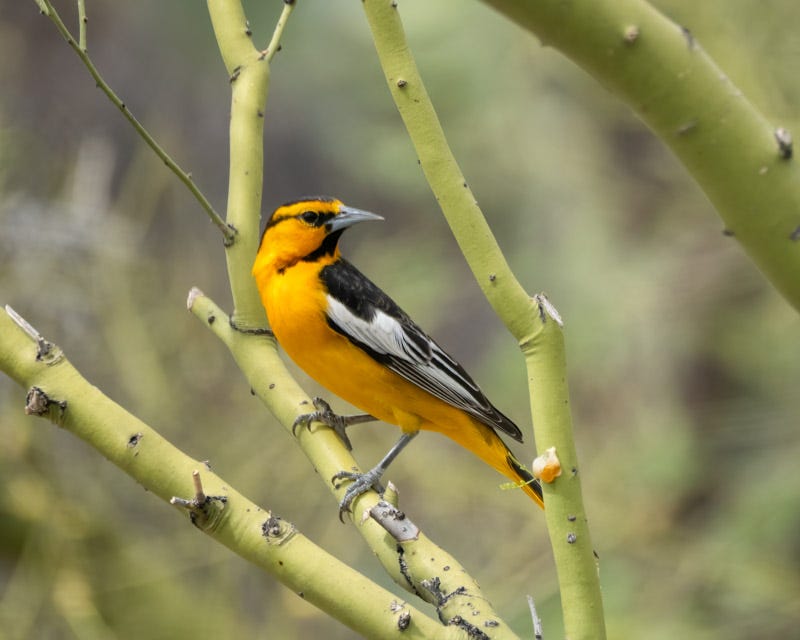
The Bullock’s Orioles regular presence makes me believe, or hope, that there is a nest somewhere nearby. I have yet to see a female so perhaps the male is just establishing his territory. Bullock’s Orioles build their nests in riparian areas but have adapted to urban areas as well. I’ll need to look for their hanging woven pouch nest in all of the large trees in my neighborhood. Birdnote explains their nest building process.
Couldn't happen to a more deserving guy - thanks so much for taking the time to share your great shots and copious, well researched knowledge.
So lucky!!