

Scott’s Orioles arrive in southern Arizona in the springtime. They generally aren’t seen in the flat cactus land of the Tucson valley but you can find them at slightly higher elevations. Look for them in our surrounding mountains beginning in elevations where there are ocotillo or yucca plants and then continue on up the mountain slopes. When we visited the Chiricahuas, there were many Scott’s Orioles to be found.
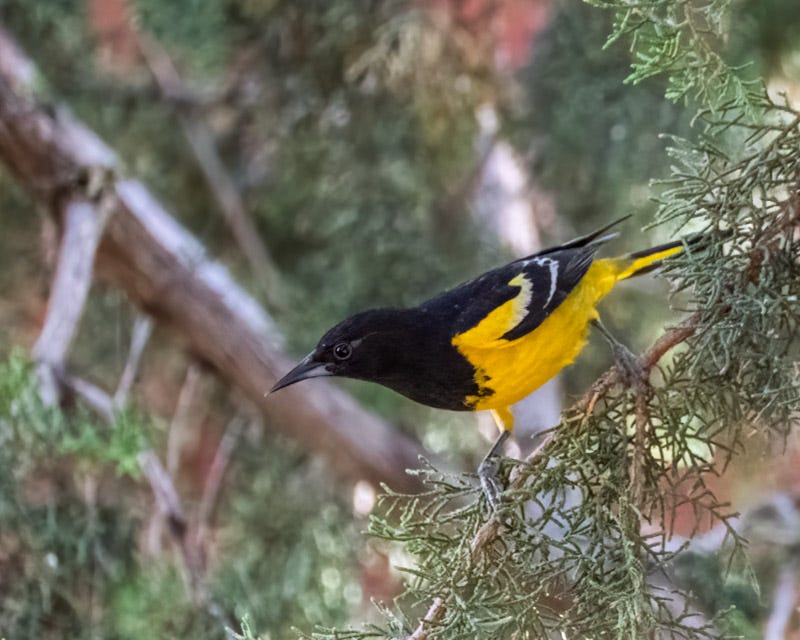
This male Scott’s Oriole perched in a juniper tree while waiting to get to the feeders at the George Walker House in Paradise. The male is a striking bird with a bright, lemon-yellow body contrasting with a jet black head, breast, and back. It has a prominent white wingbar and it has sharp bill has a blue base to it.
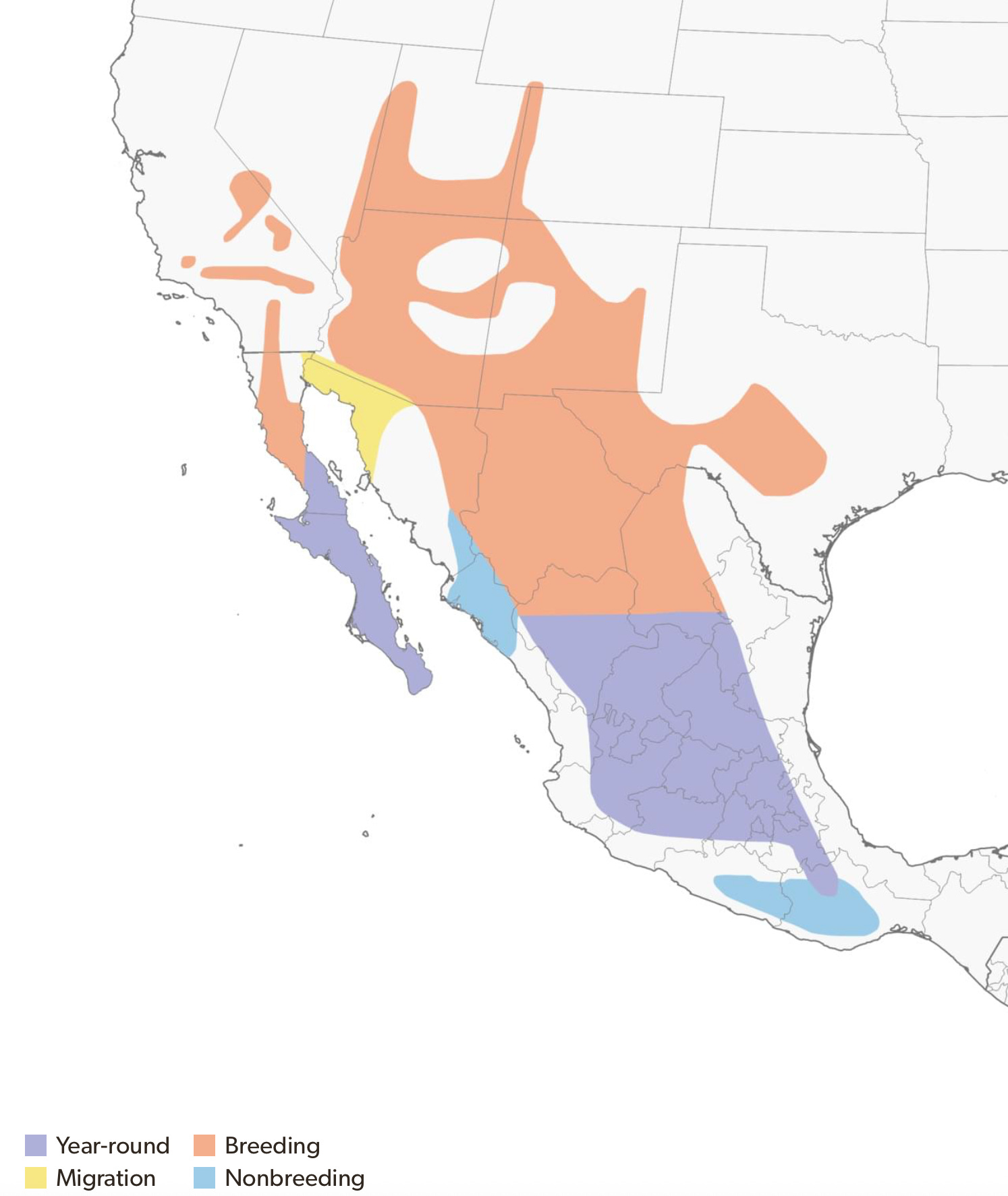
This range map from AllAboutBirds shows the areas that Scott’s Orioles can be found in during the warmer breeding season. They are found in appropriate habitats within those “orange” regions on the map.
We stayed at the Southwestern Research Station in the Chiricahuas. It is operated by the American Museum of Natural History to support research and education in the incredibly rich and biodiverse area. Scott’s Orioles seem to nest there annually. One morning, I was sitting on our apartment’s porch and I saw a bird make several flights across the parking lot into a tall yucca plant. I looked more closely and realized that the bird was a female Scott’s Oriole which was fixing up her nest.
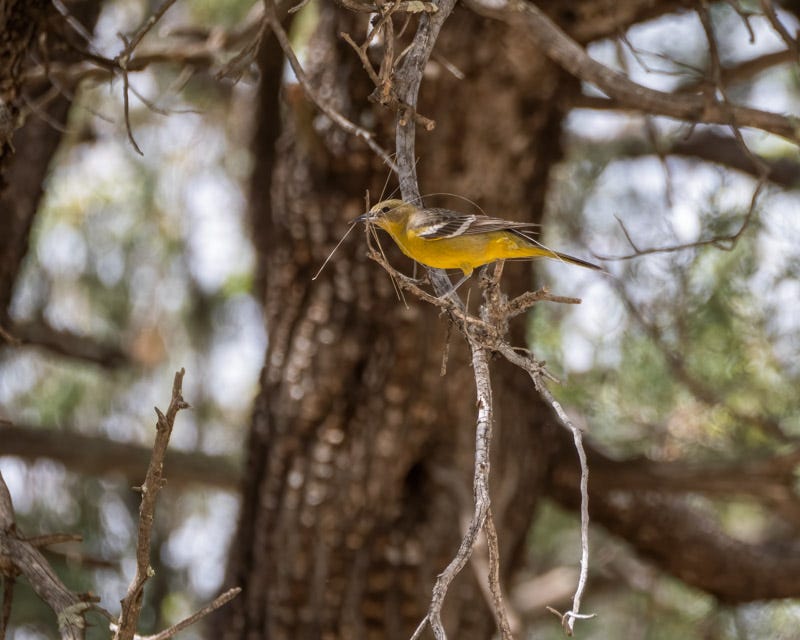
Without getting near the nest, I stood across the parking lot, waiting and watching. With the telephoto lens on my camera, I was able to observe her bringing fibers to her nest which was located in the yucca. Female Scott’s Orioles are a dull yellow and lack the striking black of the males.
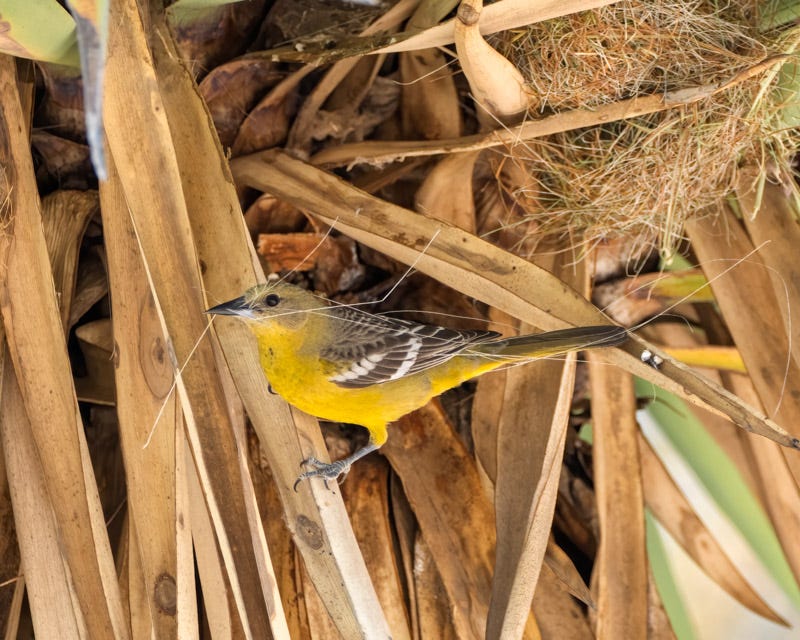
Scott’s Orioles have been called “Yucca Orioles” due to their preference for building nests in yuccas and using yucca fibers to build their nests with. You can see the cup-like nest to the right of this bird.
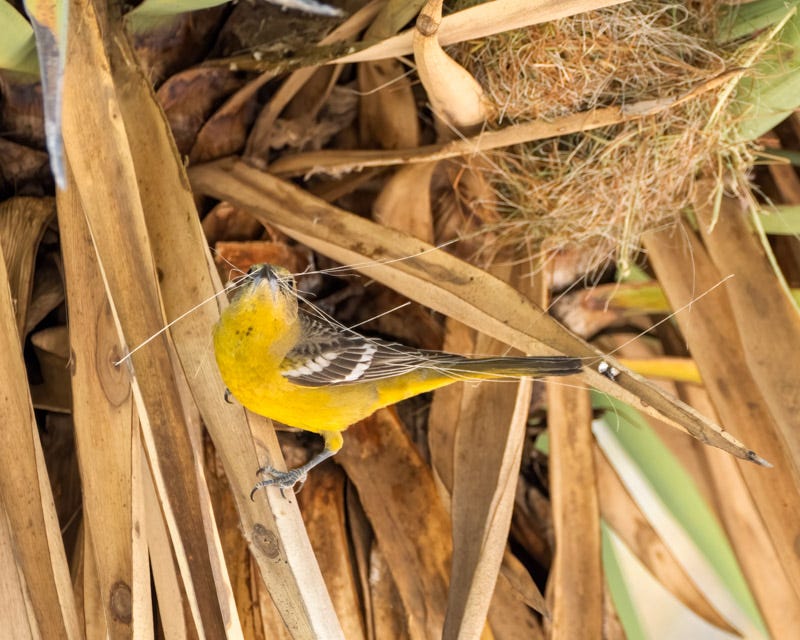
I never saw her fly directly into the nest. She would land on the yucca, hop around a bit, and then finally enter the nest. Once there, she would place the fiber where it needed to go, and then she would exit the nest a minute or two later.
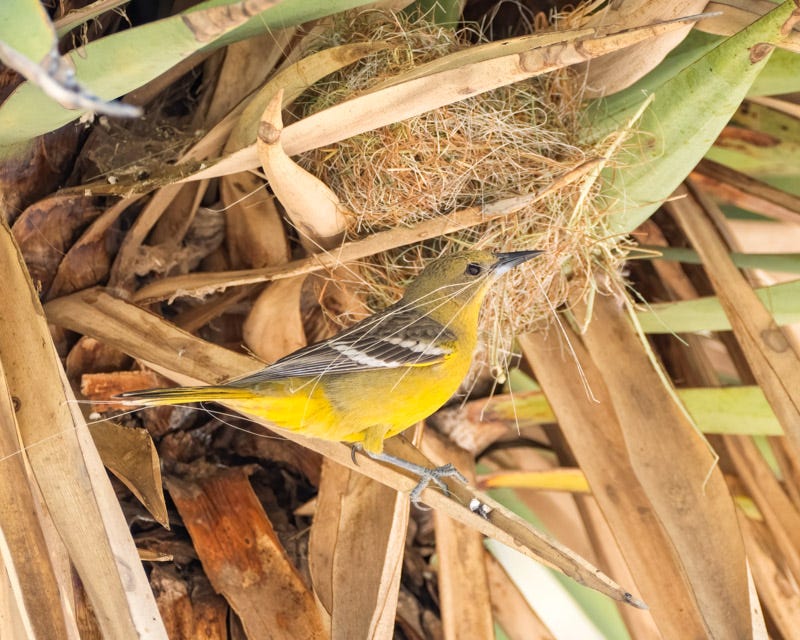
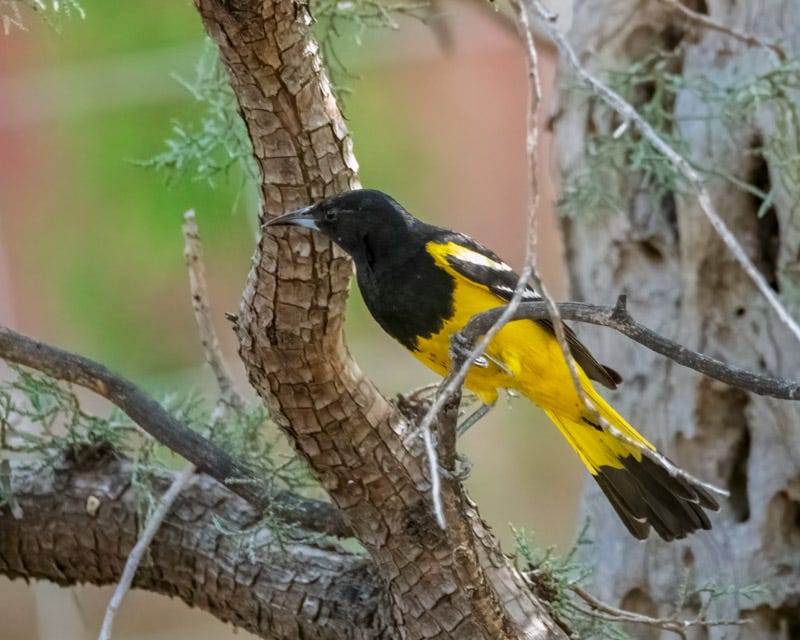
I never saw a male Scott’s Oriole near that nest during my stay. They were on the grounds of the Southwestern Research, but never near the nest. I understand that while the female is weaving her nest together, the male’s role is to protect the territory from rivals and predators. The bird below was one of the males that I photographed at the George Walker house.
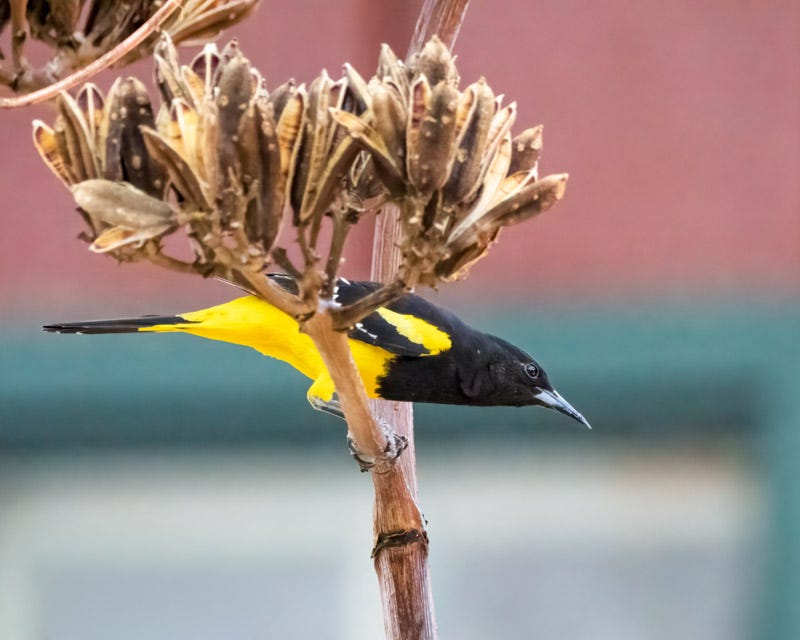
The Scott’s Oriole is a delightful summering bird to see and the Tucson Bird Alliance tells us more about this species.
What a great organization l!
Beautiful....Thankyou!