

Pinal County in Arizona is located between Pima County (where Tucson is) and Maricopa County (where Phoenix is). Typical of counties in Arizona, Pinal County is large, ranging over 100 miles east-to-west and 60 miles north-to-south. Just over half of Pinal County consists of low desert landscape. Within that desert landscape is a premier winter birding area called the Santa Cruz Flats. It spans about 350 square miles, roughly a quarter of a million acres. Picacho Peak anchors the eastern edge of the Flats.
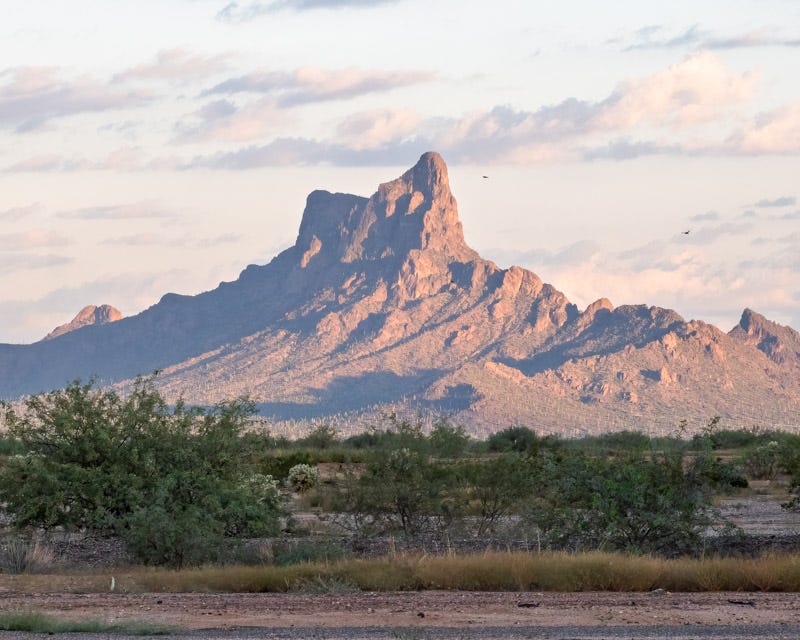
Thanks to agricultural areas, the desert scrub, and feedlots, the Flats attract a wide variety of wintering birds including raptors. I was driving through the Flats with a friend a few days ago and came across a bird that surprised us. Osprey are very large raptors that specialize in hunting fish. They have been known as the Fish Hawk, the Fish Eagle and the Sea Hawk among other names. Fish are estimated to make up 99% of the Osprey’s diet. So what was this fish-eating bird doing in the middle of the desert?
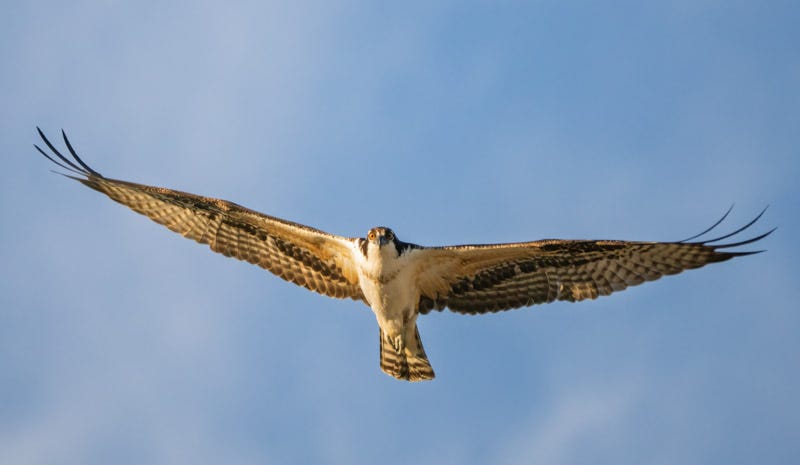
Osprey are uncommon in the Tucson area and southern Arizona but can be spotted during migration season and cooler months. Since they feed on live fish, they may be found near bodies of water such as Lake Patagonia, Kennedy Park, or Lakeside Park. Osprey will travel about 150 miles per day during migration but they will make pit stops along the way to rest and hunt for a few days before resuming their travel. In the photo below, you can see the Osprey gliding through the air with its wings in a typical “M” shape.
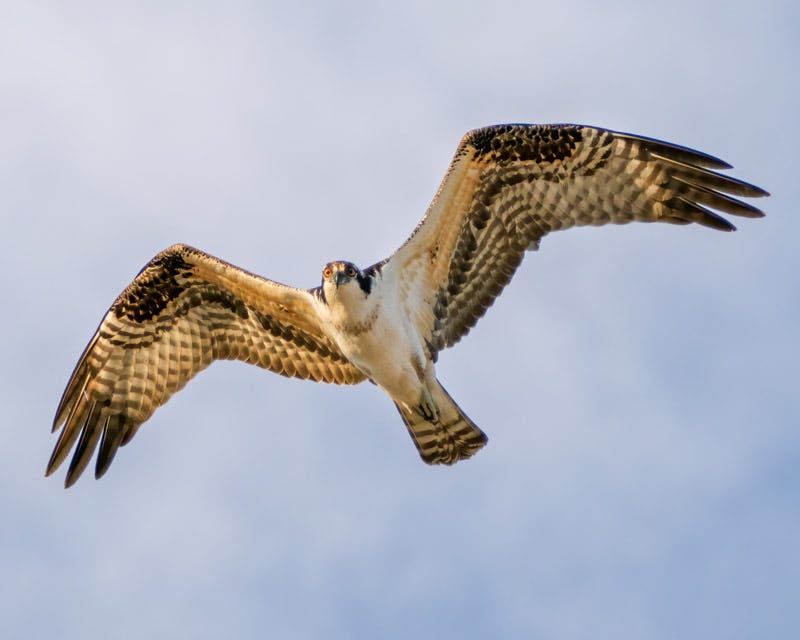
We thought the Osprey was continuing its journey. The Osprey stopped gliding and hovered, looking towards the ground. This was hunting behavior. The expanse of agricultural land in this area uses water from the Colorado River pumped in by the CAP (Central Arizona Project). Fish do get caught up in this process and can be found in some of the irrigation canals so perhaps this bird saw something!
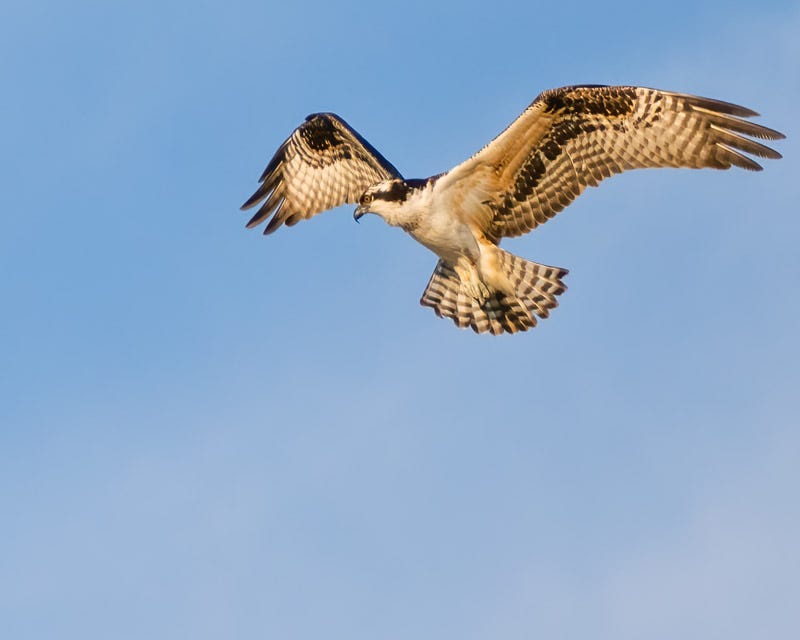
The Osprey dove down suddenly and then disappeared from sight. It reappeared but flew off towards a distant utility pole. We headed towards that pole and as we approached it the Osprey took to the air once more. This time, it was carrying something!
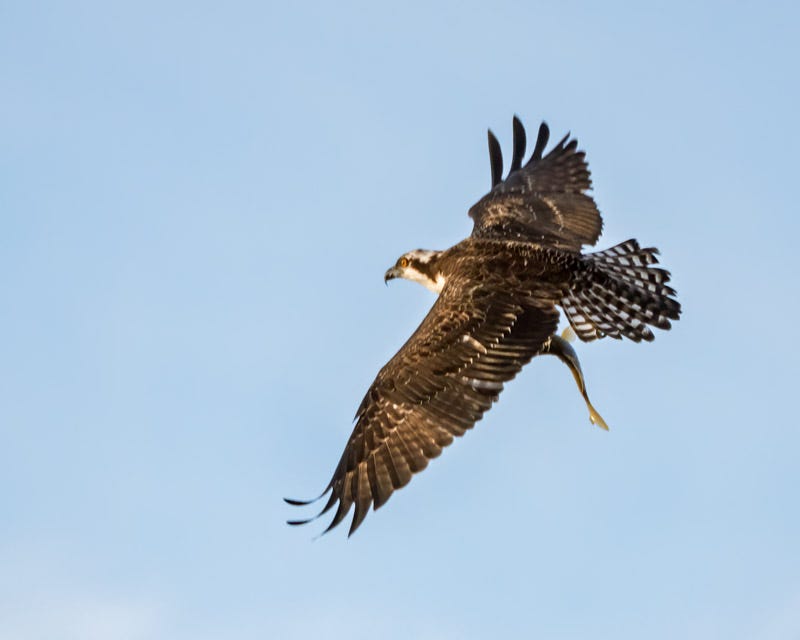
The Osprey was carrying a large fish. The CAP places up to 3000 Grass Carp in their canals annually. These fish have been scientifically sterilized to prevent reproduction but the fish are used to eat aquatic vegetation that would otherwise clog the canal system. Osprey are two feet long, head-to-tail. Knowing that, the Carp looks to be at least one foot long!
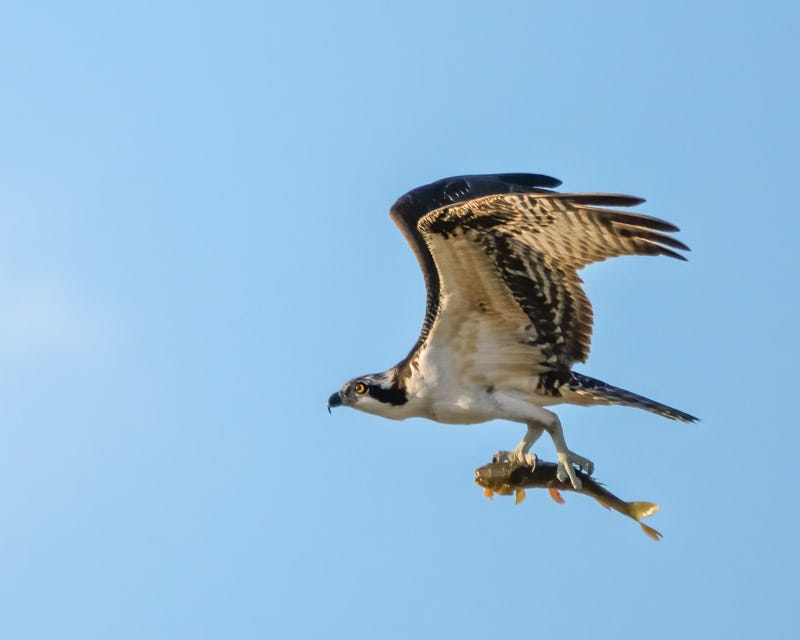
Osprey carry their fish aerodynamically. The fish are held head-first to reduce wind resistance. One foot holds the fish’s head and the other, placed directly behind the front foot, holds the fish closer to the tail. Other Hawks carry their prey with one foot. Osprey use both feet in tandem.
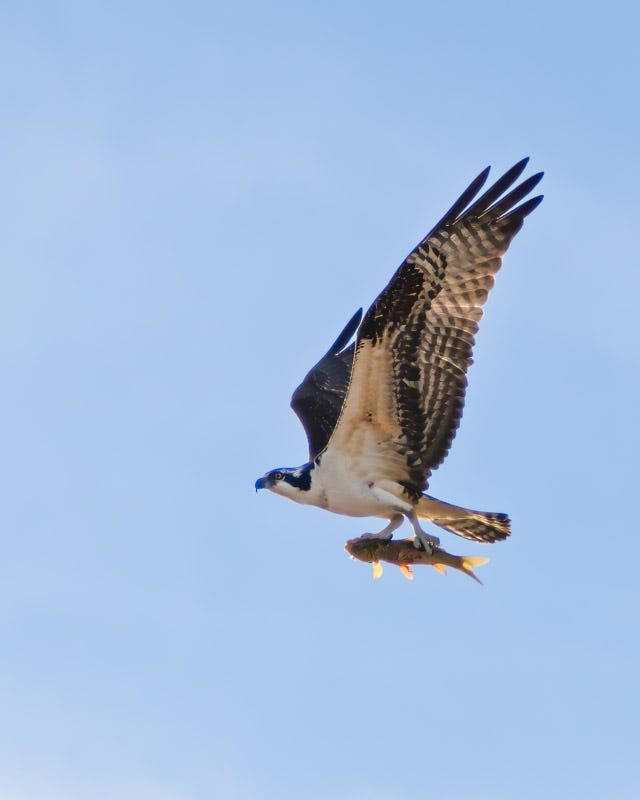
When providing for a family, Osprey will hunt several fish per day. When fattening up for migration they will also hunt often and eat much. But during the remainder of the year when they live solo, they only need to eat about 14 ounces of protein daily. A carp this large may be the only meal this bird needs to meet its needs that day.
Whether that Osprey will live all winter in that expanse of desert and farmland, or whether it will soon continue its journey south, we don’t know. But it sure was fun to see that big bird fishing in the desert. For a bit more on our area Osprey, here is an article by the Tucson Bird Alliance.