

I have a fondness for Owls of all types. Sometimes when I take photos of them I can make a nice newsletter about them. Sometimes photos don’t fit into a nice package so I keep them around until I figure out what to do with them. Below are a number of photos which have been waiting for their time to shine!
In May I learned about some Elf Owls in a wash in Pima County. Together with a few friends, we were able to spend a number of evenings in the desert after dark observing this pair of owls
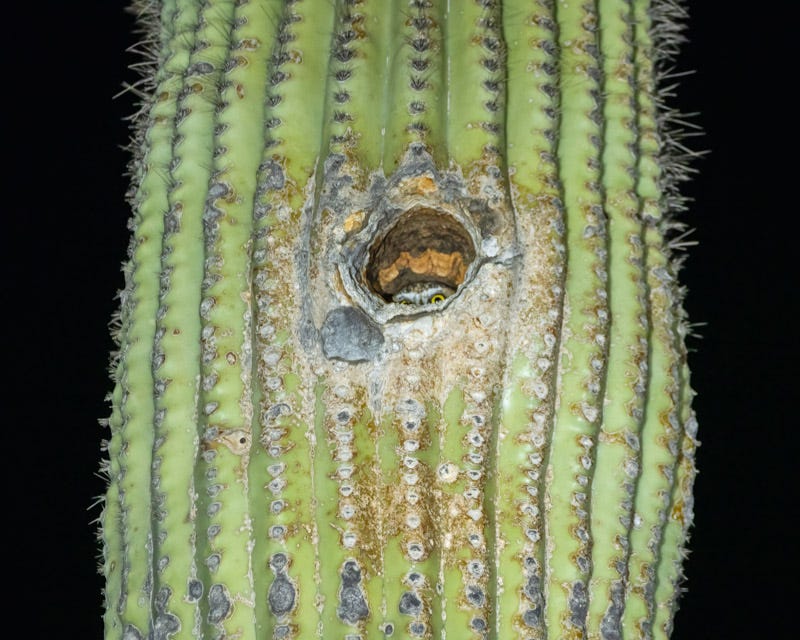
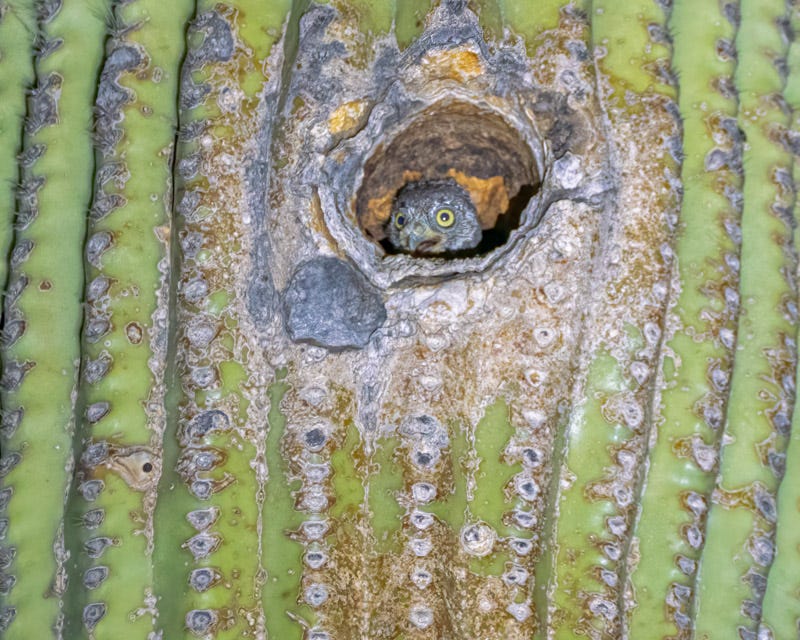
Once we discovered where the nest cavity was, that was the spot for our observations. By our second visit, the female Elf Owl was in the saguaro nest during most of our visits. Week after week we watched from a distance. Her changing behavior, calls, and interactions with the male Elf Owl helped us learn about her nesting habits. Once she had eggs and then young in the nest, she would wait and wait for regular food deliveries.
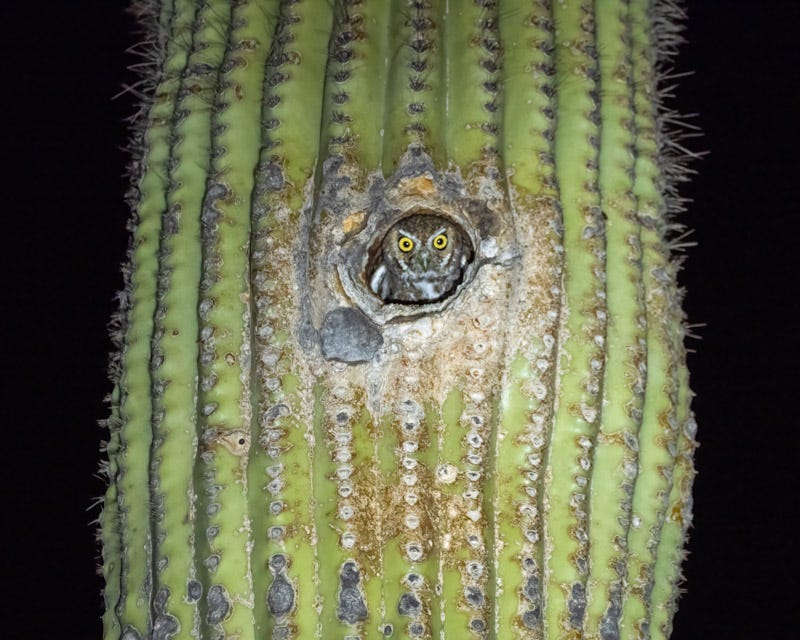
Elf Owls are the smallest species of Owls in the world. The primary food choice for these tiny owls is insects. Shortly after dark, the male Elf Owl began a series of food deliveries. The Elf Owl was busy capturing lots of food for his partner and for the young in the nest. Tucson Bird Alliance tells us more about these little Owls.
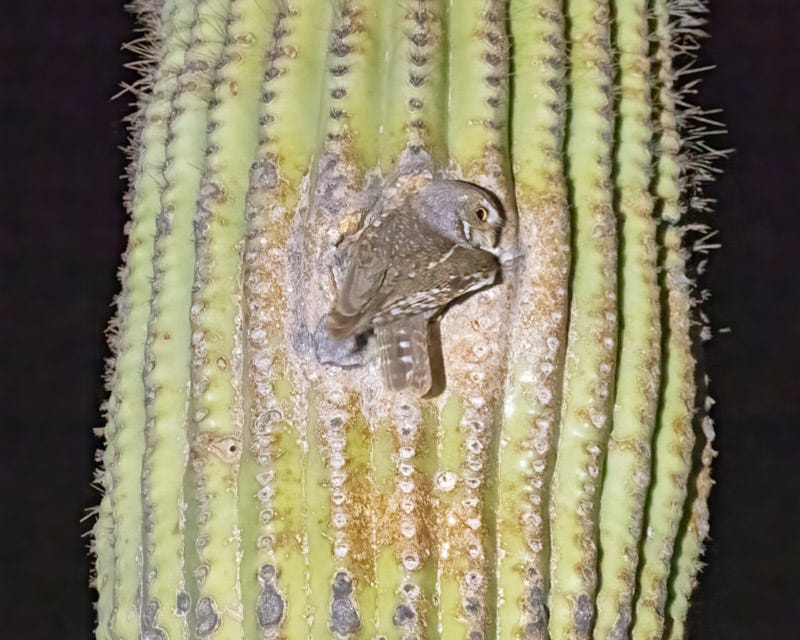
On our final visit, we saw a young Elf Owl inspecting the world. After seeing it, we realized that our visits would come to an end. That last night we heard a distant Great Horned Owl and the father did not make food deliveries for a very long time. The threat of a large predator in the valley was enough to shut down the movement and the hunting efforts of Elf Owl. We left knowing the next phase in that Owl’s family life was critical and we wanted to make sure we didn’t impact their world in any way.
Recently I shared some photos of Burrowing Owls in farmland near Tucson. I had been making visits in anticipation of a field trip to that area that I was to lead for the Southeastern Arizona Birding Festival. I captured the flight of one Burrowing Owl as it flew parallel to an irrigation ditch and in front of a field of Pima Cotton.
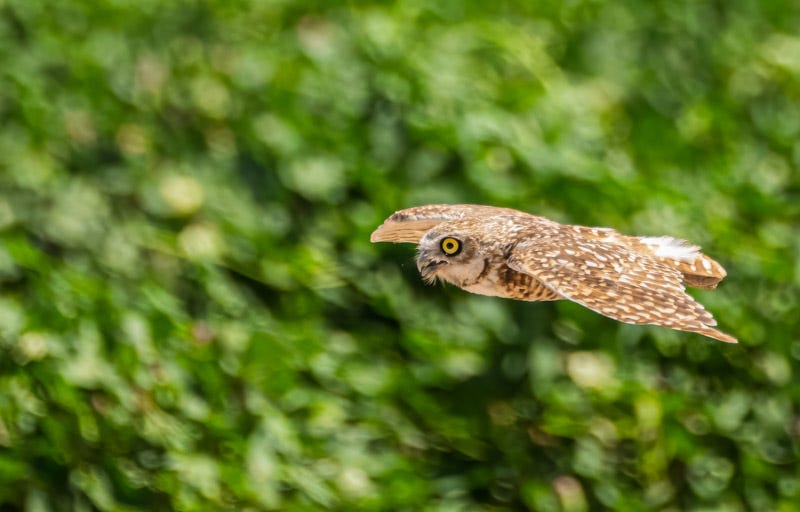
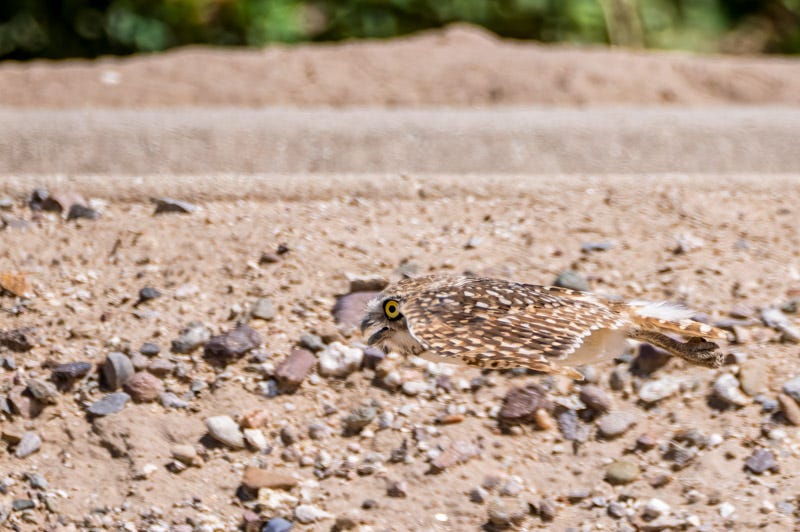
As it neared its burrow it moved over the irrigation canal and flew just above land and very close to the ground.
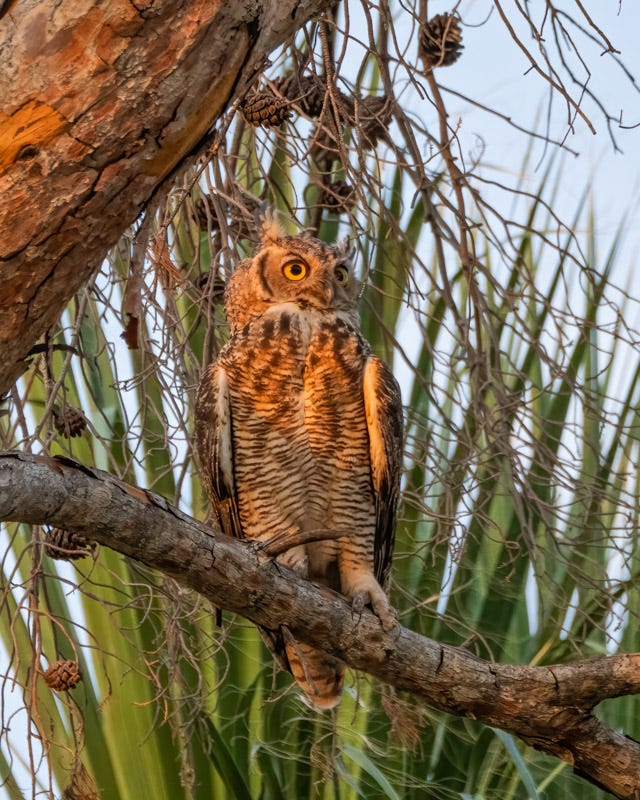
A friend and I visited some Great Horned Owls at Sweetwater Wetlands. This year’s young had recently begun living on their own, away from their parents. The parents, including Mom below, remained in the home territory for now. Perhaps that was a way to allow the young to return ‘home’ if they felt the need. You can see the vertical part in this bird’s breast feathers, denoting the brood patch that all female birds get in anticipation of breeding season.
The male Great Horned Owl was in a eucalyptus tree a short distance from the female. It was first light, and with the Owl perched in the shade, its pupils were dilated. Still, it was a summer morning in Tucson and hot already so this Owl was spreading its wings in an attempt to cool down.
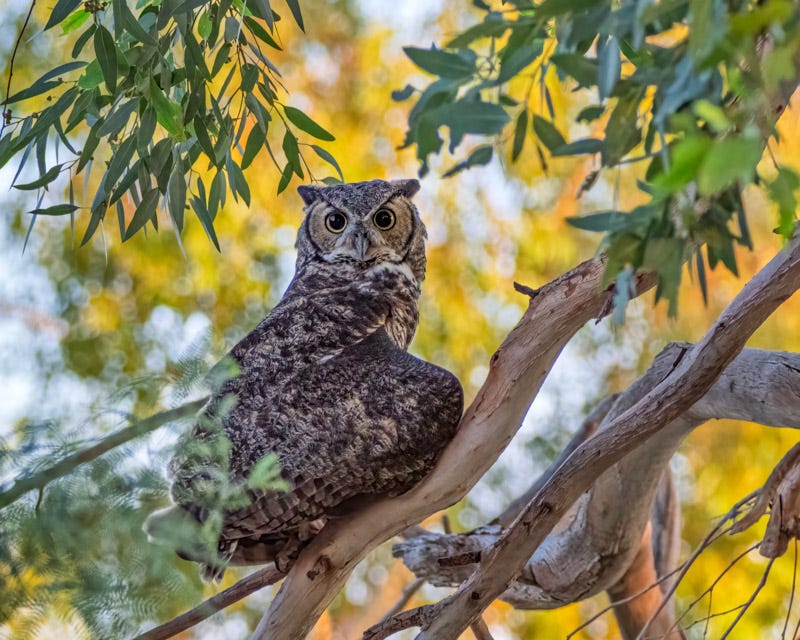
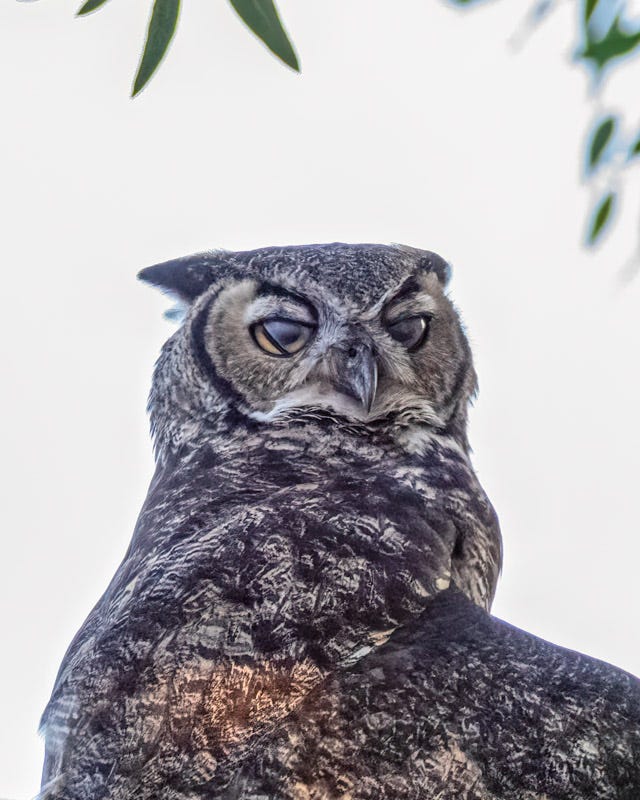
I moved around to try to find an angle where the Owl was not obscured by leaves. I got to a nice spot and the Great Horned Owl closed both of its third eyelids, the nictitating membrane. Between that effect and the lighting, it results in a photo with a ghoulish effect.
I sure like those Owls!!
Those Elf Owls are so cute in their cactus! And the look on the Great Horned Owl…so intense.
Love seeing the Owls! Thanks for sharing Dan
Do people give you owl themed gifts?