

When you think of Squirrels, you probably think of little animals living in trees. We don’t have forests in the desert, so our Ground Squirrels live primarily on the ground and in underground tunnel systems rather than in trees. Antelope Ground Squirrels is the name of a group of five species of Ground Squirrels that live in Arizona and in Mexico. The Harris’s Antelope Squirrel is the species in the Sonoran Desert and they live in our rocky, desert habitat. One family lives at the end of my street.
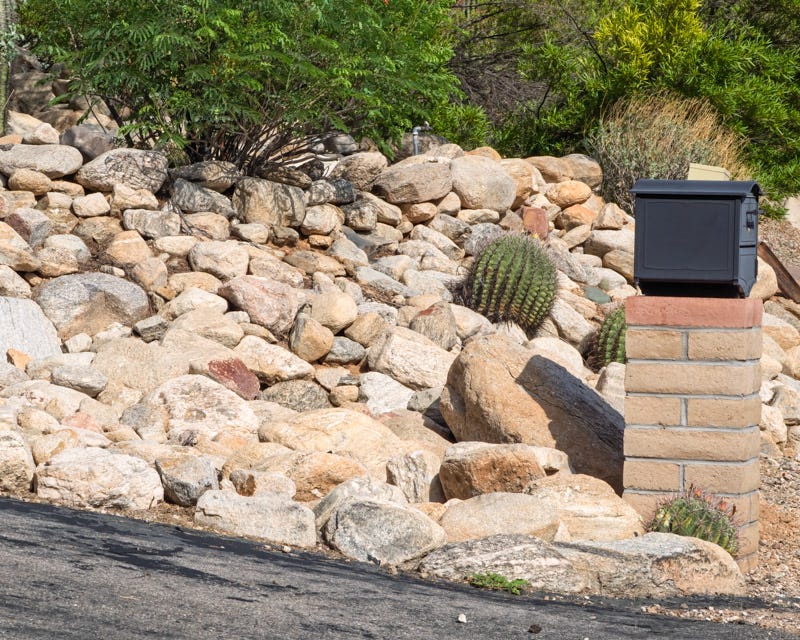
Their specific home is in this rocky spot. That’s where I see them playing and running around almost any time I walk or drive past it.
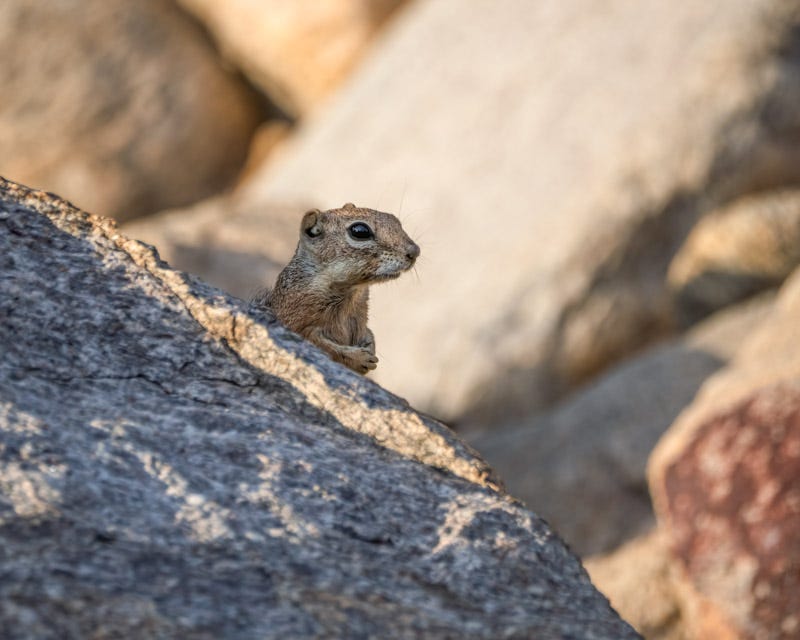
Harris’s Antelope Squirrels are a prey species sought after by virtually every predator in the Sonoran Desert including Roadrunners, Coyotes, Raptors, Snakes, Bobcats, not to mention domestic cats and dogs. Because of that, they are very wary and often stand tall to look for any nearby danger. The youngster below is one of the many in this spring’s litter. The black skin visible on its face is due to its molt- its new facial fur has not yet grown in.
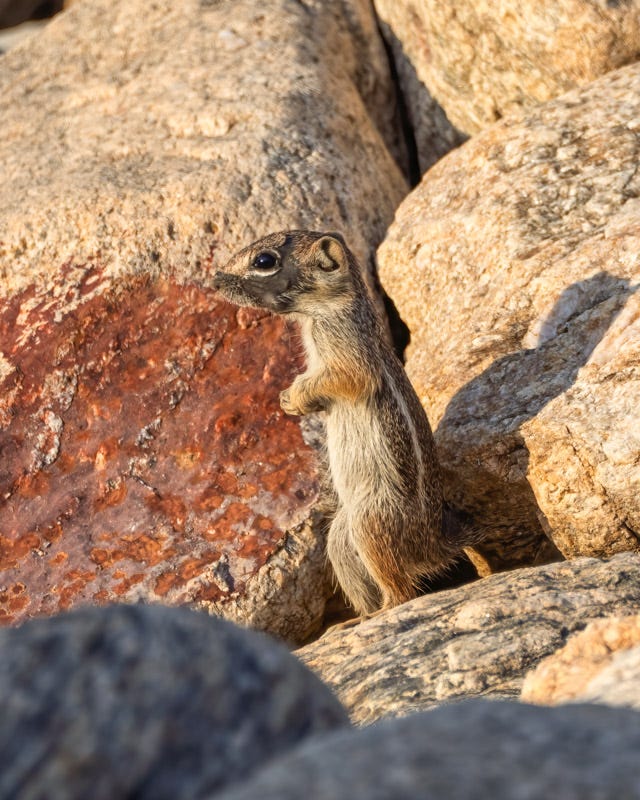
Antelope Squirrels get their name from the fact that they raise their tail over their back similar to how a pronghorn antelope will raise its tail while running. The Antelope Squirrel tail serves a great function in the hot, sunny desert. It acts as a sort of umbrella, providing constant shade to the squirrel. Some people think this Squirrel is a Chipmunk due to the white stripe on its side but it is not a chipmunk. Chipmunks have white stripes on their backs and along their cheeks. An Harris’s Antelope Ground Squirrels will have a stripe on its side, and not on its face
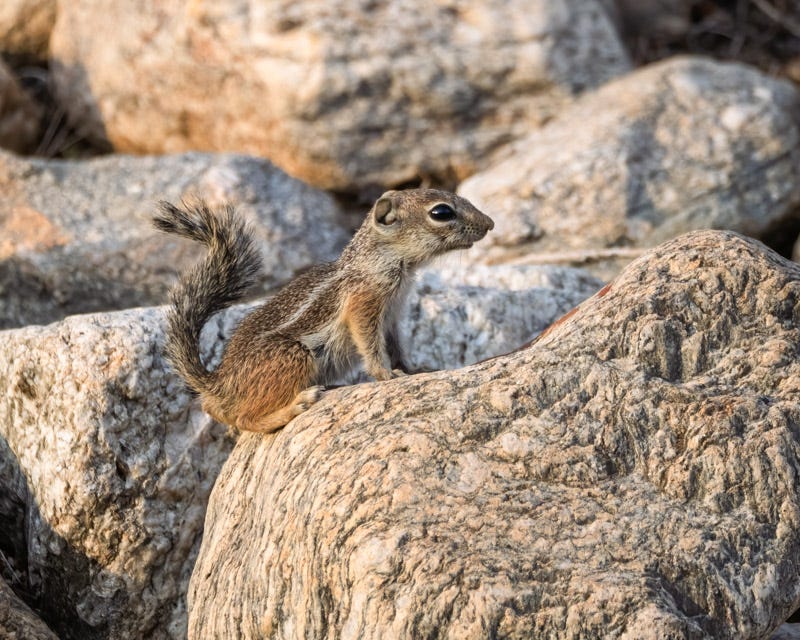
Unlike most desert creatures, Harris’s Antelope Squirrels can be very active during the day. They scramble over the ground, across rocks, and climb on barrel and cholla cacti quickly while looking for fruit. They are speedsters when they want to be and they are always on alert for any lurking danger.
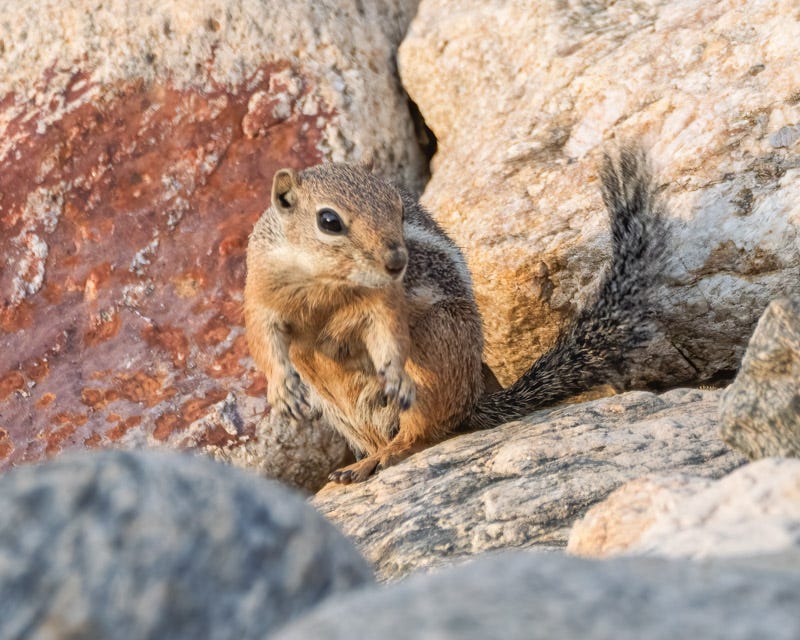
Here’s another youngster with a bare face. Litter size ranges from 5-14 with the average size being 6 or 7 pups. Some of the young in this litter have bare faces while others have all of their facial fur. The timing and rate of molt varies among individuals in the same litter.
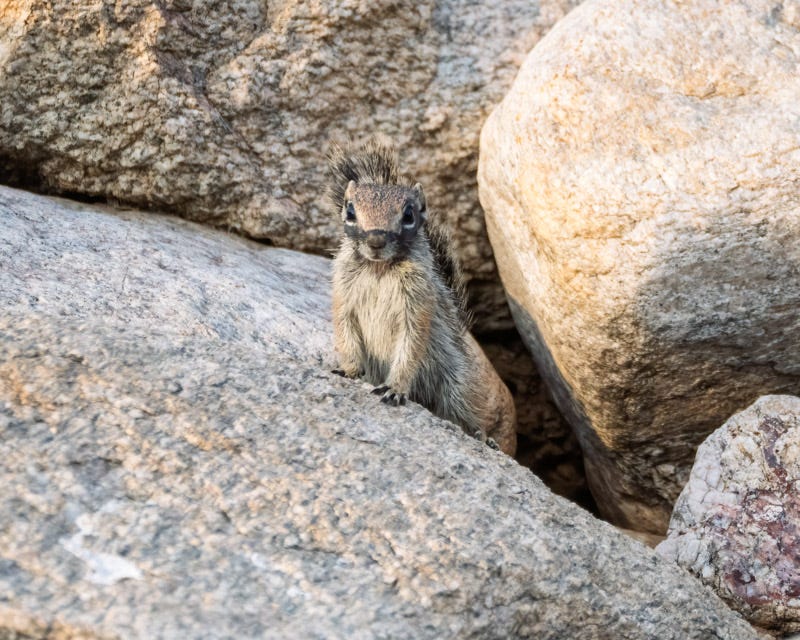
Here is the classic pose of a Harris’s Antelope Squirrel. For these photos, I sat on a rock on the opposite side of the street late one afternoon. It took about 15 minutes before the Squirrels even made their appearance. They all were very aware of my presence even though I never moved. I sat and watched them watching me for quite a while.
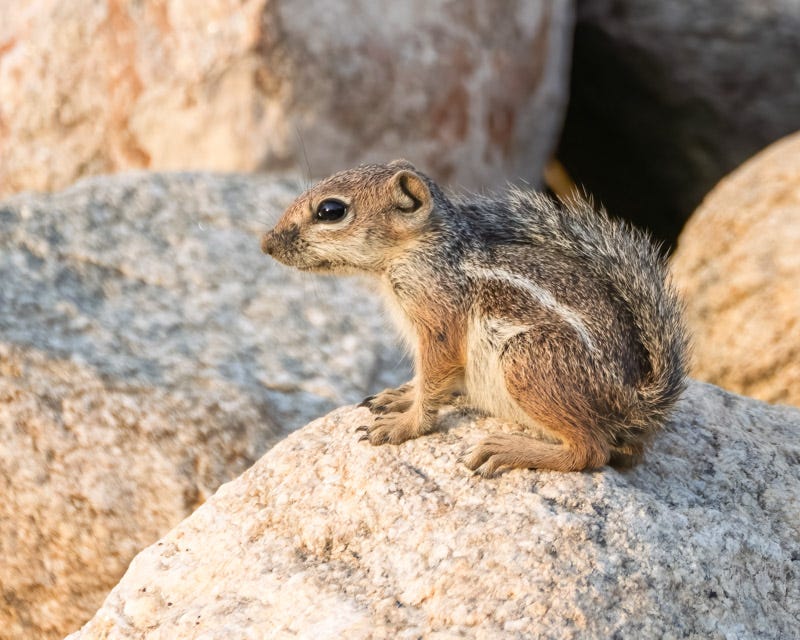
After some time, I was satisfied with what I had seen and my rear end was telling me it had enough sitting on the boulder. Before I stood up though, the mother Harris’s Antelope Squirrel made an appearance. Her young will nurse for up to 7 weeks before complete weaning occurs. At that time, the young will disperse.
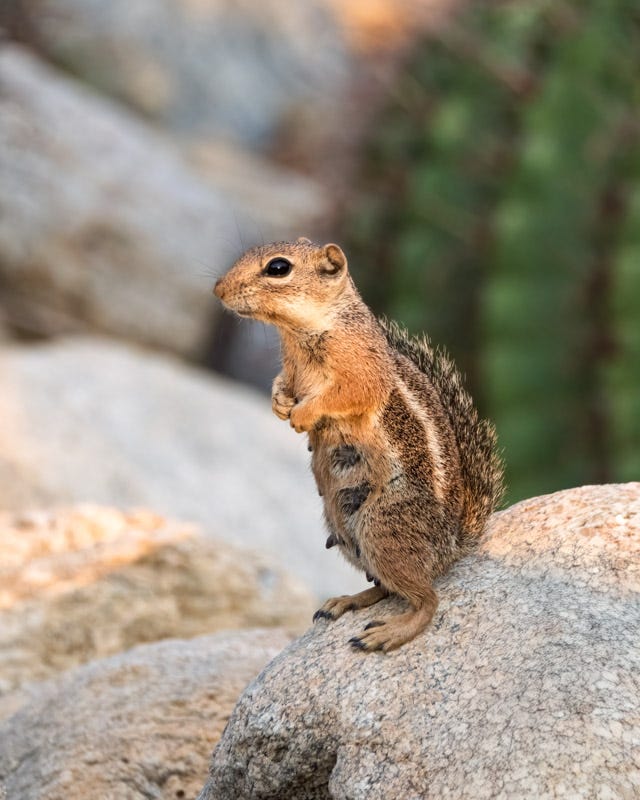
The Desert Museum has more on these special Squirrels as does Ned Harris with the Sabino Canyon Volunteer Naturalists.
Cute little guys! You sure get a great variety of visitors. Thanks for sharing Dan😊
Interesting....look like my northern Wisconsin chipmonks.