

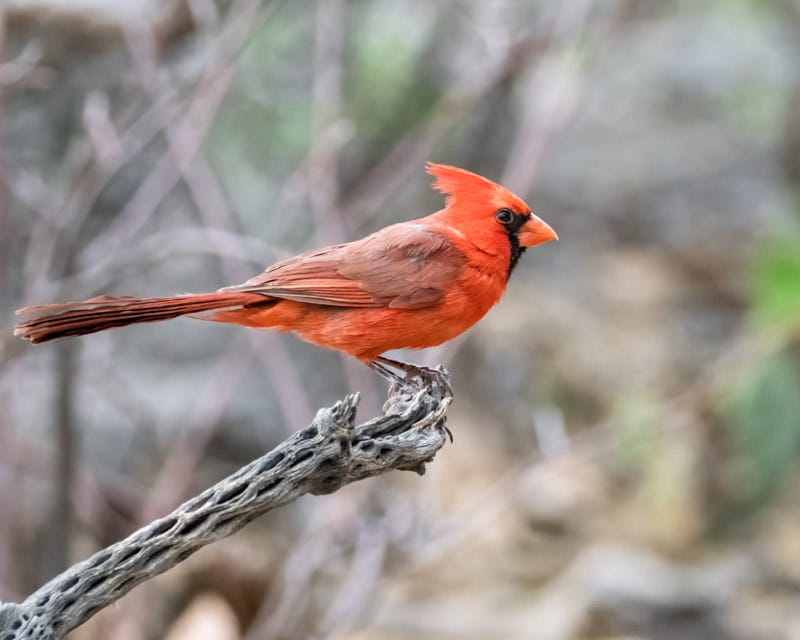
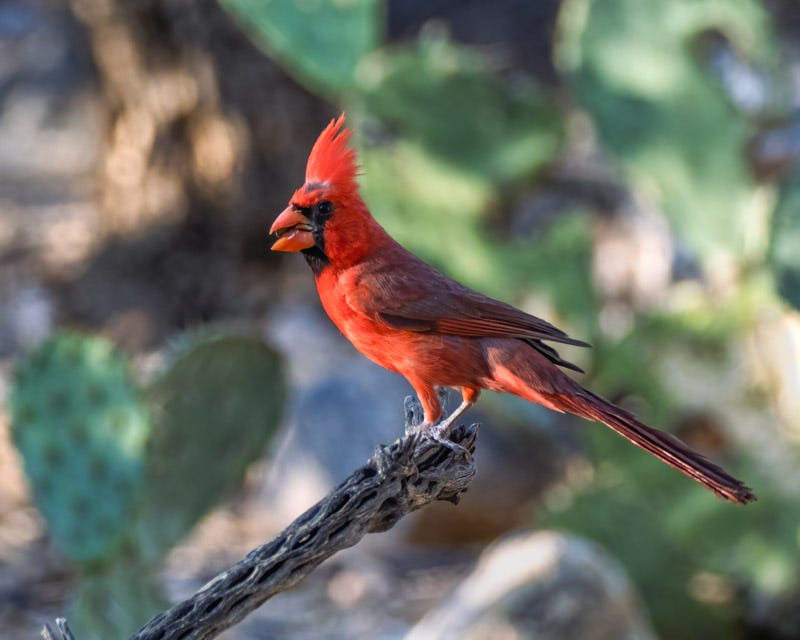
The northern Cardinal may be one of the most recognizable birds throughout the United States. It has a solid red body set off by a black mask and a perky crest on its head- a distinctive look. Seven states claim it as their state bird and many sports teams use the Cardinal as a mascot. I’m fortunate enough to have two different families of Cardinals frequenting my backyard and this series of pictures shows many family members during this year’s breeding season. Here is a male Cardinal I saw at the end of April.
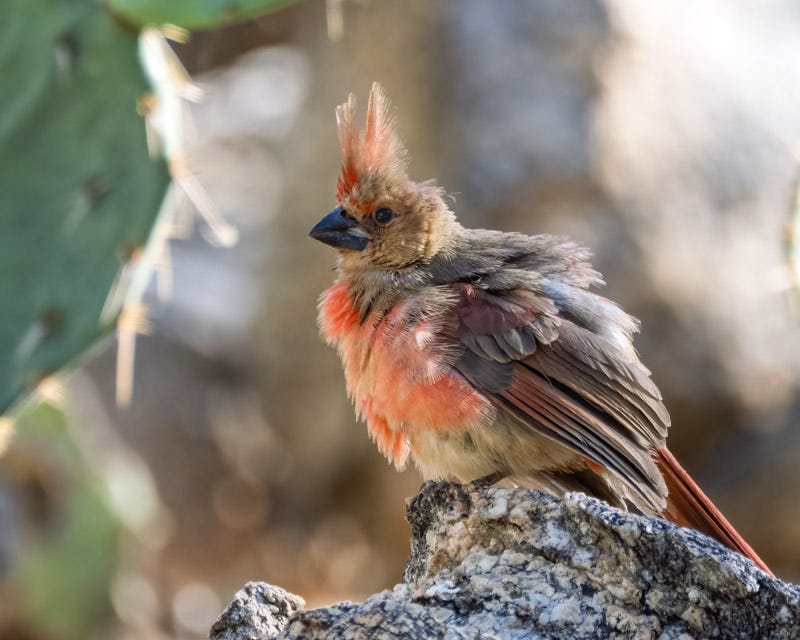
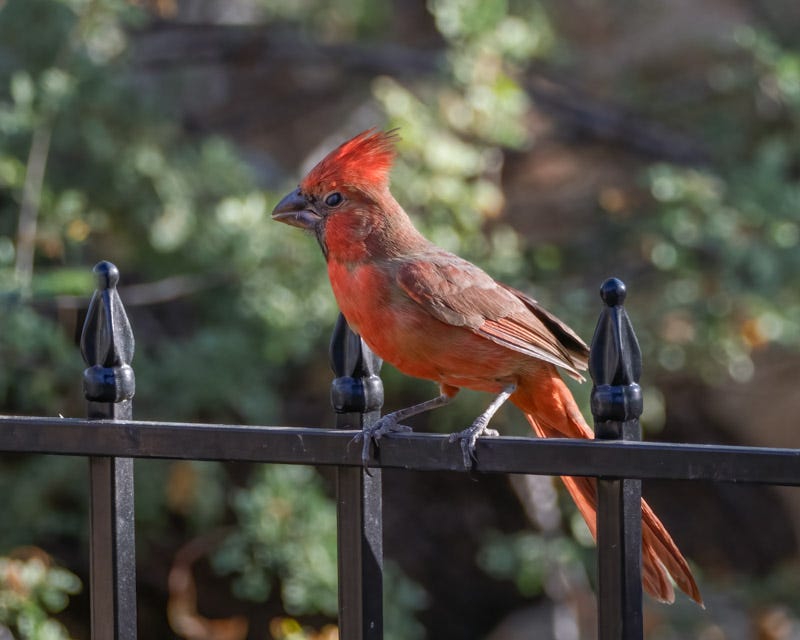
About a month after I took that male Cardinal photo, youngsters started showing up in my yard. Below is one of the juvenile birds. Young Cardinals begin their lives with a black bill that takes about a half a year until it turns bright orange. This young bird below is a male and he is beginning to develop the red feathers on its breast. The following photos were taken around the middle of May.
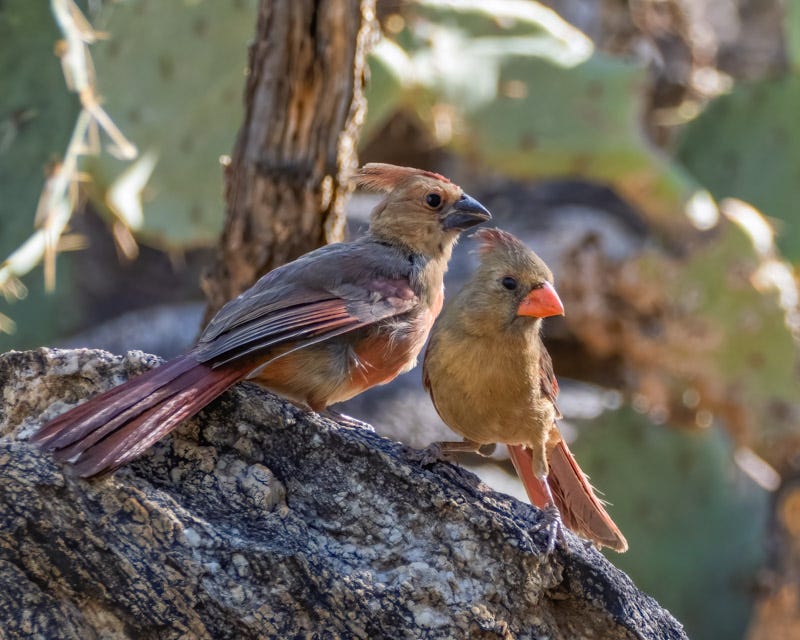
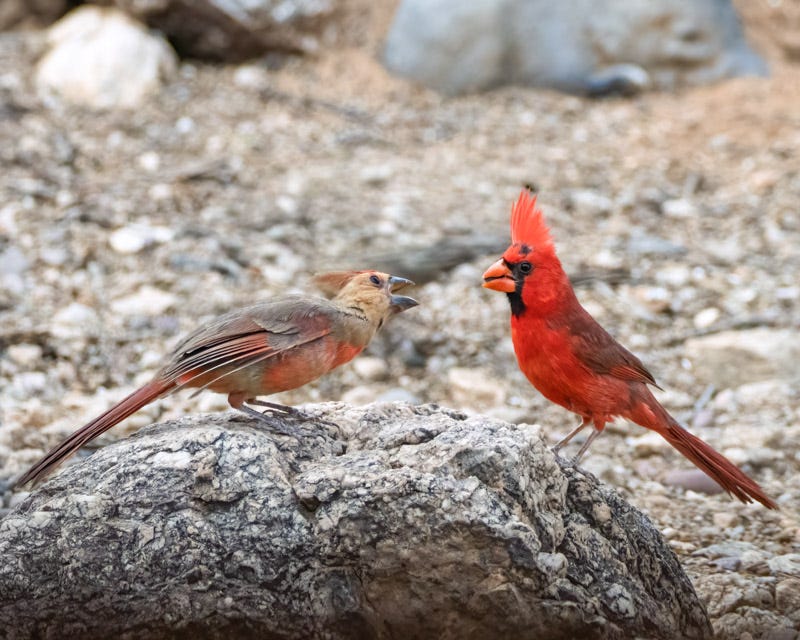
Because I believe I have two sets of cardinal families, I really couldn’t tell which bird belonged to which family. Here we had one female Cardinal on the right with the juvenile Cardinal on the left. They were looking over to a sunflower seed feeder where a male Cardinal was either feeding or getting some seeds to bring to the youngster. At this stage, both the adult male and female Cardinals were feeding the juvenile birds.
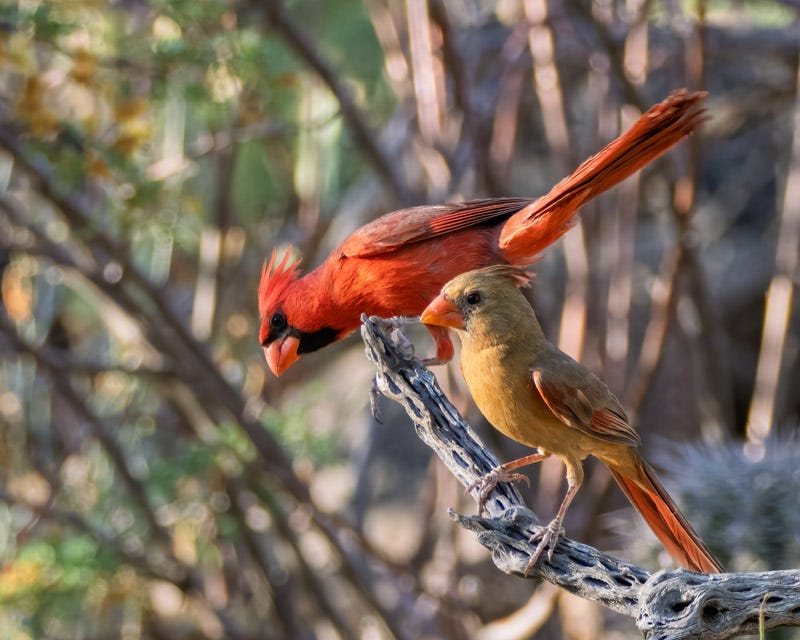
Here is the adult male next to the female
The scene below repeated itself over and over again. The juvenile male Cardinal, on the left, was begging his father for a seed. The father, holding a seed in his bill, was waiting for the right moment to feed his youngster. Look closely at the adult Cardinal’s forehead. The black spot there shows where this bird has lost some feathers and is in the process of molting or growing in new feathers. The adult Cardinals spent so much energy raising a family. After the young are off of the nest, the adults finally can begin molting, losing their old feathers and getting a new set of feathers for the next year.
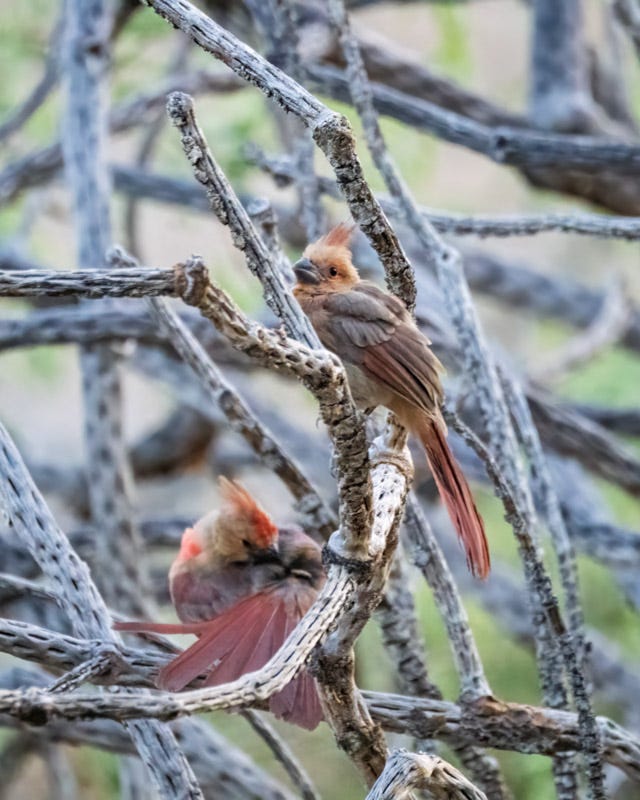
Two juvenile Cardinals were waiting for service by their parents. The lower bird is a young male and he is busy preening while he waits for food. You can see all the red coming in on its head, breast, and wings. The Cardinal perched above it is a female. There is much less red on that bird and just a hint of red on the wings and tail.
Below is a close-up of the adult male. That bald spot on the Cardinal’s head is very apparent. You can read more about the process of molting feathers in an Audubon Society piece here.
One week later and the male juvenile Cardinal was now feeding himself without his parents around.
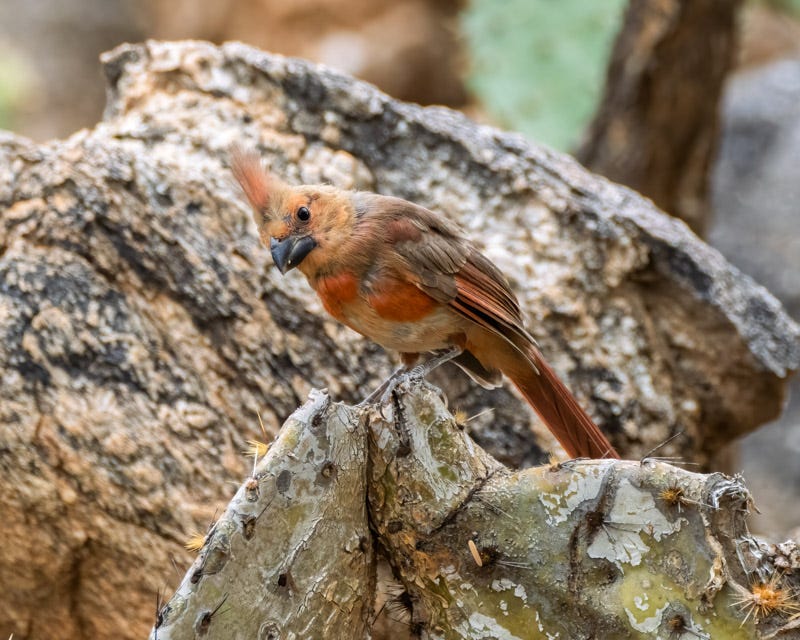
A recent photo, taken June 7, shows the young male with many more of his red feathers having emerged. He no longer is dependent on his parents to feed him.
At some point, the young Cardinals will disperse and try to find their own territories. The adults will remain in what they have found to be a good place to live and raise a family. I feel fortunate to have them as part of my regular ‘yardbirds.
Yes, we enjoy them here in Wisconsin, but I never saw the funny looking juvenile.
Thanks, Dan!
The crest on the juvenile is hilarious!