

About forty minutes before observing the Acorn Woodpecker (which happened to have unusual plumage), another unusual bird appeared at the stock pond. Again, I didn’t realize how unusual its plumage was until I got home and began processing my photos. At first glance, I felt that I was ‘just’ seeing some Blue Grosbeaks, beautiful birds, but nothing I hadn’t seen before. This summer, I’ve already shared a few other photos of Blue Grosbeaks and they are undoubtedly handsome birds. Here is the male:
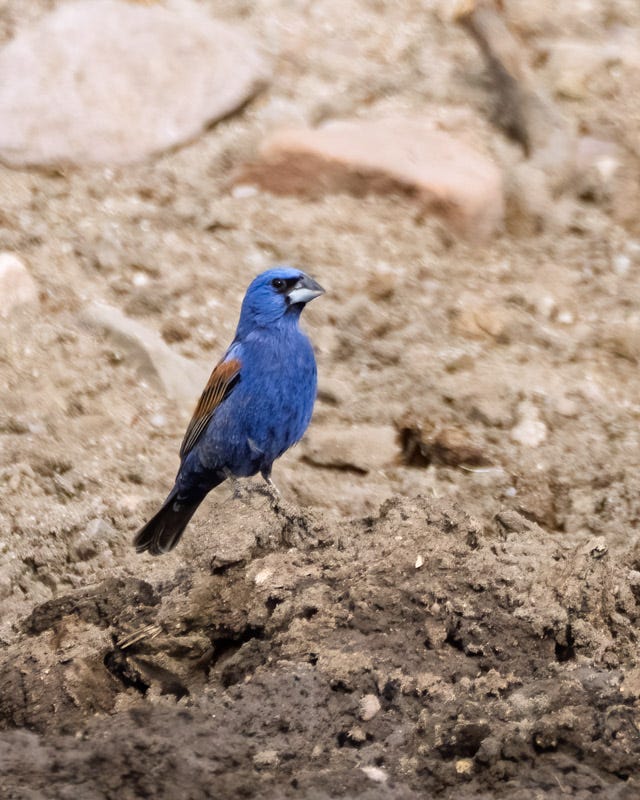
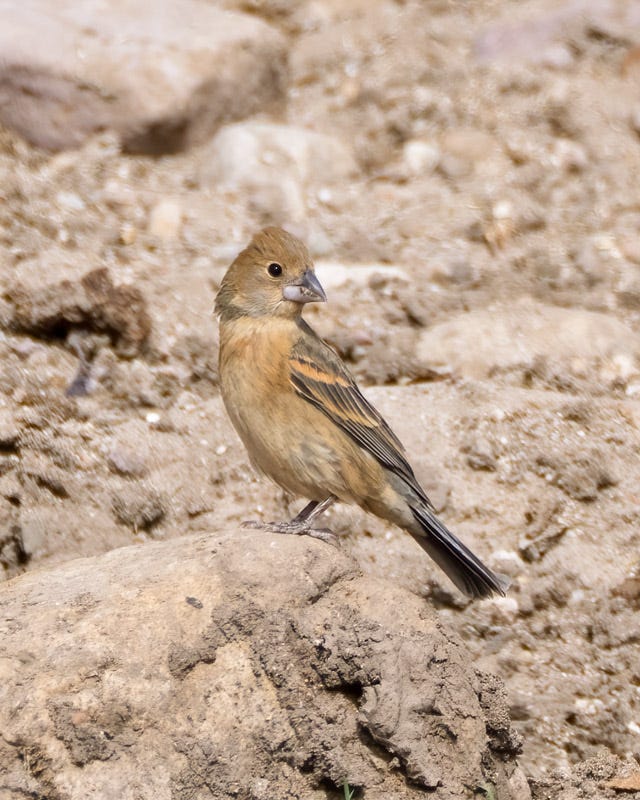
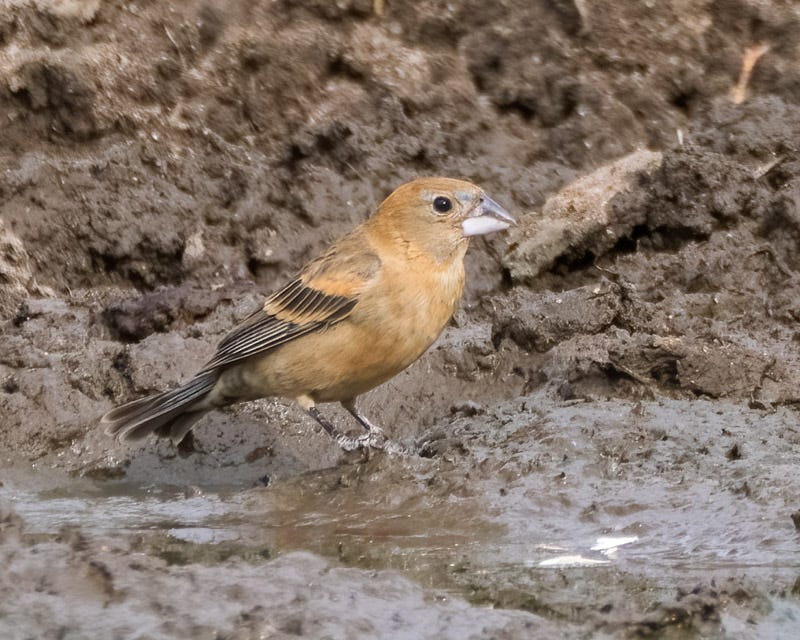
This vibrant blue male contrasts with the cinnamon colored female. The body shape of both is very stocky and both have a large beak. The female really is a pretty bird in her own right.
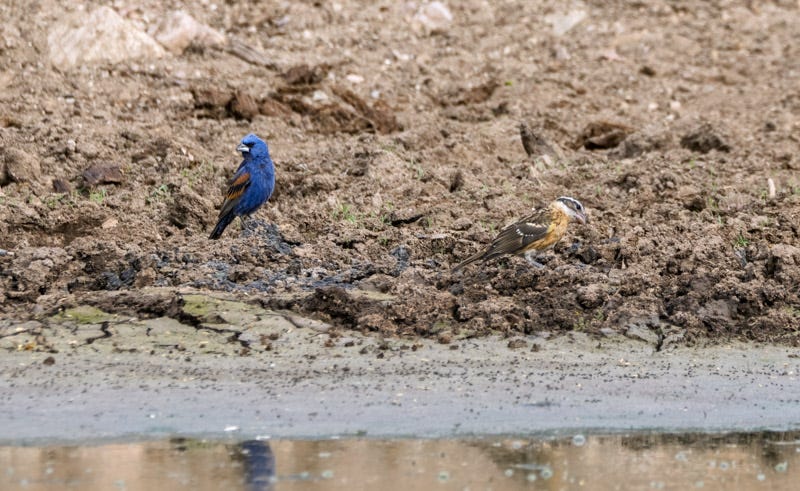
The male Blue Grosbeak was also hanging around a female Black-headed Grosbeak. Although both species share the same name (Grosbeak) thanks to their very large bills, they are not very closely related. Both are in the Cardinal family but are distant relatives.
What appeared to be another female Blue Grosbeak arrived. However, the bird turned out to display some very unusual plumage. It has a very distinct, blue cheek patch but there is no other blue feathering apparent on its body. So was this a 1st spring, male Blue Grosbeak just growing in its blue plumage, or could this be a female Blue Grosbeak which is known to sometimes have some blue patches mixed in with her brown feathers?
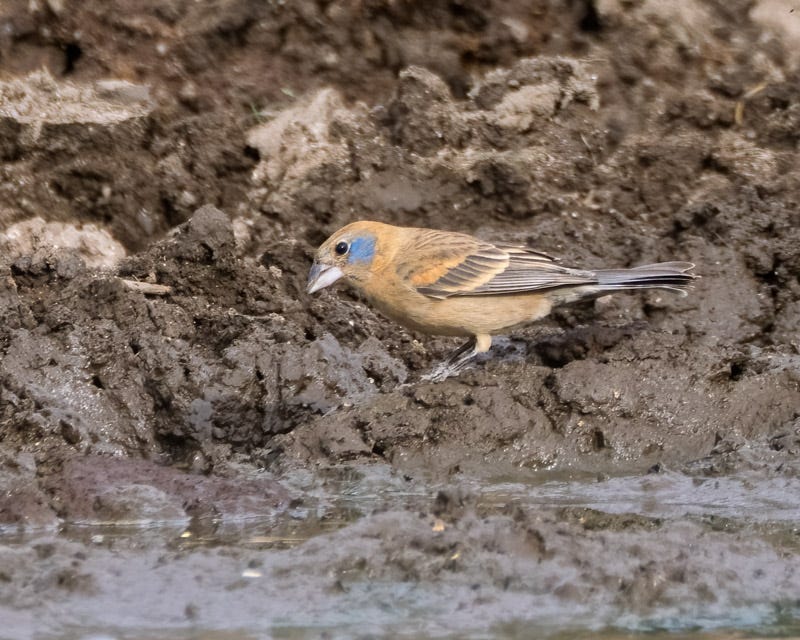
And then she turned the other cheek, literally! No blue cheek patch on that side but a light blue lore running from her bill to her eye! Again, no other blue feathering apparent on the rest of its body. Blue Grosbeak males that were born a year ago would be showing much more blue on their bodies at one year old. It would then take an additional year to develop their full adult plumage. The absence of blue on the rest of this bird’s body tells me that this is a female. She certainly shows some different blue highlights but her overall look is that of a female. Those blue highlights turn out to just be an anomaly and an interesting fashion statement. (Special thanks go to Jeff B. for helping me to sort out this interesting plumage variation.)
Here is the male Blue Grosbeak once more. For all I know, it too could have been a different Blue Grosbeak from the earlier one.
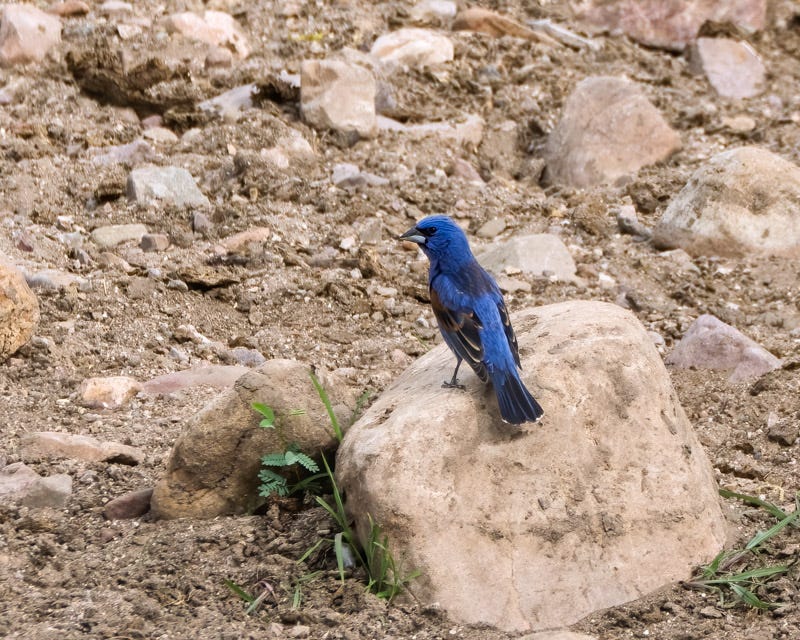
Blue Grosbeaks are one of those species that always brighten the afternoon. Seeing one that both surprised me and made me do a bit of research is always a treat.
You find and document the most interesting things!
What a rare find! Great pictures and such a treasure to see😊